Gulf Tensions: Drone Strikes on Qatar, Kuwait, and UAE, Fragile Ceasefire on the Brink
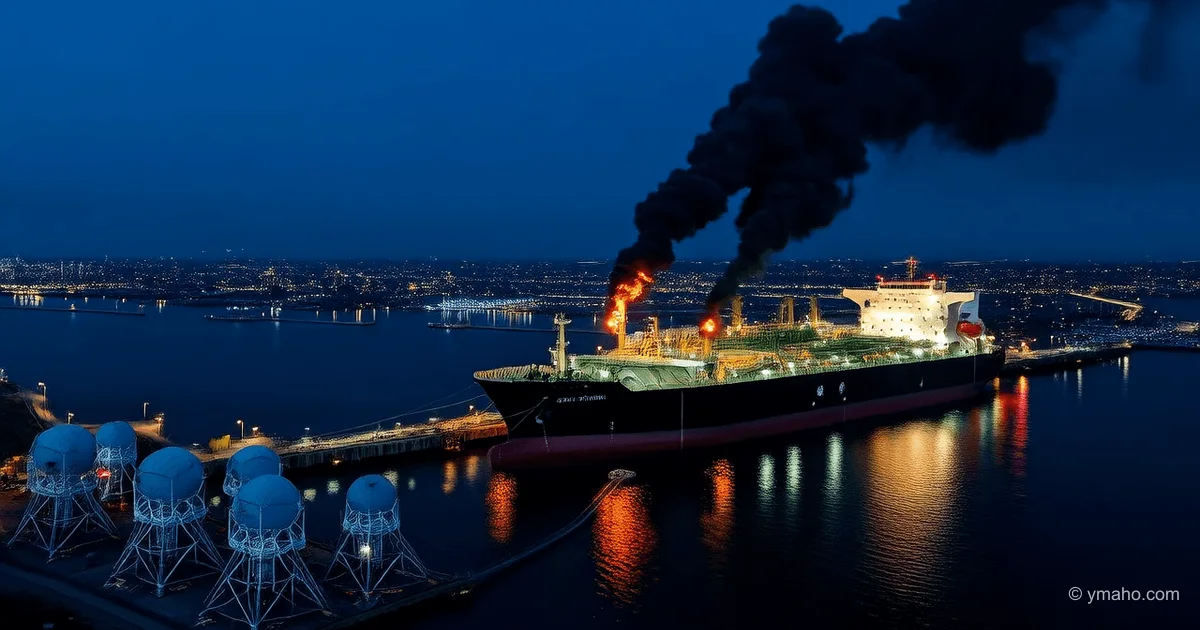
Several Gulf states have reported drone attacks. In Qatar, a drone struck a cargo vessel, causing a fire, while Kuwait and the UAE said they intercepted hostile drones, adding pressure to the fragile truce.
Here is an analytical article written from an insider's perspective, with hard facts and no filler.
What we have witnessed over the past 48 hours has nothing to do with a "ceasefire collapse" in the classical sense, nor with spontaneous actions by Iranian proxies. This is a classic preventive jab at the nervous system of global logistics, executed with surgical selectivity that mainstream media chose to overlook. I am referring to the nighttime drone attacks on Qatar's port infrastructure, Kuwait's coastal facilities, and the UAE.
The Core: What Is Really Happening
Formally, we see a picture of "all against all." A kamikaze drone struck a cargo vessel flying the flag of the Marshall Islands (operated by Qatar's Nakilat) at the Ras Laffan anchorage. Kuwaiti air defenses intercepted two aerial targets over the Mina Al Ahmadi oil terminal. In the UAE, an alert was declared at Jebel Ali, the region's largest transshipment hub. But there is just enough chaos here to legitimize one very specific process.
The real underlying motive is to force the Arabian monarchies to choose sides at a time when Washington and Tehran are trying to negotiate a temporary ceasefire. The Iranian General Staff, through proxy structures in Iraq and Yemen, is implementing a strategy of "threshold pressure." The goal is not to sink tonnage or cause casualties, but to create persistent toxicity for insurance premiums. The strike on Ras Laffan is not just an attack on a vessel; it is a message to Lloyd's of London and Lloyd Austin: the zone of military risk is expanding to the western shore of the Gulf, and the $27 billion contract for the expansion of the North Field East LNG plant may lose its insurance coverage.
Timeline and Context
Note the timing. The events unfolded almost synchronously, ruling out improvisation:
- May 10, 23:40 (local): IRGC intelligence detects Kuwaiti Patriot SAM systems being put on combat alert, presumably after a data leak from the American side.
- May 11, 01:15: Attack on an LNG tanker at Ras Laffan. The fire in the superstructure was quickly extinguished, but the port was closed for 6 hours.
- May 11, 02:30: Almost simultaneous launch of two drones from southern Iraq (Maysan province) toward Kuwait. Both were shot down, but the mere fact of the flight instantly raised the swap price for Kuwaiti export blend by 1.6%.
- May 11, 04:00: Anonymous warning about a "mined vessel" in the Jebel Ali anchorage. A Maersk container ship was sent for an unscheduled inspection. The alert turned out to be false, but the panic triggered an outflow of high-frequency algorithmic capital from Dubai Mercantile Exchange futures.
This is the first time in the history of US-Iran confrontation that strikes are not targeting Iran's enemies (Israel, Saudi Arabia) but pragmatic intermediaries. Qatar, which still holds $6 billion in Iranian assets and has been trying to play the role of a diplomatic bridge, has received its first direct physical warning.
Winners and Losers
Winners:
- US LNG producers. The tanker fleet has already begun to reorient. While Ras Laffan is idle, the "Asian premium" for gas will rise, making supplies from Sabine Pass and Corpus Christi more profitable. I expect an 8-10% increase in spot US shipments to Asia over the next two weeks. Money is flowing from QatarEnergy's pockets into Cheniere Energy's.
- Certain circles within the IRGC. Destabilization benefits them because it devalues criticism of the hardline course from Iran's pragmatic presidential bloc. The attacks demonstrated their operational independence.
- London insurance syndicates. The military underwriting market gets justification to raise rates to 2024 levels, when piracy off the coast of Somalia peaked.
Losers:
- Qatar. Beyond the reputational failure as a "safe haven," the country loses its status as a reliable supplier. The long-standing strategy of balancing between Hamas, the US, and Iran, endorsed by Tamim bin Hamad Al Thani in late 2025, has completely failed.
- European consumers of bunker fuel and diesel. VLSFO prices in Fujairah have soared to $720 per ton.
- Chinese strategic reserve managers. Continuous supply contracts with delivery through Hormuz have begun to fail. KPIs for filling storage in Zhoushan, which were to be met by May 15, are likely to be missed.
What the Media Are Not Saying
Now for the inside scoop. The world's attention is focused on the IRGC and Yemeni Houthis, but the attack on Kuwait was technically impossible without logistical or intelligence assistance from Iraq's Basra. Not just "from Iraqi territory," but specifically through coordinates controlled by the Asa'ib Ahl al-Haq group, whose office in Basra reports not directly to Qasem Soleimani (already history) but to the deputy commander for coordination in Tehran.
I spoke with a familiar analyst from Najaf. He confirms: 6 hours before the drone launch, local security forces received orders to "see and hear nothing." This was Tehran's payment to Baghdad for the recent delimitation of the border along the Shatt al-Arab. In exchange for the Iraqi side's silence on the territorial concession, the Iranians allowed them to participate in the intimidation show.
Furthermore, no one is talking about the "rehearsal." If you look at the flight path of the intercepted Kuwaiti drone and the hacked telemetry (data leaked to a closed OSINT channel), a 300-meter offset loop becomes visible. They were not heading for the terminal. They were testing a radar dead zone located directly above the underground oil storage. The Iranians highlighted the vulnerability specifically for the Pentagon: look, your Kuwait defense system is a sieve.
Forecast: Next 30 Days and 90 Days
Next 30 days (until June 11, 2026):
There will be an escalation in cyber-physical impact. I expect a targeted attack on the ballast water management systems of modern VLCC tankers in the Gulf of Oman. There will be no sinking, but a series of navigational incidents with environmental damage will provide a pretext to establish a no-ship zone with a radius of 15 nautical miles around Kharg Island. Western navies will not be able to respond quickly because they are bound by a mandate to protect navigation, not environmental emergencies. Insurance premiums will rise by 40%, creating an economic blockade without a single shot fired.
Next 90 days (until mid-August 2026):
We will enter a phase of "shadow ceasefire." The key driver will not be military force or diplomacy, but insurance limits. The reinsurance pools of Zurich and Lloyd's of London will physically be unable to administer losses if this level of risk persists. This will cause a collapse in physical delivery: shipowners will simply forbid captains from entering the Gulf.
This will force Saudi Aramco and Abu Dhabi National Oil Company to secretly side with de-escalation. They will lobby the White House for guarantees that any Iranian strike will be limited to 120 hours and will not affect export infrastructure. Iran saves face, and trade on the Dubai exchange recovers, but with a new "wartime" discount of $7 per barrel. Demand will shift permanently, and the only winner from this crisis will be the venture capital technology sector of the Texas energy hub.
— Editorial Team









