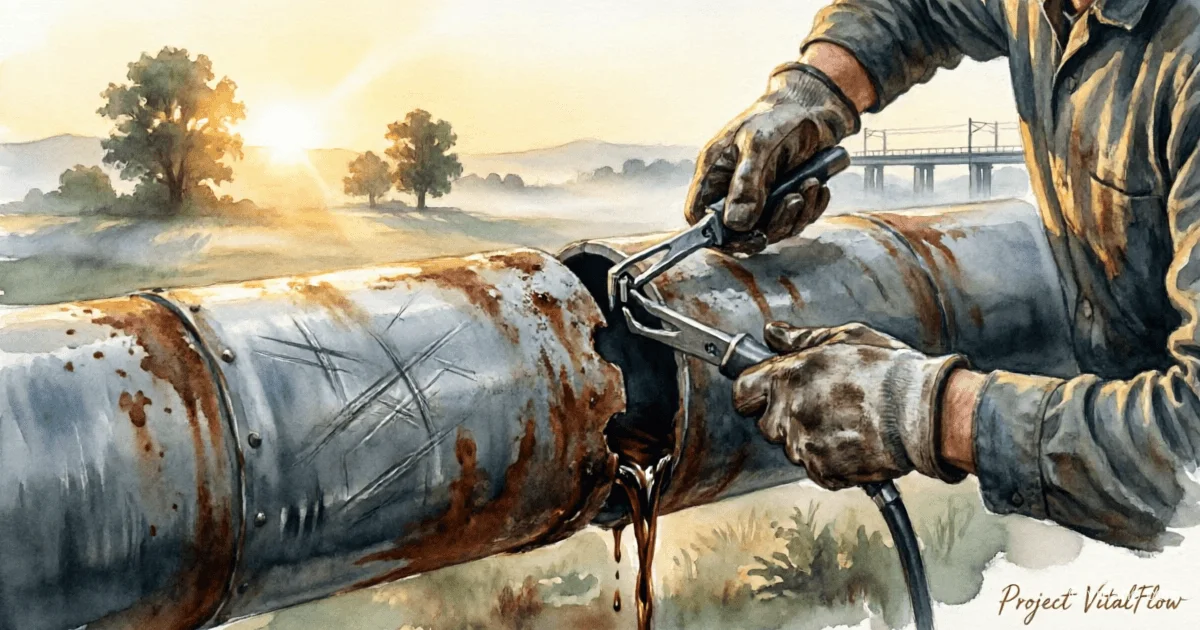
The Druzhba Pipeline Returns: How This Will Change Fuel Prices in Europe
The Druzhba pipeline, which has stood empty for months after being damaged, could resume operations as early as next week. For the average person, this isn’t just news about industrial pipes—it’s a direct signal of how quickly gasoline, diesel, and heating fuel prices across Europe may shift.
Why the halt of one pipeline affects your wallet
Imagine the main water supply line for a large district accidentally ruptured during excavation work. While utility crews patch the leak, residents must rely on water tankers, instantly making water three times more expensive. Something similar has been happening in Central Europe’s oil market since January. The Druzhba pipeline, which for decades transported Russian crude through Ukraine to Hungary, Slovakia, and the Czech Republic, was shut down following a strike by a Russian drone.
When a major route goes offline, companies must find detours: chartering tankers, loading crude into rail tank cars, or sourcing oil from alternative suppliers. Logistics—the coordination of freight transport—becomes far more complex, and those extra miles are always paid for by the end consumer at the pump.
What we know so far
Hungary’s incoming Prime Minister Peter Magyar announced that deliveries could resume within days. He cited information from MOL Group CEO Zsolt Hernádi, who is scheduled to visit Russia next week for final negotiations. It’s important to clearly distinguish between confirmed facts and expectations:
• Fact: The pipeline sustained damage in January and remains non-operational.
• Fact: Hungary has already secured deals to purchase American crude during U.S. Vice President J.D. Vance’s recent visit, establishing a backup supply option.
• Expectation: A technical restart of Druzhba could happen before the end of April—a timeline previously mentioned by President Zelenskyy.
• Political context: Outgoing Prime Minister Viktor Orbán accused Kyiv of delaying repairs but pledged to lift his veto on several EU decisions immediately after flow resumes.
Magyar emphasized a technical detail often overlooked in headlines: "It’s not enough to simply turn the pipeline back on. We also need to ensure there’s oil to put into it." This means that even after physical repairs, volumes, pressure, and injection schedules still need to be coordinated with the Russian side.
How this reshapes the global energy map
Bringing Druzhba back online isn’t just a local repair job—it’s part of a broader restructuring of global trade routes. Europe is gradually moving away from old supply patterns, but infrastructure doesn’t change overnight. Alternative routes exist, but they’re costlier and slower. Restarting a proven pipeline corridor will ease pressure on ports and railways, automatically reducing the transportation premium baked into fuel prices.
For global markets, this sends a message: even amid strict sanctions and military risks, physical flows of raw materials can resume when economic demand and technical feasibility align.
What this means for everyday people
If oil truly starts flowing again, logistics costs will drop, gradually easing prices at gas stations across Central Europe. For global markets, it’s a reminder that energy infrastructure remains the circulatory system of the economy—and disruptions ripple instantly into the cost of goods. Ordinary consumers should monitor updates on the actual restart, as supply stability directly determines how expensive the heating season and summer travel will be.
— Editorial Team









