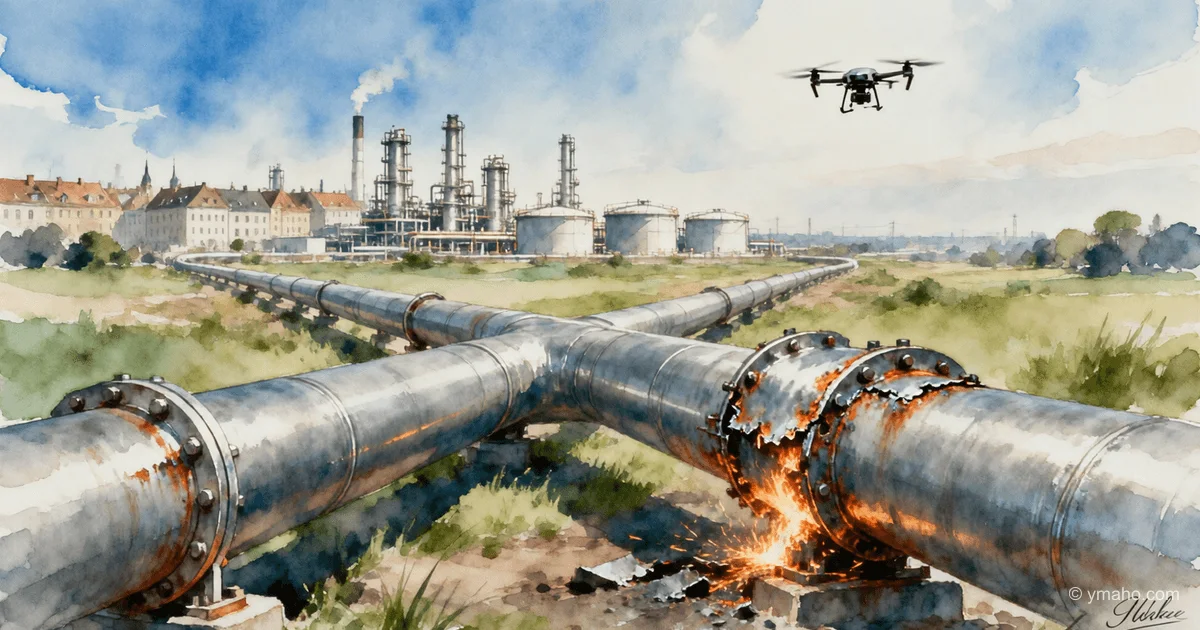
Druzhba Pipeline Resumes Operations: What It Means for Europe and Oil Prices
Ukraine has officially notified partners of its readiness to resume oil transit through the Druzhba pipeline after repairs following a January 2026 attack. This development could ease tensions in the European oil market and impact prices, but risks of further attacks remain.
Why Druzhba Matters for All of Europe
Druzhba is one of the world's largest oil pipelines, connecting Russia with several European countries. Built in the 1960s, it remains a key supply route for oil to Hungary, Slovakia, the Czech Republic, and Germany. Even after the start of the war in Ukraine, many European countries continued to receive Russian oil via this pipeline, as it was exempt from EU sanctions.
When drones damaged a section of Druzhba in Ukraine in January 2026, transit halted. This created serious problems for Hungary and Slovakia, which heavily depend on Russian oil. They had to seek alternative sources, leading to higher fuel prices and additional costs.
What Happened: Timeline of Events
- January 27, 2026 — Attack on the Druzhba pipeline in Ukraine, transit stopped.
- April 2026 — Ukrainian specialists completed repairs.
- April 21, 2026 — Ukrtransnafta officially lifted force majeure and notified Hungarian MOL of readiness to resume pumping.
- Condition — Ukrainian President Volodymyr Zelenskyy linked the resumption of transit to the unblocking of a €90 billion EU loan for Ukraine.
What the Resumption Means for the Oil Market
The resumption of Druzhba transit reduces the risk of oil shortages in Central Europe. Hungary and Slovakia can again receive oil via a proven route, decreasing their reliance on more expensive alternatives such as seaborne supplies or other sources. This could stabilize oil prices in the region and slightly reduce overall tension in the European energy market.
However, there is an important caveat: the Ukrainian president warned that he cannot guarantee Russia will not attack the pipeline again. This means the risk of repeated shutdowns persists, and the market will factor in this uncertainty. Additionally, the resumption is tied to a political condition—the EU loan for Ukraine—adding an element of bargaining.
Key Points
- Transit of Russian oil through Ukraine resumes after repairs following a January 2026 attack.
- This reduces the risk of shortages for Hungary and Slovakia, which depend on Druzhba.
- Oil prices may slightly decrease due to increased supply, but political uncertainty remains.
- The resumption is conditional on unblocking a €90 billion EU loan for Ukraine.
- The risk of new attacks persists, which could halt transit again at any time.
What This Means for Ordinary People
For Europeans, the resumption of Druzhba operations means gasoline and diesel prices may stabilize or slightly decrease as more oil becomes available on the market. However, if transit is halted again due to an attack or political disputes, prices could spike sharply. Therefore, the situation remains unstable, and drivers should keep an eye on the news.
— Editorial Team









