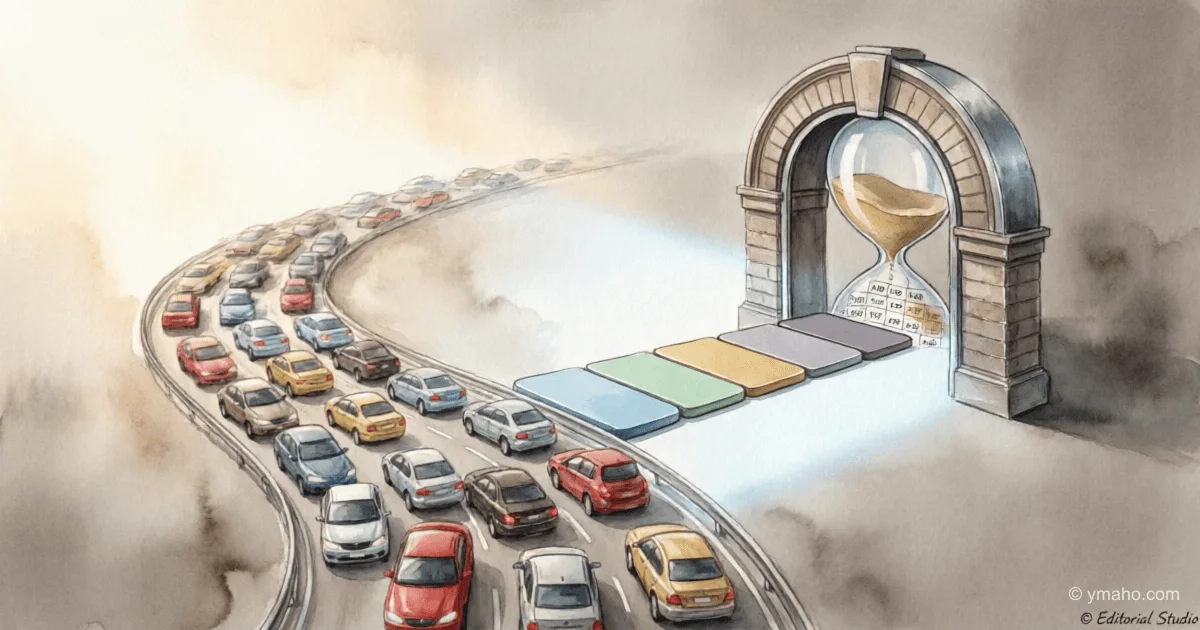
Digital Border Queue: How Travel to Europe Will Change
Crossing the border by private car will soon stop resembling a chaotic quest with hours-long traffic jams. Ukraine is moving border queue registration to a digital format, and this change directly affects millions of travelers and freight carriers moving between Eastern and Western Europe.
Imagine being able to book an exact appointment time with a doctor in advance via smartphone instead of waiting in a physical line. The new system works on the same principle: you select a convenient time slot, arrive at the checkpoint, and pass inspection without unnecessary delays. The launch for passenger vehicles is scheduled for June, even though the pilot project was initially planned for testing only in 2026. Both Ukrainian citizens and foreigners will be able to register via the "Diia" app, the official website, or the electronic queue mobile service.
What’s Changing for Commercial Transport
The update isn’t limited to private drivers. For trucks and buses, an automated verification system for the "Green Card" insurance policy— an international agreement covering driver liability abroad—will be introduced. The system will automatically verify data, eliminating the need for border officers to manually check documents.
Freight carriers will gain access to a priority corridor integrated with T1 customs documents and MDP Carnets (international transit guarantee documents). This means verified logistics companies and authorized economic operators will cross the border faster, bypassing general congestion. Passenger transport providers will be able to pre-book transit routes through Ukraine, re-register shuttle trips, and easily swap buses for irregular services.
Why This Affects International Routes
The digital queue has already proven effective: over three million trucks and buses have passed through it. Now, scaling the system to passenger vehicles and tightening document control directly impacts key routes—especially borders with Poland and Moldova. One-time use of permits for irregular transport operations will close a loophole allowing repeated use of the same documents, making the passenger transport market more transparent.
Key updates:
• Smartphone-based booking for passenger cars starting in June
• Automated verification of international insurance policies
• Priority passage for freight with complete customs clearance
• Slot reservations for transit bus routes
• Protection against reuse of transport permits
What’s important:
— The system reduces idle time at the border, turning chaotic traffic jams into a managed digital flow.
— Foreign drivers will have equal access to booking, simplifying tourist and business travel.
— Integration with customs databases speeds up movement of goods critical to European supply chains.
— Stricter rules for irregular carriers reduce risks in the informal passenger transport market.
What does this mean for ordinary people?
You’ll no longer have to guess how many hours your trip to a neighboring country or vacation destination will take—you’ll simply pick a time in the app and arrive right on schedule. For those ordering goods from abroad or using international bus services, this means more predictable delivery times and fewer delays en route. The border becomes less of a barrier and more of a standard route point with a clear timetable.
— Editorial Team









