Building Energy Passports: How Ukraine Is Saving Energy and What It Means for the World
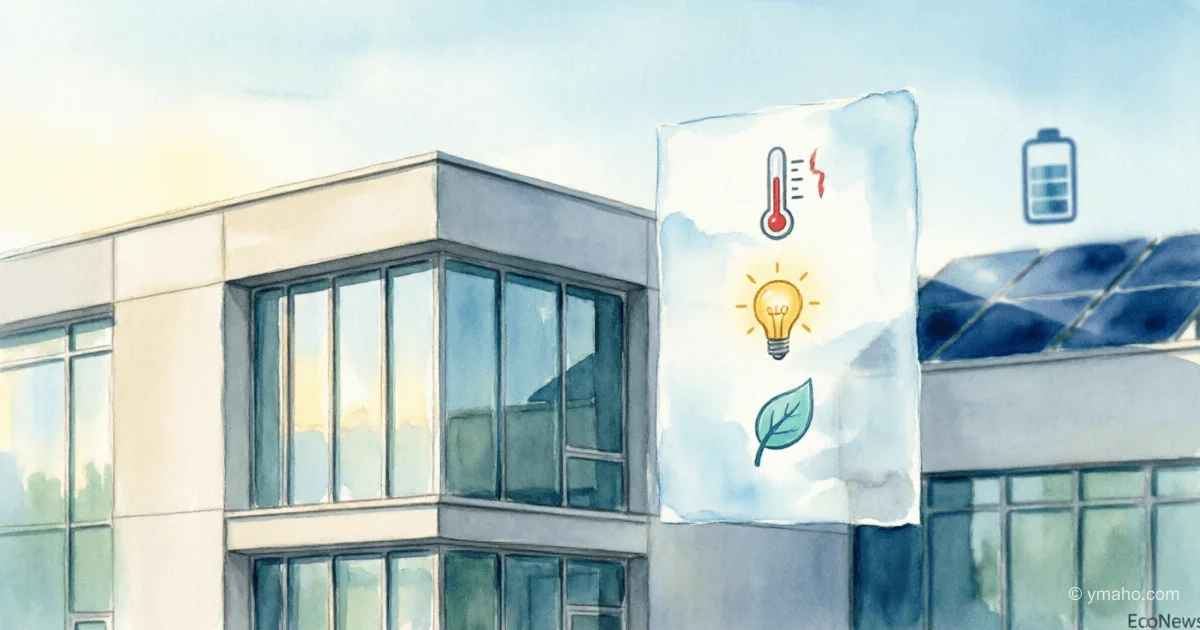
Ukraine has already issued special energy passports to 455 public buildings—ranging from hospitals to daycare centers. Why should this matter to you, even if you live abroad? Because energy efficiency saves money, lowers utility bills, and helps combat climate change. And in a country at war like Ukraine, it is literally a matter of survival: reliable power keeps people alive.
What Is an Energy Passport and Why Do You Need One?
Think of it as a building’s “health record,” much like a human medical file. It tracks how much energy a structure consumes each month and offers actionable advice on how to become more efficient and cut costs. An energy passport evaluates a building’s energy performance and outlines specific upgrades to improve it.
For instance, the report might reveal that half the heat is escaping through outdated windows. The recommendation would be straightforward: upgrade the windows or add wall insulation. It’s exactly like a doctor’s visit: first the diagnosis, then the treatment. Energy efficiency isn’t about complex jargon; it’s about stopping your building from literally throwing money out the window.
In Ukraine, these passports are issued by government bodies. Getting one is the first step toward modernization. Without it, you cannot access subsidized loans or grants for renovations. It’s like getting clearance for surgery: diagnosis first, treatment second.
How Does It Work in Ukraine?
The initiative was launched by the State Agency on Energy Efficiency and the Ukraine Decarbonization Fund. Backed by state funding, 455 facilities have been certified—including hospitals, universities, fire stations, and preschools in Kropyvnytskyi, Kyiv, Vinnytsia, and other cities.
Holding a valid passport is mandatory to participate in government support programs. After upgrading to the standard “Class C” efficiency rating, energy consumption drops by 40–70%. That’s massive savings, especially during wartime when every kilowatt-hour counts. To put it in perspective: if your apartment used to draw 100 kWh per month, post-renovation it would only use 30–60 kWh.
The passport does not just give a score; it provides a clear action plan: what needs fixing, the estimated cost, and the expected payoff. For example, insulating the facade could save 30% of heat loss, while swapping out an old boiler adds another 20%. It’s like assembling furniture with a step-by-step manual: clear, direct, and no fluff.
Why Does This Matter Globally?
Buildings worldwide account for roughly 40% of total energy production. Making them more efficient would drastically cut carbon emissions and help keep global warming in check. Europe, the United States, and many other nations have already mandated building certifications—Ukraine is simply following this global trajectory, even amid active conflict.
But there is also a military dimension. The war has exposed how fragile centralized power grids are, with missile strikes frequently targeting power plants. As a result, alongside issuing passports, Ukraine is installing solar arrays paired with battery storage on critical infrastructure—hospitals, maternity wards, and emergency response centers. This ensures that even during grid failures, lights and heating remain online.
This is not just relevant to Ukraine. The technologies being stress-tested under wartime conditions today will soon be deployed in peacetime regions to defend against hurricanes, floods, and other natural disasters. Take the Caribbean, for example: after a major hurricane, hospitals kept functioning thanks to solar panels backed by battery systems.
Key Takeaways
- An energy passport acts as a building’s “diagnostic report”: it pinpoints where energy is wasted and shows exactly how to cut costs.
- Post-renovation buildings can slash energy use by up to 70%, lowering utility bills and easing strain on the power grid.
- The war in Ukraine proved that uninterrupted power for hospitals and first responders is life-or-death, making solar-plus-storage systems essential.
- Government-backed energy efficiency programs are a worldwide movement, not just a Ukrainian initiative.
What Does This Mean for Everyday People?
Even if you are not in Ukraine, energy-efficient buildings make your city cheaper to maintain and cleaner to live in. You will pay less for heating, and your community will produce less air pollution.
The technologies currently being rolled out under wartime pressure—like solar panels combined with battery backups—are poised to reach peaceful regions soon, strengthening communities against extreme weather. Your local hospital or school could stay fully operational even during prolonged blackouts.
Every move toward energy efficiency is a step toward a more resilient world—one with fewer power interruptions and lower monthly bills. And it all starts with a single, straightforward document: the energy passport.
— Editorial Team









