Eurozone GDP Growth in Q1 Weakest Since 2024 Amid Energy Crisis
Eurozone economy grew only 0.8% year-on-year, confirming preliminary estimates. Inflation in France accelerated to its highest since July 2024, and European companies are massively downgrading forecasts due to the impact of the Middle East conflict.
[The Gist]: What's Really Happening
The 0.8% eurozone GDP growth figure is not just a weak quarterly number. It's a statistical mirage hiding a much darker reality: Europe's industrial core has entered a recession masked by growth in services and government spending. While Eurostat publishes a formally positive figure, S&P Global's composite PMI for eurozone manufacturing plunged to 44.2 in April — the lowest since May 2020, when the continent was paralyzed by COVID lockdowns. The gap between services and industry has hit a record high: the services sector still holds at 52.8 points thanks to tourism and domestic consumption, but factories are closing, and chemical giants are moving production overseas. This is not a cyclical slowdown — it's a structural deindustrialization of Europe, accelerated by the conflict in the Strait of Hormuz.
Timeline and Context
The roots of the current collapse go back to February 2026, when the US and Israel launched a military operation against Iran. But the key turning point for Europe came not in February, but on April 10, when Lloyd's officially expanded the war risk zone to the entire Gulf of Oman. From that moment, European manufacturers began receiving notifications from logistics operators: the cost of shipping a 40-foot container from Shanghai to Rotterdam rose from $3,200 to $18,500, and transit times stretched from 28 to 52 days due to the need to circumnavigate Africa. For chemical giant BASF, this meant that supplies of naphtha and gas condensate — critical feedstock for steam cracking — fell by 40%. Plants in Ludwigshafen are running at 65% capacity, and CFO Dirk Elvermann admitted at a closed investor meeting on May 8 that the company is considering moving two more polyurethane production lines to Texas.
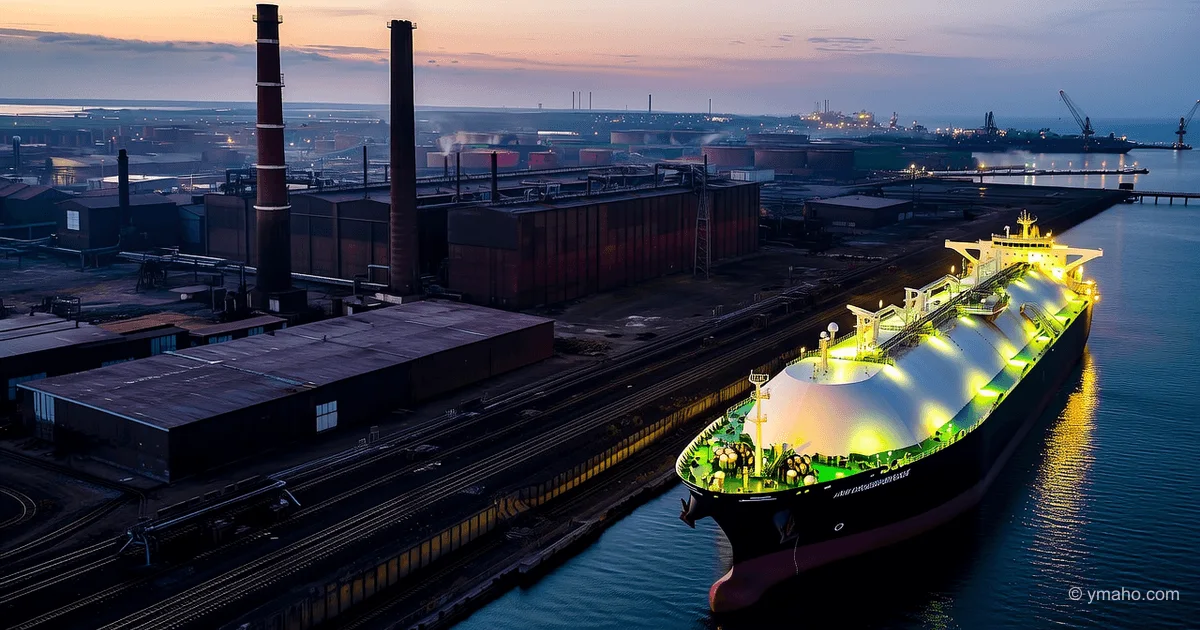
Simultaneously, an energy shock unfolded. Europe formally has gas storage levels at 58% as of early May — higher than in previous years. But these reserves are an illusion of safety. The problem is that Qatar, the second-largest LNG supplier to Europe after the US, is effectively blocked: its tankers cannot pass through the Strait of Hormuz without Iranian permission, which Tehran selectively grants only to loyal buyers. As a result, Qatari exports to Europe fell by 70% in April, and US LNG producers are happily filling the gap, but at $14.5 per MMBtu — three times the price of gas on the US domestic market.
French inflation at its highest since July 2024 is a direct consequence. Electricity for French households rose 18% in a month, and this is just the beginning: on June 1, the government price shield expires, and EDF tariffs will rise another 15%. German auto parts manufacturers, such as Continental and ZF Friedrichshafen, have already announced a combined 22,000 job cuts, citing "structural restructuring of supply chains."
Who Wins and Who Loses
Winners are US exporters of energy and industrial raw materials. Cheniere Energy and Venture Global LNG are ramping up shipments to Europe at record rates: in April 2026, US LNG exports reached 14.2 billion cubic feet per day, 18% above the Q1 average. The margin between the domestic Henry Hub price ($3.2 per MMBtu) and the European TTF price ($14.5 per MMBtu) is 350% — pure arbitrage income financing new terminals in Louisiana. US polymer producers — Dow Chemical, LyondellBasell — also benefit: while European competitors struggle without feedstock, they capture market share by exporting polyethylene to Europe at prices European producers cannot match.
Losers are the entire European industry, but especially the Mittelstand — Germany's small and medium-sized enterprises, which account for 55% of the country's GDP. These companies cannot simply move production to Texas; they lack the capital and management resources. They are squeezed between rising energy costs, broken supply chains, and ECB rate hikes that make credit unaffordable. According to a May 10 survey by the German Chamber of Commerce DIHK, 28% of industrial Mittelstand are considering bankruptcy within the next 12 months. This is not a recession — it's the liquidation of an entire economic segment.
European households lose no less. Real wages in the eurozone fell 2.1% year-on-year after inflation. French consumers, facing higher electricity and food prices, are cutting spending on durable goods, hitting retailers and deepening the industrial downturn.
What the Media Isn't Saying
The main secret is that the ECB is deliberately allowing an industrial recession as an "acceptable price" for curbing inflation. Christine Lagarde at the May 1 press conference spoke of "the need to maintain restrictive policy," but behind these words lies a cold calculation: an industrial slowdown reduces energy demand, which in turn pressures gas and electricity prices, helping the ECB achieve its 2% inflation target without further rate hikes. Simply put, Frankfurt is using factory suffering as a monetary policy tool. This is not said aloud, but it's a fact: every closed plant in Ludwigshafen or the Ruhr is a step toward lowering inflation.
The second underreported story is China's role in Europe's energy crisis. While European politicians blame Iran and Russia, Beijing is methodically buying long-term LNG contracts from Qatar and the US, intercepting volumes that could have gone to Europe. In March-April 2026, Chinese state-owned companies CNOOC and PetroChina signed contracts for 18 million tons of LNG annually for 20 years — equivalent to a third of Germany's annual consumption. China is using the crisis to lock in energy resources for a generation while Europeans argue about price caps and green transitions.
Forecast: Next 30 Days and 90 Days
On a 30-day horizon (by June 15, 2026), the eurozone will officially enter a technical recession. Q2 GDP data, to be released in mid-July, will show a contraction of 0.3-0.5% quarter-on-quarter. The ECB at its June 5 meeting will keep rates at 3.75%, but Lagarde will be forced to acknowledge that risks to economic growth have shifted "substantially to the downside." The euro will weaken to $1.02-1.04 amid capital flight to the dollar and US assets.
On a 90-day horizon (by August 15, 2026), the key factor will not be the Strait of Hormuz or ECB decisions, but the labor market situation. If by August BASF, Volkswagen, and Siemens implement announced cuts — affecting up to 150,000 jobs across supply chains — Germany will face a social crisis unseen since 2009. The IG Metall union is already preparing strikes against plant closures, and if they happen, they will paralyze the remnants of industrial production. The ECB will face an impossible choice: cut rates to save the economy, risking inflation accelerating to 4%, or keep rates and watch the continent deindustrialize.
The only scenario that could prevent catastrophe is a swift resolution of the conflict with Iran and the reopening of the Strait of Hormuz. But as talks in Seoul and the upcoming Trump-Xi summit show, the diplomatic process is stalling, and both sides continue to raise the stakes. Europe is a hostage of a conflict it did not start and cannot stop. And for this hostage situation, it will pay with a decade of lost growth.
— Editorial Team









