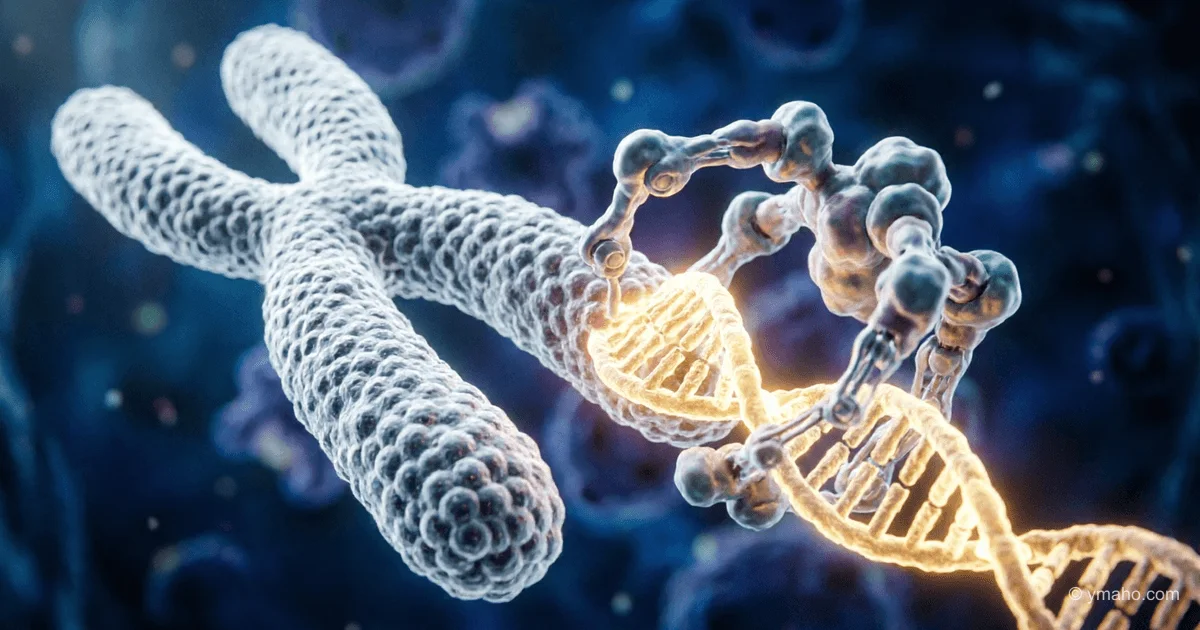
Nature: New Gene Editing Tool Inserts Whole Genes Without DNA Breaks
A method based on CAST (CRISPR-associated transposases) has been developed that precisely inserts whole genes into human DNA without double-strand breaks. The optimized enzyme version evoCAST improves efficiency by more than 400-fold.
This is an analysis of the current landscape of CAST-based technologies. This text is not a summary of a scientific publication but an expert perspective on how evoCAST optimization could reshape gene therapy.
The Real Story: What's Actually Happening
The Nature publication about a 400-fold improvement in evoCAST efficiency is just the formal trigger. What we're actually witnessing is a tectonic shift from "genetic scissors" (CRISPR/Cas9) to a "genetic fax machine" or "freight elevator." The old gene editing paradigm relied on creating a double-strand break in DNA. This triggered cellular repair, often error-prone, creating risks of mutagenesis and chromosomal rearrangements. CAST systems, and evoCAST in particular, work fundamentally differently: they use transposon mechanisms to "stitch" large DNA fragments into a precisely defined genomic site without any breaks. This isn't editing individual letters (point mutations) but replacing entire paragraphs (genes or regulatory regions) thousands of base pairs long.
The "400-fold" figure matters not in itself but as a threshold for commercial therapy viability. When insertion efficiency becomes high and predictable enough, we can talk not only about treating monogenic diseases but also about creating "cell factories" for CAR-T or complex stem cell modification without the risk of uncontrolled transformation.
Timeline and Context
The history of transposases in genetic engineering began with the Sleeping Beauty system. However, transposases long suffered from random insertion—they integrated genes anywhere, creating proto-oncogenesis risk. The discovery of CRISPR-associated transposases (CAST) solved the targeting problem: the guide RNA now directs the cassette to a precise landing site, and the TnsB protein or its analogs perform a clean cargo transfer without breaking both DNA strands.
A key contextual point is the crisis of traditional CRISPR therapies. Casgevy (Vertex/CRISPR Therapeutics) is approved for sickle cell disease, but its production involves a complex ex vivo protocol with risks of off-target mutations. The therapy costs around $2.2 million per course. The industry is seeking safer, cheaper alternatives. Optimized evoCAST arrives just as the market is ripe for break-free gene insertion technologies.
Winners and Losers
Winners:
- Next-generation CAR-T startups. For example, companies working on allogeneic (universal) CAR-T, such as Allogene Therapeutics. Using evoCAST, they can insert a chimeric receptor and delete endogenous TCR/HLA in one step, avoiding chromosomal translocations that arise from multiple Cas9 breaks.
- Editing platform holders (Prime Medicine, Tessera Therapeutics). They can license this component to expand their technological arsenal, offering solutions for diseases requiring insertion of genes larger than 5–6 kb, which is impossible with AAV vectors due to their limited packaging capacity.
Losers:
- Classic AAV vector platforms. Adeno-associated viruses have a packaging limit of 4.7 kb. If evoCAST enables in vivo insertion of genes 7–9 kb or larger, it questions the effectiveness of billion-dollar investments in AAV infrastructure, especially for companies like Sarepta or Biomarin.
- Companies focused solely on Cas9. Those who invested in licenses for classic nucleases will end up with a portfolio of technologies considered "dirty" due to p53-mediated response and unwanted deletions. The valuation of such patents in M&A deals could adjust downward by 15–20%.
What the Media Misses
Most media focused on the "disappearance of scissors" but missed the issue of target-site duplication (TSD). The transposase mechanism typically leaves duplications at the insertion site. This can disrupt splicing or chromatin structure. Nature likely describes attempts to minimize this, but completely removing the "scar" is not yet achieved. This means it's safer for gene expression regulation than for coding sequences, where even a single-nucleotide frameshift is critical.
Insider perspective: The key battle here is not therapeutic efficacy but manufacturing (CMC, Chemistry, Manufacturing, and Controls). To deliver the CAST system in vivo, a combination of two components is needed: the transposase coding apparatus and the DNA template itself. Fitting this into a single AAV is impossible due to size, and LNPs (lipid nanoparticles) require mRNA modification. If the study only used electroporation for ex vivo delivery, clinical implementation is at least 3–4 years away. The market may misprice stocks amid this hype, overlooking the gap between a lab protocol and GMP production.
Forecast: Next 30 Days and 90 Days
30 days (by June 18, 2026): A sharp rise in venture capital interest in transposon synthetic biology is expected. We will see several prominent names from the Broad Institute or Arc Institute announce the creation of a new company (NewCo) with a Series A round of around $75–100 million, specializing specifically in programmable transposons. Major players (Vertex, Intellia) will release "updates" to their R&D reports, emphasizing that they are "monitoring" the technology.
90 days (by August 19, 2026): The first preprint or article demonstrating in vivo delivery of evoCAST to primate livers (not mice) will appear. If successful, this will directly compete with base editing. If no in vivo data emerges, the hype will fade, and Wall Street analysts will start writing about the "delivery trap" for transposon systems in the CNS and muscles. The main intrigue will remain the cost of synthesizing ultra-long guide RNA under GMP conditions—a critical factor that could delay commercialization for years.
— Editorial Team









