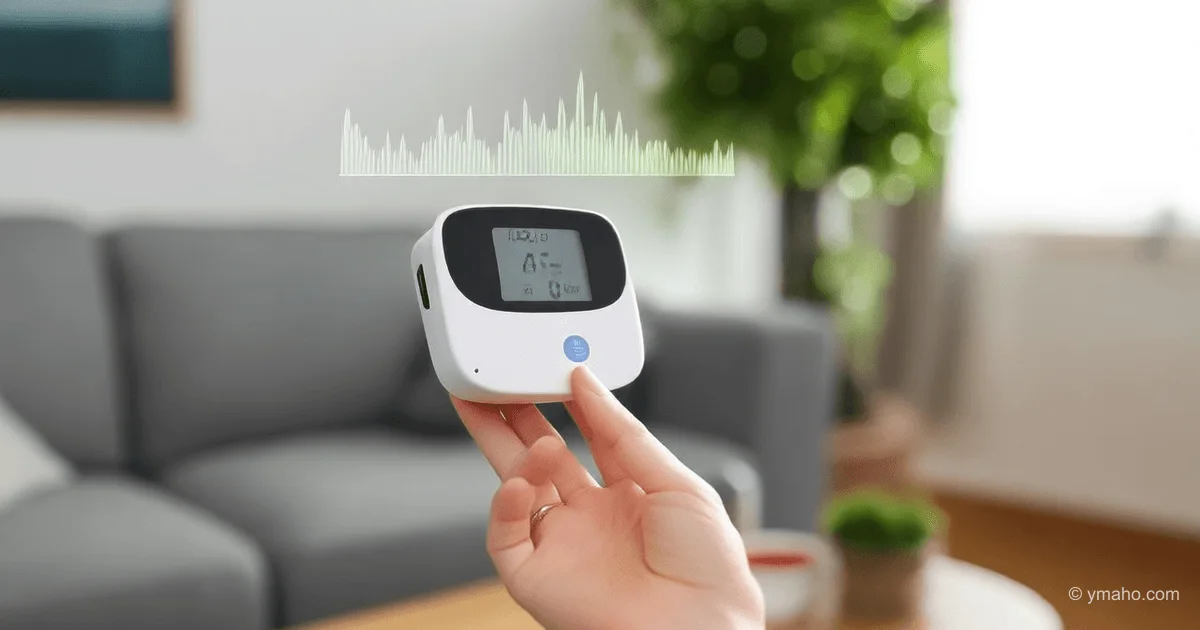
FDA Approves Calibration-Free Blood Pressure Measurement from Fingertip
The Biozen BP1000 device, which uses a finger sensor instead of a cuff, received FDA 510(k) clearance. The gadget employs photoplethysmography and pressure sensors for clinically accurate measurement without the need for calibration.
The cuff is dead, long live the finger: Why FDA approval of Biozen BP1000 is not a gadget but a Trojan horse
The Gist: What's Really Happening
On May 10, 2026, the FDA granted 510(k) clearance to the Biozen BP1000—the first calibration-free blood pressure monitor in the US that works from a fingertip signal. Headlines read like ads for a convenient gadget: "forget bulky cuffs." The reality is far bigger: this is the first time a regulator has acknowledged that a fusion of pressure sensors and photoplethysmography (PPG) can directly measure absolute pressure, not estimate it statistically. This is not an evolution of measurement but a paradigm shift that will impact the hypertension market worth over $45 billion annually.
Medical journalists focused on convenience: "BP1000 fits in your pocket" and "hypertension patients will finally measure their pressure more often." Yes, 47% of US adults have hypertension, but only 20–30% measure it with recommended regularity. That's true. But what remains unsaid is the answer to: why did the FDA approve this particular device now, when dozens of competitors have been knocking on the same door for years?
Timeline and Context
The quest for seamless blood pressure measurement has spanned over a decade. As early as 2018, Apple patented PPG sensors for the Apple Watch with corresponding ambitions. In 2019, Aktiia received CE marking in Europe. In 2022, Biobeat and LiveMetric got FDA clearance for wearable solutions. Total venture investment in cuffless technologies exceeded $300 million. But all had one fatal flaw: mandatory calibration against a cuff reference. Users had to regularly, every few weeks, input reference values from a standard monitor, or algorithm accuracy degraded.
This calibration anchor held back both the market and regulators. The FDA was not satisfied with a device that "guesses" pressure and periodically asks for a hint from a cuff.
Biozen's breakthrough, led by scientific director Omer Inan (professor at Georgia Tech), is that they achieved direct pressure measurement through finger artery occlusion. The user places a finger on the sensor and presses, following a visual target in the app. The pressure sensor captures the moment of artery compression, PPG confirms blood flow cessation, and the algorithm computes absolute pressure without any reference to a cuff. Inan's key phrase: "This is measurement, not estimation." That convinced the FDA that this is not a software trick but a full-fledged medical device.
The prospective validation study per ISO 81060-2:2018 included 264 participants with overrepresentation of people with dark skin (Fitzpatrick V–VI) and obesity—groups where optical sensors historically failed. Biozen presented results at ACC in March and received clearance in May.
Who Wins and Who Loses
Winners.
Biozen. 68 issued patents in the US and internationally. First-mover status. The company just got a ticket to the club: its sensor fusion platform can now be licensed to smartphone, smartwatch, and medical wearable manufacturers. CEO Dikran Tourian hinted at "support for integrating the sensor platform into future devices." Imagine a future iPhone with a button—an FDA-certified blood pressure monitor. The licensing market for such technology is tens of billions of USD.
Hypertension patients. The US home blood pressure monitor market is about $2.5 billion. It relies on the patient sitting down, calming down, putting on a cuff, and staying still. Every extra step reduces compliance. A device that comes out like a keychain changes behavior from "procedure" to "habit."
Cardiologists managing hypertension patients remotely. BP1000 data is automatically logged in the app, and for the first time, doctors see not ritual morning readings but the real picture of pressure fluctuations throughout the day.
Losers.
Omron, Withings, A&D Medical, and other traditional cuff-based monitor manufacturers. While Biozen is a startup, cuffless technology will eventually become the standard. The cuff business is a mature, low-margin market, and it will start to shrink.
Aktiia, Biobeat, LiveMetric—competitors in the calibration-free niche. Their patent portfolios are now in question: if Biozen first proved that measurement without calibration is possible, others must either buy a license or try to bypass 68 patents. They will likely go the licensing route.
Smartwatch manufacturers without medical certification. Samsung and Apple, embedding PPG pressure sensors in watches without FDA approval, find themselves in a gray zone: consumers now see the difference between a "wellness feature" and a clinically accurate tool.
What the Media Isn't Saying
Insight #1: The key word is not "convenience" but "data."
The BP1000 is not a blood pressure monitor. It's a data gateway. Every measurement goes to the doctor's cloud dashboard. Biozen is not building a business selling $99 plastic sensors; it's building a clinical data platform where real money lies in subscriptions for clinics, telemedicine services, and potentially insurance companies. An insurer receiving a continuous stream of blood pressure control data from a client can personalize premiums. For the patient: a discount for good control. For Biozen: a contract for millions of users. That's why their business development targets B2B partnerships with clinics, not retail sales through Amazon.
Insight #2: The FDA approved the technology despite serious population limitations.
Fine print in the documents states: BP1000 is not validated for people under 22 or over 59, patients with arrhythmias, atrial fibrillation, peripheral artery disease, or pregnant women. That's nearly 40% of the entire hypertensive population. The FDA deliberately gave the green light for a "limited population," knowing that real-world data will allow expanding indications within 2–3 years. The regulator learned from the thermal scanner mistakes of 2020 and now applies an iterative approach: release with restrictions, collect real data, expand.
Insight #3: The study deliberately overrepresented people with dark skin—and that's a response to the pulse oximeter scandal.
The decision to include an excess of participants with Fitzpatrick skin types V and VI is no accident. It's a direct response to the wave of publications from 2020–2024 showing that PPG sensors systematically underestimate oxygen saturation in Black patients. Biozen consciously made this design part of its FDA submission strategy to neutralize the main argument of skeptics. And it worked.
Forecast: Next 30 Days and 90 Days
Days 1–30 (mid-May to mid-June 2026):
Biozen will announce first enterprise partners—major telemedicine networks (Teladoc, Amwell) or insurers incorporating BP1000 into hypertension management programs. The B2B subscription price will likely be in the range of $15–30 per patient per month under bulk contracts.
Competitors will ramp up M&A: companies like Apple or Google have likely already requested due diligence on Biozen's patent portfolio.
Days 31–90 (June to August 2026):
Biozen will start its next funding round (Series B) with a target valuation above $500 million. Investors will see not a startup but a platform company with an FDA-approved sensor stack. Licensing talks with major tech companies will become public. Expect headlines like "Apple in talks with Biozen."
Cardiology associations (AHA, ACC) will issue a joint statement, for the first time including cuffless devices in clinical guidelines for ambulatory monitoring.
One of Biozen's major competitors (likely Aktiia or Biobeat) will announce a clinical trial replicating Biozen's protocol, trying to prove they too can measure without calibration. The FDA will wait for results for at least 6–12 months.
Historical parallel: In 1901, Dr. Riva-Rocci invented the mercury sphygmomanometer with an inflatable cuff. For 125 years, the cuff was the only way to measure blood pressure. On May 10, 2026, that era formally ended. Now the race is not about measurement accuracy—that's already proven. The race is about who can embed this technology into the 300 million smartphones and 100 million wearables that people already carry every day.
— Editorial Team









