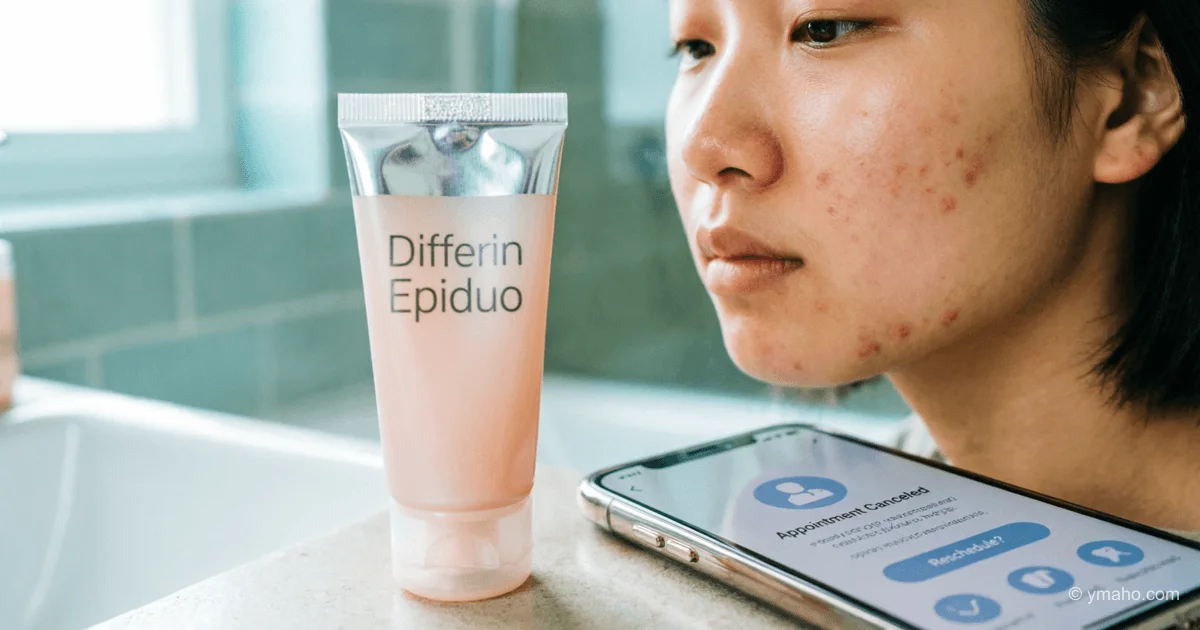
FDA Approves First OTC Differin Epiduo Gel for Acne Treatment
The adapalene and benzoyl peroxide combination is now available without a prescription, offering effective dual action for treating and preventing breakouts in teens and adults.
This is an analytical first-person article written from the perspective of an insider working at the intersection of dermatology business, regulatory affairs, and strategic marketing.
Title: Countdown for Benzoyl and a Closed Door for Generics: Why the FDA Approved Differin Epiduo's OTC Switch Now
Introduction: One Winner, Three Losers
On May 22, 2026, the FDA officially approved the switch of the combination gel Differin Epiduo (adapalene 0.1% + benzoyl peroxide 2.5%) to over-the-counter (OTC) status for individuals aged 12 and older. The media wrote: "Dermatology bestseller now available without a prescription," "Millions of acne patients gain easy access." It sounds like a win for consumers.
As an analyst who has tracked Galderma's and its competitors' portfolio strategies for a decade, I see a very different picture. This decision is not altruism or a drive to expand access. It's a forced move driven by three things: an outdated monoproduct, an overheated telemedicine market, and a desire to "close" the US market to generics before they can emerge.
The most important thing the news doesn't mention: the exact same combination of active ingredients (adapalene + benzoyl peroxide) has been sold in the US as a prescription generic for several years. Now, in May 2026, Galderma has achieved what no generic manufacturer could — securing exclusive OTC status for a combination that is essentially old and well-studied.
Non-Obvious Insight (What Press Releases Don't Say):
Galderma isn't just switching a drug to OTC. They are reshaping the market to kill two birds with one stone.
The first bird is telemedicine services like Curology, Hims & Hers, and Nurx. Over the past five years, these companies built a billion-dollar business by prescribing combination acne medications (including adapalene+benzoyl peroxide) through remote consultations for $25–50 per "prescription." Now that any patient can buy Epiduo at Walmart or Amazon without a prescription, the economic model of these services collapses. Their "unique value proposition" disappears overnight.
The second bird is the regulatory barrier. The FDA requires a massive amount of data on safety for self-administration for OTC drugs. Galderma spent years and millions of dollars on these studies — over ten studies involving more than 3,200 patients. Now, any generic manufacturer wanting to launch their own "adapalene+benzoyl peroxide" OTC product must repeat this entire process from scratch — conduct their own clinical trials under OTC protocols, costing tens of millions and taking 3–5 years. Galderma has created a "legal monopoly" for the next 3–5 years.
1. [The Core]: Why the Switch Happened Now, Not Five Years Ago
Background: Adapalene (alone) switched to OTC back in 2016. Since then, millions of Americans have treated acne with adapalene alone, even though dermatology clinical guidelines clearly state: the combination of a retinoid + benzoyl peroxide is first-line therapy, working significantly better than either component alone.
Why did Galderma wait ten years? The answer lies in money and fear of cannibalization.
Epiduo (prescription version) generated steady revenue from dermatologist visits. Switching to OTC meant losing control over price and sales channels. But in 2024–2025, two events changed the calculus:
- Patent expiration in several jurisdictions. Generic manufacturers had already started launching their versions in some countries. The best defense is to move to OTC in the largest market (US), where generics cannot follow without huge costs.
- Rising popularity of "personalized" dermatology services. Hims & Hers reported a 40% year-over-year revenue increase in its dermatology segment in 2025. Galderma realized it was losing market share not to competing brands, but to services that aggregate prescriptions. OTC status is a way to "cut out the middleman."
2. Timeline and Context: Numbers That Didn't Make the Press Releases
Official data Galderma cited to support the switch:
- 15 years of use by dermatologists, millions of prescriptions worldwide.
- Over 10 proprietary studies involving more than 3,200 patients.
- Clinically significant improvement as early as week 1, antimicrobial activity from day 1.
- 70.3% reduction in inflammatory acne lesions by week 12.
- Sustained reduction of approximately ~65% over 12 months.
But what aren't they saying?
Adapalene is the third retinoid, but not the strongest. Tretinoin (retinoic acid) and tazarotene have more pronounced effects on photoaging and severe acne. However, tretinoin will never go OTC due to teratogenicity and risk of severe irritation. Galderma chose adapalene precisely because it is the safest retinoid — minimal risk for pregnant women, minimal irritation.
This is not a choice of the "most effective" drug. It's a choice of the "safest for OTC use."
3. Who Wins and Who Loses
- Winner (1): Galderma (SIX: GALD). The company's stock will get a short-term boost. Analysts had already factored this switch into their models, but the market may not have fully priced it in. Estimated additional US market potential: approximately $300–400 million in annual revenue by 2028, with the overall Differin market already valued at $1.15 billion by 2026.
- Winner (2): Retail chains (Walmart, Target, Ulta, Amazon). A new category leader in the "dermocosmetics" segment with high margins. Launch in summer 2026 — perfect timing for the back-to-school season.
- Winner (3): Teens and young adults. They gain access to the dermatological standard of care without a doctor's visit, which in the US costs an average of $150–250 without insurance.
- Loser (1): Telemedicine services (Curology, Hims & Hers). Their "unique value proposition" is no longer needed. Dermatology revenue could drop by 20–30% within 12 months.
- Loser (2): Generic manufacturers (Teva, Perrigo, Taro). They cannot launch their combination generics OTC due to the regulatory barrier. Their only channel is prescription, which will shrink.
- Loser (3): Dermatologists. The flow of patients with mild acne will dry up, reducing overall paid visits.
4. What the Media Isn't Saying
- "Without a prescription" does not mean "cheap." Expected retail price: $30–45 per tube, while regular Differin (adapalene only) costs $15–20. This is significantly cheaper than a dermatologist visit ($150+), but more expensive than generics with insurance. In Europe, prescription Epiduo costs around €16 — US patients will pay more.
- "Outside the US, Epiduo remains prescription-only." This is a deliberate strategy — first "capture" the largest market (US), then apply to Europe in 2–3 years, where regulators are much more conservative.
- The benzoyl peroxide problem. This component is unstable and can degrade if stored improperly. Galderma claims their "Simulgel base" solves the issue. But on a real Walmart shelf in summer — I wouldn't be so sure.
- The "black box" problem for consumers. Patients with severe nodulocystic acne requiring isotretinoin may use Epiduo unsuccessfully for six months and develop scars. The FDA deemed the risk low, but it exists.
5. Forecast: Next 30 Days and 90 Days
Next 30 Days (June 2026):
- Hims & Hers (HIMS) and Curology will issue emergency statements to investors. I expect announcements of accelerated launches of new "exclusive" formulas (adding clindamycin, which remains prescription-only, or switching to tretinoin+benzoyl peroxide).
- Analysts will revise Galderma's rating. The current stock price could see a 5–10% increase by the end of June.
Next 90 Days (August–September 2026):
- Sales launch (summer 2026). I expect a massive marketing campaign on TikTok and Instagram with budgets of $50–80 million in the first year.
- Main risk — generic petition. Within 90 days of approval, a major generic manufacturer may file a petition with the FDA requesting permission for their own OTC generic. Probability of success: less than 5%, but the filing itself would create uncertainty and could drag Galderma's stock down by 5–7%.
- Impact on retail chains. I expect Walmart and Target to give Epiduo "premium shelf space" in the skincare segment, next to CeraVe and La Roche-Posay. Dermocosmetics is finally blurring the line between pharmacy and mass market.
Verdict:
The FDA's decision on Differin Epiduo is not a revolution in dermatology (the drug is old and well-studied). It is a revolution in the business model of acne therapy. Galderma shifts decision-making from doctor to consumer while simultaneously cutting off oxygen to telemedicine middlemen.
If you're an investor — consider a long position in Galderma (SIX:GALD). If you're a consumer — great news: an effective treatment becomes more accessible. If you own a telemedicine startup — it's time to urgently find a new business model.
And remember: 70.3% reduction in inflammation is from a clinical trial. In real life with irregular application, it will be less. But it's still better than paying $200 for a dermatologist visit to get the same prescription.
— Editorial Team









