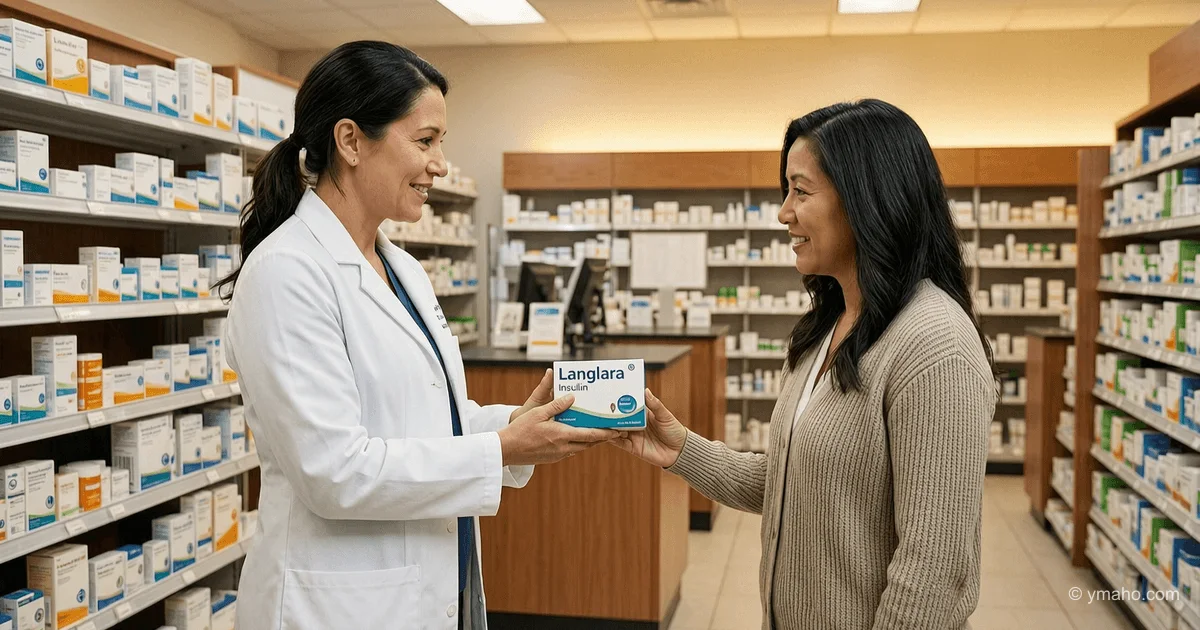
FDA Approves Langlara as Interchangeable Biosimilar to Insulin Glargine
FDA has granted Langlara (insulin glargine-aldy) interchangeable biosimilar status with Lantus. This means it can be substituted for the original product in U.S. pharmacies without physician involvement, potentially expanding patient access to basal insulin therapy.
The Bottom Line: What's Really Happening
On May 5, 2026, the FDA officially designated Langlara (insulin glargine-aldy) as an interchangeable biosimilar to Lantus. Behind this dry regulatory announcement lies a tectonic shift in the U.S. insulin market, valued at over $400 billion annually. Langlara is not just the fourth glargine on the market. It is the first Chinese insulin to receive an interchangeable designation from the FDA. And it is the first time a Chinese biopharmaceutical company has not licensed the molecule to a Western partner but instead entered the U.S. market directly, with its own manufacturing and through exclusive distributor Lannett.
Interchangeable status is not a cosmetic addition. It is a regulatory standard meaning that a pharmacist can substitute a prescribed Lantus with Langlara without calling the doctor. For the patient, this means: walk in with a prescription for Sanofi, walk out with Sunshine Lake. Clinically, there is no difference. Economically, there is—and it is significant.
Timeline and Context
The story of Langlara does not begin in 2026. Sunshine Lake Pharma, the pharmaceutical arm of China's HEC Group, has been investing in insulin development since 2008. Seventeen years of R&D and $280 million (2 billion yuan) in investments—and that was without a guarantee of U.S. market entry. The strategy was built sequentially: first emerging markets—UAE, Algeria, Mali, the Middle East, Latin America, Southeast Asia. Then, once production was ramped up to 100 million vials per year with plans to expand to 180 million, the company submitted its application to the FDA.
A key turning point came in June 2024. The FDA updated its draft guidance on biosimilars, removing the requirement for multiple clinical switching studies to confirm interchangeability. Instead, manufacturers could provide an assessment of why existing comparative analytical and clinical data meet the statutory standard for switching. This decision opened the door for accelerated approvals. Langlara became a direct beneficiary of this policy. The regulatory package included a Phase I glucose clamp study in 104 healthy volunteers, confirming pharmacokinetic and pharmacodynamic comparability with Lantus. The FDA inspected Sunshine Lake's manufacturing facilities in September-October 2025. The result: approval on May 4, 2026.
Who Wins and Who Loses
Winners
Sunshine Lake Pharma and HEC Group. The company secured an exclusive distribution contract with Lannett, with a guaranteed initial order of at least 18 million vials over 18 months. This ensures immediate revenue and market validation. FDA approval will also accelerate registration in Brazil, Argentina, Indonesia, and Turkey—countries where FDA approval is seen as the gold standard and shortens local regulatory procedures.
Lannett Company. CEO Tim Crew stated: "Often the biggest barrier for patients with diabetes is the cost or availability of the medication itself. With the launch of Langlara, patients will gain expanded access to a safe, affordable, and accessible treatment option." Lannett created a subsidiary, Lanexa Biologics, specifically to commercialize Langlara—and this entity is poised to become independent after Lannett's planned acquisition by Aurobindo Pharma. Beyond glargine, Lannett and Sunshine Lake are already developing rapid-acting insulin aspart.
Pharmacists in states allowing automatic substitution. The interchangeable designation gives them the right to substitute Lantus with Langlara without prescriber intervention, provided the state permits it. This positions the pharmacist as an active player in managing therapy costs.
Uninsured and underinsured diabetes patients in the U.S. Although Langlara's price has not yet been announced, the presence of a fourth player with large-scale Chinese manufacturing inevitably drives prices down. The logic is simple: production costs in China at such volumes are significantly lower than at Sanofi.
Losers
Sanofi. Lantus has been a long-standing cash cow. A fourth biosimilar, especially one with interchangeable status and aggressive pricing, will accelerate market share erosion. Sanofi is already under pressure to lower insulin prices in the U.S.—Langlara adds competitive, not just political, pressure.
Novo Nordisk and Eli Lilly also lose. Their own glargine biosimilars face a competitor that can undercut prices, leveraging world-class manufacturing capacity and HEC Group's capitalization.
Manufacturers without interchangeable status. Not all glargine biosimilars are interchangeable. Those lacking this status cannot be automatically substituted at the pharmacy. Langlara gains a structural advantage that directly translates into market share.
What the Media Isn't Saying
Insight #1: The FDA's 2024 decision to drop switching studies was not a technical adjustment but a strategic shift favoring emerging markets. Eliminating the requirement for repeated clinical switching studies lowered the entry barrier by approximately $50-100 million per application. This is a deliberate policy to attract manufacturers from China and India who have scale but are not willing to invest in costly switching trials. Langlara is the first major result of this policy. Others will follow: Tonghua Dongbao has already filed for insulin aspart, and Gan & Lee for insulin lispro.
Insight #2: Lannett is not just a distributor; it is a company in the process of being acquired by Aurobindo Pharma, which changes the entire picture. Aurobindo is an Indian pharma giant with biosimilar ambitions. The deal structure is such that Lanexa Biologics will become an independent entity after the acquisition. In effect, Sunshine Lake gains access to a U.S. distribution network built on Aurobindo's money without purchasing its own infrastructure. This is an asset-light market entry model that no Chinese biotech has used for biosimilars in the U.S. before.
Insight #3: The initial order of 18 million vials is not a commercial forecast but a minimum guaranteed volume that Lannett must purchase over 18 months. This number does not mean the market will absorb 18 million vials. It is Sunshine Lake's insurance against a failed launch: Lannett is financially motivated to ensure formulary placement and commercial success. If the product does not take off, Lannett still pays. This flips the standard risk model in biosimilars, where the manufacturer typically bears commercial risks.
Forecast: Next 30 Days and 90 Days
30 Days (by June 6, 2026)
Lannett will announce Langlara's wholesale price. Analysts expect a 30-50% discount to Lantus's current price. Given that the global insulin glargine market is valued at nearly $10 billion, with the U.S. accounting for over 60% of that volume, every percentage point of discount translates into tens of millions of dollars in potential healthcare savings. Pharmacy Benefit Managers (PBMs) will begin reviewing formularies, and Langlara has a chance for rapid placement given its interchangeable status.
Competitors—Sanofi, Novo Nordisk, Eli Lilly—will ramp up defensive measures. Additional rebate programs to maintain formulary positions are possible. Sanofi may accelerate promotion of Toujeo (glargine 300 U/mL) as a differentiated product that cannot be substituted.
Chinese business media have already called the approval a "historic breakthrough"—"国产胰岛素首破美国市场". This will trigger a wave of pride and speculation about the next Chinese biopharma approvals in the U.S. HEC Group's shares on the Hong Kong Stock Exchange will rise.
90 Days (by August 5, 2026)
The first commercial batches of Langlara will reach U.S. pharmacies. The key test will be formulary placement with the three largest PBMs: Express Scripts, CVS Caremark, and OptumRx. If Langlara is included as a preferred brand by August, Lannett will report a strong start.
Sunshine Lake will begin preparing its submission for insulin aspart in the U.S., with a decision expected by 2028. Given the accelerated track for glargine, aspart may receive priority review.
The FDA will release updated statistics on interchangeable biosimilar approvals. Langlara will serve as a case study demonstrating the effectiveness of the new policy. Expect at least two to three Chinese companies to announce pre-IND meetings for insulins by year-end.
A critical moment will be the reaction of the U.S. Congress. Insulin pricing has been a hot topic on Capitol Hill. If Langlara truly reduces the average prescription price for glargine by 30% or more, it will become an argument against forced price regulation—the market solved the problem through competition. If the reduction is insignificant, the argument that "the market doesn't work" will strengthen, and pressure on the entire sector will increase.
The fourth glargine on the market is not about a clinical breakthrough. It is about a fundamental reconfiguration of global biosimilar supply chains. Sunshine Lake has shown that a Chinese manufacturer can meet FDA standards and compete with Sanofi on its home turf. With aspart and degludec following Langlara, the Big Three's monopoly on the U.S. insulin market will cease to exist.
— Editorial Team









