FDA Approves Expansion of Avastin Biosimilar Production for Global Supply
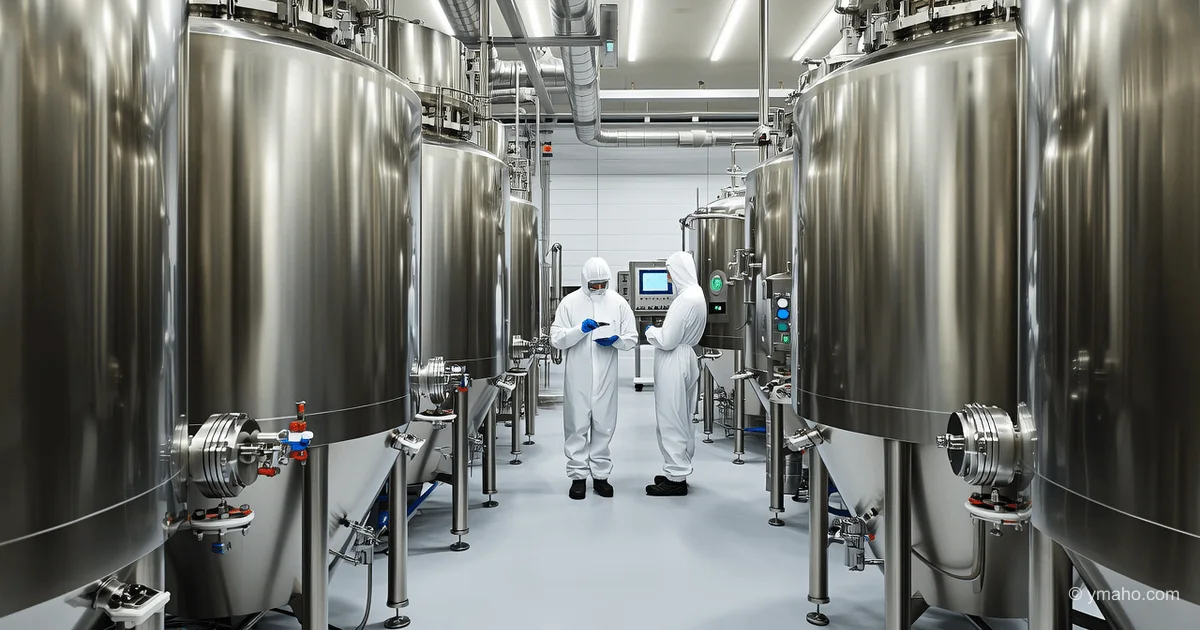
The US FDA has approved a supplemental application for a manufacturing process change for the drug Avzivi (bevacizumab), including the use of new 4,000-liter bioreactors. This decision will significantly increase production capacity for the colorectal cancer treatment and ensure stable global supply.
As someone who has watched the battle between original biologics and biosimilars from inside the industry for the past seven years, let me say this: the FDA just pulled the trigger on a price war that will reshape the oncology market worth $2.42 billion USD by 2030. The approval of Avzivi's production expansion is not a technical formality but a strategic blow to Roche's monopoly, disguised as a routine regulatory decision.
The Core: What's Really Happening
The average person sees a headline: "FDA approves increased production of a cancer drug." That's true, but it's just the wrapper. The real revolution is that Bio-Thera Solutions got the green light to use 4,000-liter bioreactors for bevacizumab production. For the uninitiated: 4,000 liters is an industrial scale that drops the cost per dose to a level where Roche physically cannot compete without dumping below profitability.
The key non-obvious issue is the "tyranny of quality metrics" when scaling biosimilars. When you move from a 2,000-liter bioreactor to a 4,000-liter one, cell growth curves, oxygenation, and antibody glycosylation change unpredictably. Avzivi must not just be "similar" to Avastin—it must be statistically indistinguishable in protein structure. By approving this application, the FDA essentially confirmed that Bio-Thera Sciences has fully decoded and replicated Roche's "secret sauce." This is a defeat for the originator because the manufacturing process is the main intellectual property that cannot be protected by molecule patents.
Timeline and Context
This story didn't start yesterday, and it's much messier than press releases suggest:
- December 2023: The FDA first approves Avzivi (bevacizumab-tnjn) from Bio-Thera Solutions. This was the first Avastin biosimilar from a Chinese manufacturer, and it was met with considerable skepticism. Production capacity at the time was modest—a niche player for emerging markets.
- July 2024: The EMA approves Avzivi for the European market. Europe, with its tender system and aggressive price pressure, became the first battleground where Bio-Thera's bevacizumab began eating into Roche's share.
- 2025: The bevacizumab biosimilar market reaches $1.64 billion USD. This is no longer a niche segment but mainstream. NHS England reports 354,820 new cancer cases in 2023—an increase of 8,605 cases. Demand for cheap bevacizumab skyrockets.
- May 11, 2026: The FDA approves a supplemental application for process change and scale-up to 4,000-liter bioreactors. This is the moment Bio-Thera transforms from "just another generic" into a global heavyweight.
Who Wins and Who Loses
Winners:
- Bio-Thera Solutions (688177): This is the obvious winner. With this approval, they become a key global supplier. Their portfolio—adalimumab, tocilizumab, ustekinumab, bevacizumab—covers nearly the entire spectrum of expensive monoclonal antibodies.
- Medicare and Insurance Companies: The annual cost of original Avastin can reach $100,000 USD. Biosimilars cut that by 30-40%. When a powerful player with industrial scale enters the market, savings for the healthcare system amount to hundreds of millions USD.
- Cancer Patients in Africa and Southeast Asia: Bevacizumab was previously an unattainable luxury for them. Bio-Thera, with FDA and EMA certification, can supply the drug through WHO and UNICEF channels, radically changing the colorectal cancer treatment landscape in these regions.
Losers:
- Roche (F. Hoffmann-La Roche Ltd): Avastin was their cash cow for decades. Now they face price competition not from a small generic but from a manufacturer capable of flooding the market with pharmacopoeial-quality product at near-cost prices. Tariff wars, which analysts say increase costs for imported raw materials, could work against Roche in their home US market.
- Indian Manufacturers (Biocon, Cipla, Dr. Reddy's): They are also betting on bevacizumab, but a Chinese competitor with an "American quality stamp" and giant reactors creates pressure they didn't expect so soon.
What the Media Isn't Saying
The most non-obvious insight is the "leaky bucket effect" in the supply chain. Formally, the drug is registered in the US, Europe, China, and Brazil. But the reality of global monoclonal antibody logistics is a cold chain nightmare. To deliver Avzivi from Guangzhou to a hospital in Nigeria or Paraguay requires infrastructure that Bio-Thera simply doesn't have. So behind the nice headline "global supply" lies the fact that the real beneficiaries of the growth will be logistics giants like DHL Life Sciences and cold chain aggregators.
The second point is a patent time bomb. The FDA approval for Bio-Thera was obtained through procedure aBL 761198. This means they bypassed some patent disputes through legal loopholes in the Hatch-Waxman Act. Roche hasn't given up. I expect that in the coming weeks, they will initiate a new wave of lawsuits over purification and formulation method patents, trying to block the import of this specific "scaled" product into the US, citing process differences from the originally approved one.
Forecast: Next 30 and 90 Days
First 30 days (until mid-June 2026):
A "quiet panic" will begin in oncology clinic supply chains. Hospital networks like HCA Healthcare will start renegotiating bevacizumab procurement contracts, demanding 50-60% discounts from Roche, threatening a full switch to Avzivi. Roche will be forced to agree, losing margin. Meanwhile, Bio-Thera's shares on the Shanghai Stock Exchange will rise, and analysts will start raising target prices.
Next 90 days (until September 2026):
I expect an announcement of a strategic partnership between Bio-Thera and one of the US distributors (e.g., McKesson or AmerisourceBergen) for direct Avzivi supply to US retail networks. The next step will be expansion into Japan and South Korea. The key question is whether Bio-Thera can fill its 4,000-liter capacity with real orders before Roche plays its "patent trump cards." If they do, the bevacizumab market will be reshaped forever. If not, frozen product worth hundreds of millions USD will pile up in Guangzhou warehouses, and shareholders will start asking uncomfortable questions. Either way, the era of $100,000 price tags for a year's course of VEGF inhibitor is over.
— Editorial Team









