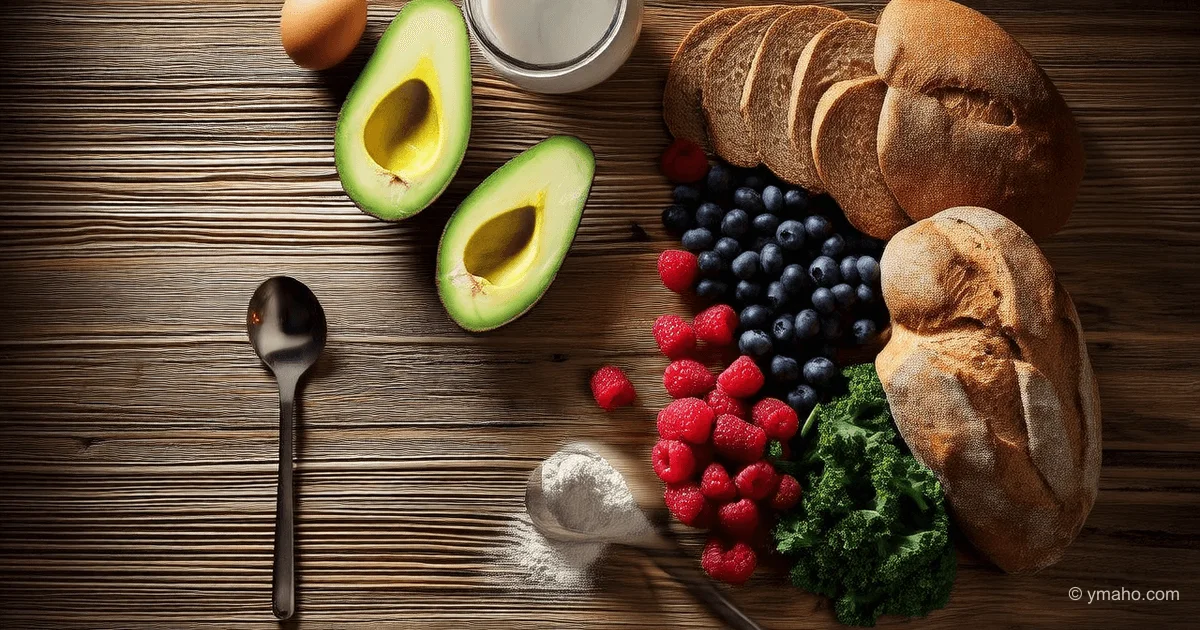
Dietary Turnaround: Fiber and Carbohydrates Reclaim Ground from Protein
The obsession with protein supplements is fading — experts advise against overpaying for the "protein needle" and instead recommend focusing on quality carbohydrates and whole foods. "Fibermaxxing" is giving way to a calm, no-extremes approach to gut health.
Protein Takes a Back Seat. Fiber and Carbohydrates Take Over the Plate — and It's Not a Temporary Glitch
The protein supplement market is still growing — $6.90 billion in 2025, $7.25 billion in 2026, $9.54 billion by 2032. But the numbers no longer tell the main story. The real story is happening in consumers' minds, who are tired of the "protein needle" and have switched to what was long considered the enemy: carbohydrates and fiber. Natural Products Expo West 2026 clearly marked the turning point: "If 2025 was the year of protein, then 2026 is definitely the year of fiber."
"Fibermaxxing" — the Word You'll Be Hearing Everywhere
The term fibermaxxing has rapidly entered the lexicon of food technologists. In February 2026, Foodology by Univar Solutions ranked it alongside the GLP-1 movement and AI formulation as a trend defining the year. The concept is simple: consumers are chasing not extra grams of protein, but dietary fiber. Nearly 70% of global consumers cite fiber as the top nutrient they want to add to their diet.
But fibermaxxing is not just a fad for "more bran." Comet, a key player in the prebiotic market, clarifies: fiber is no longer a commodity. It is a functional, physiological, and deeply personal tool. Different fibers do different things: some feed bacteria, others improve bread texture, others reduce inflammation. Consumers are beginning to understand this — and they demand ingredients that work, not just fill the "fiber" line on the label.
GLP-1 Rewrote the Rules: Smaller Portions, Tougher Requirements
A major driver of this shift is the widespread use of drugs like Ozempic and Mounjaro. Danielle Miley from Univar Solutions puts it bluntly: "GLP-1 reduces portion sizes but raises the bar for nutritional density." People on these drugs eat less — and every bite must count. Empty calories and protein bars with sugar alcohols no longer pass muster.
Hence the explosive demand for products rich in fiber and quality carbohydrates. They provide satiety without excess caloric density, feed the microbiome, and avoid glucose spikes that GLP-1s are designed to smooth out. Manufacturers are responding: fiber and probiotics are moving from a "nice-to-have" niche to the center of purchase decisions, especially among younger buyers.
Carbohydrates Rehabilitated: Science on Bones and Glycogen
At the same time, the demonization of carbohydrates is crumbling. A meta-analysis of 31 studies published in the Journal of Applied Physiology in January 2026 showed that carbohydrate intake during prolonged exercise reduces net muscle glycogen use. The effect is modest — saving about 24 mmol/kg dry weight over 100 minutes of exercise — but statistically significant and physiologically meaningful for repeated bouts.
Even more striking are data on bone metabolism. A study published in Performance Nutrition in April 2026 compared low and adequate carbohydrate intake during recovery from fasted aerobic exercise. The result is clear: adequate carbohydrates (6 g/kg per day) reduce markers of bone resorption and increase markers of bone formation. A low-carb regimen produces the opposite picture — bone breaks down faster than it builds.
For runners, CrossFitters, and military personnel training fasted, this is not theory. It's the difference between a stress fracture and a healthy skeleton. Carbohydrates have turned from enemy to insurance.
What's Happening with Recommendations: Protein Under Fire
The new Dietary Guidelines for Americans, released by the Trump administration in January 2026, turned the food pyramid upside down. Protein and fats are at the base, while whole grains are at the top. But the professional community's reaction has been harsh.
Mary Ellen Camire, professor of food science at the University of Maine, warned that most older Americans don't even meet 0.8 g/kg of protein, yet the new guidelines recommend nearly double — 1.2–1.6 g/kg. For many, this is financially out of reach. Brendan Nimiery from IFT added that the new guidelines "explicitly state they excluded any assessment of equity, accessibility, and affordability." Traditional dietary guidelines have turned into a political document disconnected from reality.
Meanwhile, Brandy Ruth, a renal dietitian, told Medscape that the protein recommendations are "too vague for real-world application" and pose risks for people with undiagnosed kidney failure. Against this backdrop, the return of carbohydrates and fiber looks not just like a trendy turn, but a pragmatic solution: whole foods, legumes, and grains are affordable and don't require $50 tubs of powder.
Who Wins and Who Loses in This Turnaround
Winners are manufacturers of functional fiber. Comet noted at Expo West 2026: nearly two-thirds of consumers want prebiotic fiber in baked goods and bars, and only 20% in powder form. People don't want another supplement. They want to make healthier swaps of foods they already eat. Brands like Gutzy (drinkable prebiotic pouches) and Flax4Life (flaxseed-based baked goods) are already capturing this niche.
Winners are whole food producers: legumes, whole-grain bread, fermented vegetables. Nutritionist Yulia Zhakotova notes: "People have stopped torturing themselves with restrictions, adopting the 80/20 rule. Food is no longer the enemy."
Losers are protein powder brands that built their marketing on fear of carbohydrates. The protein supplement market will continue to grow — inertia is huge — but its cultural hegemony is undermined. Consumers have learned: excess protein without fiber rots in the gut, causes constipation and inflammation. Supplements that offer nothing but grams of protein per dollar lose their "healthy choice" halo.
Losers are ultra-processed foods with emulsifiers and modified starches. They are accused of destroying the microbiome and disrupting satiety signals. The trend toward calorie quality over quantity hits the center of this category.
What's Next: 2027–2030
The forecast for the rest of the decade: fiber becomes what protein was in 2015–2025: a universal marker of a "healthy product." But with one difference. Protein was added to everything — from ice cream to chips — often without regard for quality. That won't work with fiber. Different fibers have different tolerances, different effects on the microbiome, and different digestibility. Comet warns: a sudden jump from low intake to the recommended 25–38 grams per day can overload the gut and cause discomfort.
Brands that offer a variety of fiber types, transparency about sources, and integration into everyday products — bread, pasta, drinks, bars — will win. Functional carbohydrates — resistant starches, inulin, oligofructose — will be listed on labels with the same pride as protein content is now.
The GLP-1 revolution will continue to shrink portion sizes and raise satiety requirements. The food industry will respond with products that satiate faster, feed bacteria, and don't trigger inflammation. Protein isn't going anywhere — it remains a critical nutrient for an aging population. But its crown as the "primary macronutrient" is fading. The trend of 2026 is not a war on protein. It's a restoration of balance after a decade of imbalance. The plate is becoming more complex, more diverse, and — oddly enough — closer to what our grandmothers ate. Only now with scientific backing and convenient packaging.
— Editorial Team









