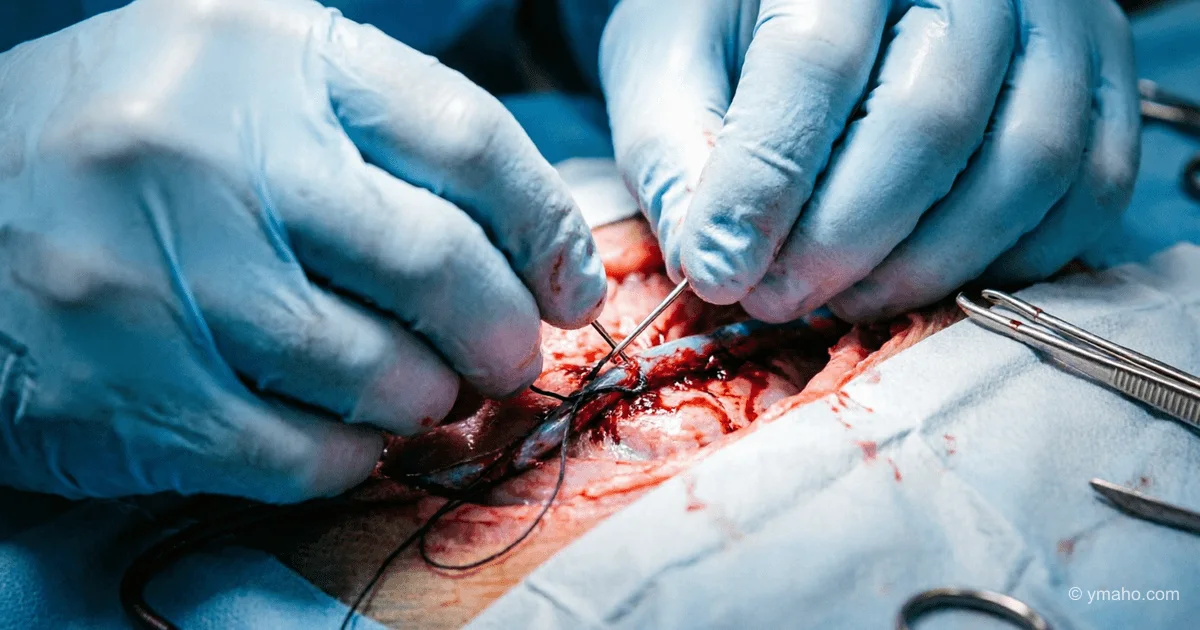
World's First Human Bladder Transplant Performed
Surgeons in the US successfully transplanted a bladder along with a kidney into a 41-year-old man during an eight-hour operation. This is the first such surgery as part of a pilot clinical trial, giving the patient the ability to urinate normally for the first time in seven years.
This is an analysis of the situation. It is not a retelling of the news event, but an attempt to assess the scale of the consequences of an operation that moves bladder transplantation from experimental surgery into the realm of clinical reality.
The Essence: What Is Really Happening
What happened in the operating room in the US is not just a technical trick. It is proof of a concept that transplantologists have dreamed of for decades. Formally, we are seeing a transplant of a vascularized composite allograft (VCA)—an organ consisting of different tissues. Until now, humanity could transplant kidneys, livers, hearts, but the bladder was hindered by extremely complex microcirculation and innervation. The success of this eight-hour operation means surgeons have found a reproducible method for suturing the small pelvic vessels of the donor and recipient.
The real medical sensation is not that the bladder took, but that it began to function—to fill and empty. This indicates restoration of detrusor-sphincter coordination, which until recently was considered nearly impossible due to problems with nerve reinnervation. If the pilot study confirms reproducibility, it will overturn the forty-year history of orthotopic neobladders made from bowel and radically change the quality of life for patients with end-stage bladder diseases.
Timeline and Context
This operation did not come out of nowhere. Since 2008, the Kato group at the University of Miami has been developing the "bladder patch" technique—transplanting a fragment of a donor bladder along with a kidney for patients with microcystis. Their method involved using part of the donor bladder trigone to increase the volume of the recipient's native bladder. Seventeen-year follow-ups confirmed the viability of this approach: the transplanted segment maintains viable mucosa, and the native bladder stretches over time.
However, now surgeons have gone fundamentally further—from fragmentary augmentation to complete orthotopic transplantation. The key difference: a whole organ is transplanted, not a patch. On ClinicalTrials.gov, this study is registered as a Phase 0 First-in-human Study with planned patient enrollment until 2027.
Context is also important because alternatives to transplantation—enterocystoplasty (forming a bladder from the ileum)—are associated with lifelong complications: hyperchloremic metabolic acidosis, mucus production, stone formation, infections, and worst of all, malignant transformation of the urothelium after 15-20 years.
Who Wins and Who Loses
Winners are immunosuppressant manufacturers. A patient with a transplanted bladder is a lifelong consumer of tacrolimus and mycophenolate mofetil. According to the study protocol, the immunosuppressive regimen includes tacrolimus at an initial dose of 0.1–0.2 mg/kg/day, mycophenolate mofetil, and corticosteroids. For pharmaceutical companies (Astellas, Sandoz), each such patient guarantees $12,000–$18,000 per year just for basic immunosuppression, not counting complication therapy.
Winners are transplant centers seeking to expand their surgical portfolio. The first successful program will become an anchor for attracting hundreds of millions of dollars in funding.
Losers are biotech companies that invested in bladder tissue engineering. Decades of promises to grow a bladder from stem cells on a collagen scaffold lose appeal against a reproducible surgical technique. Investors will start asking uncomfortable questions: why wait for a breakthrough in regenerative medicine when you can transplant a ready-made organ here and now?
Losers are urologists whose practice is built on enterocystoplasty. If the full transplant technique becomes routine, the need for bowel augmentation will sharply decrease.
What the Media Isn't Saying
Most headlines report the "first bladder transplant," but this is inaccurate. The first transplant of a fragment of the bladder was performed by Kato back in 2008. Now we are talking specifically about the first complete orthotopic transplant.
Non-obvious insight: The vascularization of the graft is likely achieved not only by suturing the main arteries. Based on indirect data on en bloc transplant techniques, surgeons may have used ureteral vessels as an additional blood supply source. This means the viability of the graft critically depends on the preservation of the donor's ureteral vascular network. If this network is disrupted during explantation, necrosis of the bladder wall is inevitable. This is a bottleneck limiting the scalability of the technology.
Another important point is neurogenic control. The media omits that emptying the transplanted bladder will likely require lifelong clean intermittent catheterization. The study protocol explicitly requires patients to demonstrate self-catheterization skills before surgery. This means that full restoration of innervation is not to be expected—urinary continence is maintained by the passive sphincter mechanism, and emptying is artificial.
Forecast: Next 30 Days and 90 Days
30 days (by June 18, 2026): The research team will publish a detailed protocol with video materials of the operation in one of the surgical journals (likely American Journal of Transplantation or Transplantation). This will trigger a flurry of requests from leading transplant centers—Johns Hopkins, Cleveland Clinic, Mayo Clinic—for inter-center collaboration. The FDA will likely extend expanded access status for 3–5 additional patients.
90 days (by August 19, 2026): Negotiations will begin to create a consortium of transplant centers for Phase I/II. The key question that will arise: compatibility with multivisceral transplant protocols. If the bladder can be included in a "kidney-pancreas-bladder" package for patients with diabetic nephropathy and neurogenic bladder, a market of $450–600 million per year will open.
However, there is also a cautious scenario. If within 90 days acute rejection of grade 2A–2B on the Banff scale develops (similar to other VCA transplants), it could slow the program. Close attention will be paid to renal function: tacrolimus is nephrotoxic, and in a patient with combined kidney and bladder transplant, the balance between immunosuppression and preserving renal function will become critical. The results of three-month follow-up will determine the fate of the entire direction for a decade.
— Editorial Team









