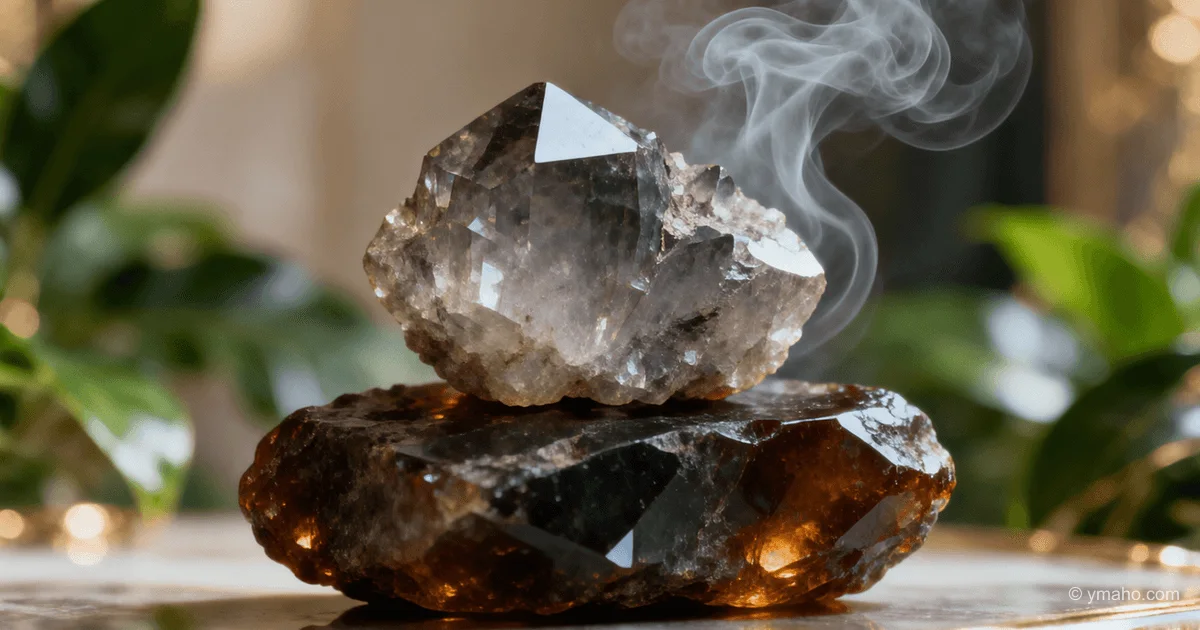
Dolce&Gabbana and Beyond: The Main Fragrance Launches of May with a Focus on Tactility
May launches bring a return to sensual luxury: D&G presents 'Mineral Smoke and Amber,' while Jo Malone London releases the brand's first-ever limited-edition home collections. In skincare, the emphasis is on complex niche notes and rituals.
Essence: What's Really Happening
Dolce&Gabbana with 'Mineral Smoke and Amber' and Jo Malone with limited-edition home lines are not just two May launches. They represent a coordinated response from the luxury segment to a tectonic shift in perfumery: the market is moving from 'nice smell' to 'emotional experience.' Mintel already outlined this framework in February 2026—'from longevity to emotional value.' Jo Malone and D&G are bringing it to the shelf.
Insider Insight: 'Tactility' in perfumery is code for 'we're taking the audience that the gourmand trend disappointed.' After three years of dominance by vanilla, caramel, and 'edible' notes, consumers are tired. Sweet scents no longer signal luxury—they signal mass market. The luxury players' response: shifting from an olfactory language to a tactile one. 'Mineral Smoke' cannot be eaten. It can only be felt on the skin. This is a fundamentally different neurophysiological anchor—and it's what will be sold for the next 12 months.
Timeline and Context
January 2026. Forbes publishes an analysis of postmodern fragrances: the niche market was valued at $3.8 billion in 2024, with a forecast of $7.6 billion by 2032 (CAGR 9.1%). Pinterest names 'Scent Stacking' among its 21 Predicts trends for 2026—searches for 'niche perfume collection' are up 500%, and 'perfume layering combinations' up 125%.
February 2026. Mintel, in its The Future of Fragrance webinar, states that a luxury price tag no longer defines luxury. Craftsmanship, heritage, and ingredient quality are required. Jo Malone prepares the launch of English Pear & Sweet Pea—released March 1.
April 2026. A fundamental shift is recorded in the market: PerfumeDirect.com reports a decline in traditional floral fragrances, while green and fresh compositions have grown 28% year-over-year, and searches for 'fresh' and 'clean' are up 45%. Statistics confirm: Statista forecasts the global fragrance market at £48.4 billion in 2026, with an average annual growth of 3.04%.
May 2026. Trigger events. D&G announces 'Mineral Smoke and Amber'—a manifesto of tactile luxury. Jo Malone London, for the first time in brand history, releases limited-edition home lines, entering the experiential luxury territory with English pear and the Jagger sisters duo as ambassadors. Vogue Australia publishes a piece on the Mother's Day collection on May 8, emphasizing that fragrance has moved beyond the bottle into home fragrance and hair mist.
May 9, 2026. We are here. Two launches set the tone for the luxury segment for the entire season.
Who Wins and Who Loses
Winners:
- Dolce&Gabbana Beauty. Gains first-mover status in 'mineral tactility'—a niche with no other big names yet. If the fragrance takes off, the brand will stake out the territory for 2–3 years ahead.
- Jo Malone London. The leap into home fragrance opens the experiential luxury segment: candles, room sprays, hair mist with argan oil and provitamin B5—the product line transforms into a ritual ecosystem.
- Niche segment retailers. Dover Street Parfums Market, Stéle, and independent boutiques in smaller US cities (Denver, Nashville, Las Vegas) attract an audience disillusioned with department stores.
- Mintel and analytics agencies. Their February forecast on 'emotional value' materializes in real launches—now everyone will want such analysis.
Losers:
- Gourmand mainstream. Vanilla, caramel, and 'edible' notes lose premium status. This is not the death of gourmand—it's its migration to mass market. Luxury hands over gourmand codes to Zara and H&M and moves into mineral, smoky, and tactile territories.
- Traditional department stores. Carlos Huber, founder of Arquiste, states bluntly: 'The department store is no longer a place to launch a fragrance.' Liberty with Beauty Pie is the exception that proves the rule. Perfume luxury is leaking into niche boutiques.
- Old-school floral fragrances. PerfumeDirect.com notes: traditional powdery florals are declining. Demand for 'green' and 'fresh' has grown 28% and 45%, respectively. Brands that haven't reimagined florals through greens, citrus, and airiness lose relevance.
- Mid-tier luxury. In a world where the niche market grows 9.1% annually (Intel Market Research), brands without a clear artisanal story or unique ingredient find themselves squeezed between niche and mass market.
What the Media Aren't Saying
1. The clash between 'tactility' and 'freshness' is a battle for the same shelf space.
Media present the May launches from D&G and the trend toward green fresh compositions as two separate stories. In reality, it's one war: both 'Mineral Smoke' and fresh citrus-green scents target the same consumer demand—'tired of sweet, want purity.' The difference is strategy: D&G chooses tactile minerality, while the rest of the market goes green. Whoever wins will dominate the luxury segment for the next 2–3 years.
2. Jo Malone is turning perfumery into hair and home rituals—this isn't a collaboration, it's a redrawing of boundaries.
The launch of hair mist with argan oil and provitamin B5 in the Mother's Day collection means Jo Malone is entering the haircare territory. And the home line enters interior design territory. The brand is no longer a 'perfume house' but an 'olfactory lifestyle provider.' No competitor has yet formulated a response to this move.
3. Jo Malone's 'limited edition' is scarcity economics, not a creative strategy.
The first-ever limited-edition home lines signal: Jo Malone is testing an artificial scarcity model. If it works, the brand will shift a significant portion of its portfolio to a drop model. This fundamentally changes business metrics: customer lifetime value is calculated not through repeat purchases of one bottle, but through the hunt for drops.
4. PerfumeDirect's statistics are an electoral map of the luxury market.
The 28% growth in green and fresh compositions and 45% increase in searches for 'clean perfumes' are not just a trend. This data allows predicting which brands will win over the next 12 months. Companies investing now in greens, citrus, and airy chords will reap the rewards by 2027. Those still releasing classic florals and vanilla gourmands will lose market share at a rate comparable to the obsolescence of their molecules.
Forecast: Next 30 Days and 90 Days
30 days (by June 8, 2026)
D&G will roll out a massive sampling campaign for 'Mineral Smoke'—betting on tactile contact: testers applied to skin, not blotters. Jo Malone will announce an expansion of the home line to new scents—English pear proved the model, now it's being scaled. A major niche retailer (Dover Street or Luckyscent) will launch a 'Tactile Luxury' shelf, uniting mineral, smoky, and green scents in one narrative. Pinterest will record a new surge in searches for 'mineral perfume' and 'skin scent luxury,' up 30-40% compared to April.
90 days (by August 7, 2026)
Summer launches will confirm the shift: greens, citrus, and mineral chords will account for up to 60% of new luxury releases. Gourmand scents will finally transition to 'browned, bitter, lactonic' formats—nuts, alcoholic notes, fermented chords instead of vanilla. The first major collaboration between a perfume brand and a hair or home brand, following Jo Malone's model, will occur—most likely within the Estée Lauder Companies portfolio. Niche segment consolidation will accelerate: L'Oréal or ELC will announce the acquisition of an Asian niche brand, continuing the trend of perfume globalization. The key: by August, it will become clear whether D&G's 'tactile minerality' has passed the commercial viability test or remains a beautiful art story without market follow-through.
— Editorial Team









