The Era of 'Functional Longevity': Why Anti-Aging Creams Are Losing Their Meaning
The wellness world is shifting its focus from smoothing wrinkles to maintaining mobility and mental clarity into old age. Instead of 'treating' age, people are mass-choosing balance training and cognitive health, considering it the new luxury.
Your grandma is squatting 50 kg, and that scares luxury brands more than any recession
The anti-aging market reached $67.71 billion in 2026, but alongside it, another quieter and more disruptive giant is rapidly growing—the functional longevity economy. Balance training, robotic rehabilitation, and cognitive simulators are no longer seen as the domain of post-stroke patients. They have become status markers for those who don't want to lie in a coffin with a perfectly taut oval face. The war on wrinkles has lost to the battle for the ability to get up off the floor independently at 85.
Anti-aging is dead, long live the ability to carry groceries
The Global Wellness Institute states the shift without equivocation: 'functional longevity' is officially replacing anti-aging rhetoric. Adults over 50 are massively switching from buying serums to preserving muscle mass and mobility. For them, shortness of breath on the stairs is scarier than crow's feet. This trend is not a niche biohacker fad but a tectonic shift. Wellness developers are already designing residential complexes to encourage residents to squat and stretch rather than seek the nearest elevator.
The beauty industry, which spent decades instilling insecurities, finds itself in a perfect storm. The generation that paid for fillers is now choosing balance platform training. The reason is pragmatically cynical: UK data for 2026 shows that the average person risks spending 17-20 years of life in a state of painful frailty. Functional training is insurance against this hell.
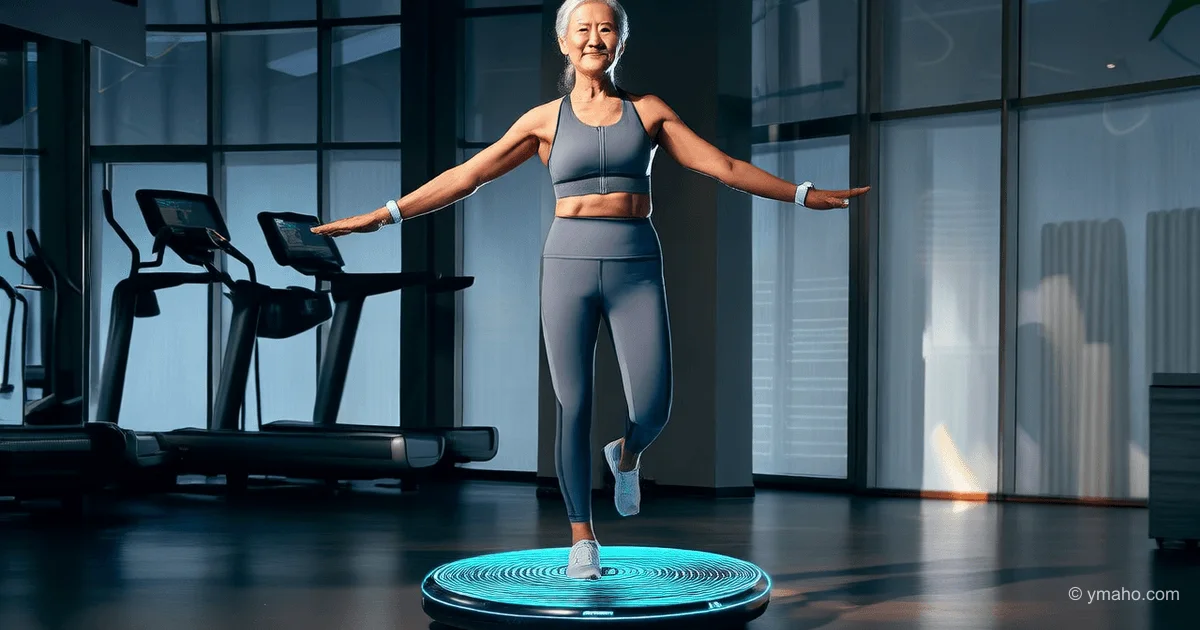
Balance training as the new luxury and a $1.6 billion market
The numbers confirm the shift. The global balance rehabilitation training market is valued at $1.6 billion in 2026 and is projected to surge to $2.48 billion by 2030. Robotic systems for coordination recovery show even wilder dynamics: from $1.75 billion to a projected $3.25 billion. This is no longer hospital equipment—it's wellness infrastructure for healthy people.
Companies like Denmark's Interacoustics launched VR platforms for vestibular rehabilitation in September 2024. American Aretech LLC rolled out the ZeroG 3D system, which supports patients weighing up to 200 kg during walking in any direction. The idea of 'mobility as luxury' has ceased to be a metaphor—it's now a high-tech product with a subscription and telemetry.
Cognitive health moves from the therapist's office to the gym
A parallel shift is the mainstreaming of cognitive training. The Global Wellness Institute notes that adults 50+ perceive brain health not as a passive given but as an asset to be enhanced through learning, creativity, and social contact. Loneliness is classified as a preventable risk factor for dementia. AI tools already predict cognitive shifts years before symptoms.
Peter Attia, one of the leading ideologues of the healthspan movement, places exercise above any supplements: strength training and cardio affect glucose homeostasis and brain vascular health more than all nootropics combined. This undermines the foundation of the multi-billion-dollar 'memory pill' market.
Who loses everything: luxury creams vs. gravity
Classic anti-aging cosmetic brands are losing. Their 'fight against age' rhetoric is perceived by young consumers as archaic and toxic. The new consumer doesn't want to 'fix' aging—they want to slow its mechanisms. The term 'inflammaging'—chronic low-grade inflammation—has replaced talk of wrinkles.
Analysts note that while the anti-aging product market is still growing to $92.58 billion by 2030, its face is changing. Consumers demand preventive solutions, not masking consequences. Creams that promise only 'radiance' lose to formulas targeting barrier protection and cellular resilience. Meanwhile, the luxury segment is losing its monopoly on 'anti-aging'—it is being replaced by functional training as the new status symbol.
Forecast: gym as clinic, clinic as wellness hotel
By 2030, the line between fitness and geriatrics will disappear. Sensory platforms, VR balance training, and AI gait coaches will move from rehab centers to luxury fitness clubs and residential complexes. 'Mobility as a service' will become a subscription model: regular screening of gait, strength patterns, and cognitive metrics will cost more than a premium spa membership.
For the beauty industry, the moment of truth is coming. Brands will either have to prove their creams' impact on deep cellular function or admit they are part of decorative cosmetics. The winner will be the one who packages mitochondrial health in a jar and sells it next to dumbbells. The stake is not a wrinkle-free face, but the ability to walk the dog independently at 90. And that scares L'Oréal more than any tariffs on retinol.
— Editorial Team









