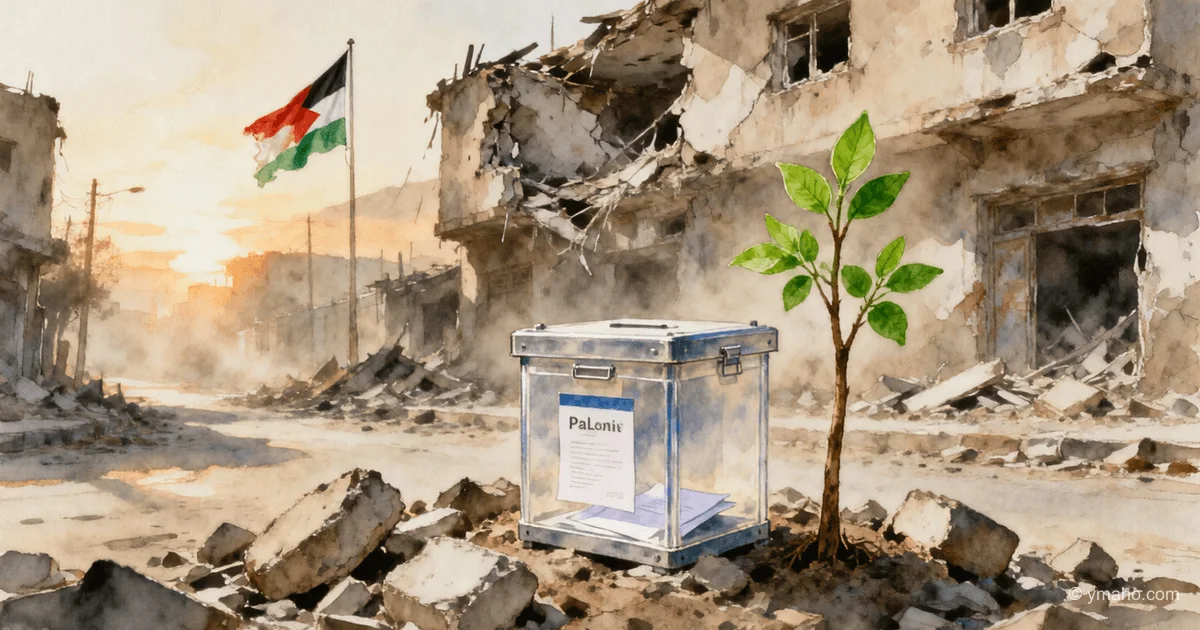
Gaza Holds First Municipal Election in 21 Years Amid War Recovery
For the first time in over two decades, Palestinians in Gaza are voting in a municipal election. On Saturday, residents of Deir el-Balah, a city in central Gaza, head to the polls to choose a local council. This vote is a small but significant step toward rebuilding local governance after Israel's devastating war, which destroyed much of the territory and killed the previous mayor in a 2024 airstrike.
Why This Election Matters
The election is a test of whether democracy can return to a place shattered by conflict. Gaza has been under Hamas control since 2007, with no elections for local councils. The Palestinian Central Elections Commission (CEC) organized this vote, hoping it could be the first step in a broader process covering 420 councils in the West Bank. Deir el-Balah was chosen because it suffered less damage than other areas, but the scars of war are still everywhere.
What Voters Are Choosing
About 70,000 eligible voters can cast ballots at 12 polling centers, including stadiums and former clinics. They will pick from four independent candidate lists: Peace and Construction, Deir el-Balah Brings Us Together, Future of Deir el-Balah, and Renaissance of Deir el-Balah. These lists are not affiliated with major political parties like Hamas or Fatah. Instead, candidates are grouped by tribal or professional ties. Each list must have at least 15 candidates, including at least four women. Voters choose a list and then pick five preferred candidates. The top 15 candidates form the new council, with guaranteed female representation.
Real Needs, Not Politics
Residents are focused on basic services, not political slogans. "The citizen today is not looking for slogans, but for real solutions," said Rabha al-Bhaisi, a local resident. Clean water, electricity, and sewage management are urgent needs. The war destroyed much of Gaza's infrastructure, and people want tangible improvements. Candidates emphasize service-oriented platforms, distancing themselves from partisan politics.
Challenges Ahead
Analysts caution that this isolated vote may not reflect true political support for any faction. The war's devastation makes it impossible to measure popularity accurately. "Neither Hamas nor any other faction views this election as an opportunity to prove its legitimacy," said political analyst Wesam Afifa. Instead, the election relies on traditional family networks, not a shift toward technocratic governance. The newly elected council will also have to navigate interaction with an international committee led by Nickolay Mladenov, appointed by the U.S. to manage Gaza's recovery.
What This Means for the Palestinian Authority
The election is also a bid by the Palestinian Authority (PA) in Ramallah to assert its relevance. The PA has been sidelined in international discussions about Gaza's future. By holding simultaneous elections in the West Bank, the PA hopes to show it still matters. But if the international-backed technocratic committee succeeds in Gaza, it could be proposed for the West Bank too, threatening the PA's legitimacy.
Key Takeaways
- Deir el-Balah holds Gaza's first municipal election in 21 years, a step toward restoring local governance after war.
- Voters choose from four independent lists focused on services, not political parties.
- The election is a test of democracy in a war-torn region, but analysts warn it may not reflect true political support.
- The Palestinian Authority uses the vote to assert its relevance amid international plans for Gaza's future.
- Real change depends on whether the new council can deliver basic services like water and electricity.
What does this mean for regular people?
This election gives Gaza residents a rare chance to have a say in who manages their daily lives. But without international support to rebuild infrastructure and open borders, even the best council will struggle to make a difference. For now, the vote is a symbol of hope—but real improvement depends on peace and reconstruction.
— Editorial Team









