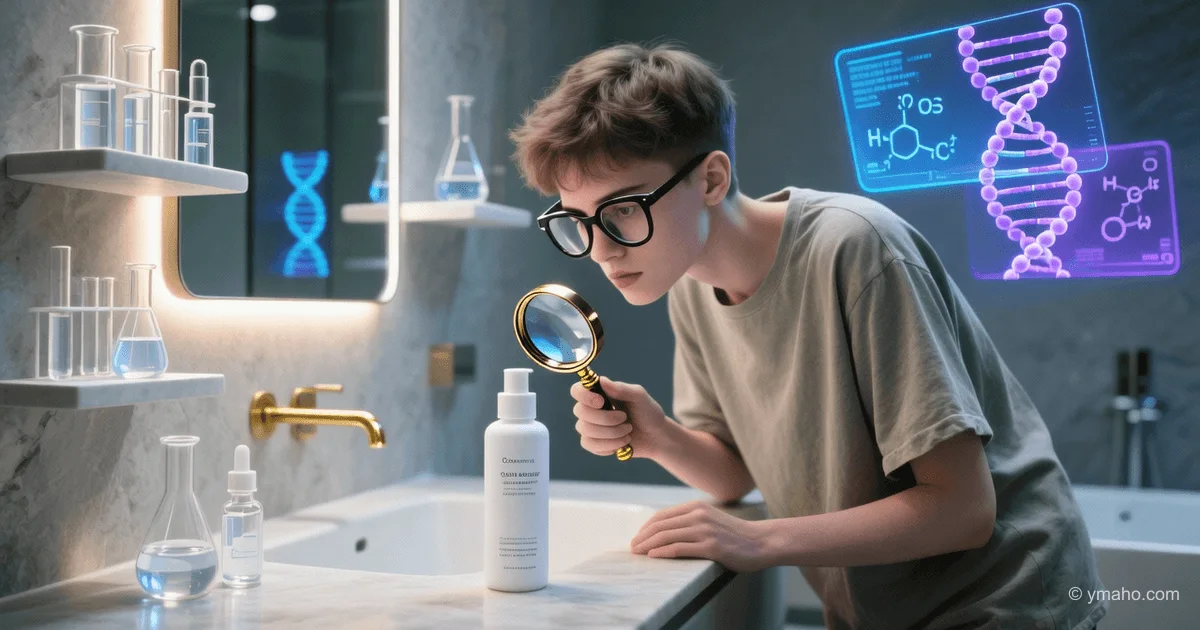
The Beauty Metaverse: Gen Z Demands Scientific Transparency and 'Evidence-Based' Skincare
McKinsey experts and retailers report: Gen Z chooses cosmetics that resemble 'pharmaceuticals' (e.g., Aveda, Living Proof). The new generation studies ingredients deeper than some beauty editors, trusting only brands with clinical studies and patents.
The Essence: What's Really Happening
Gen Z isn't just 'demanding transparency.' This generation is shifting the beauty industry from marketing language to evidence-based medicine. Retailers report: 64% of Gen Z use scalp-specific products, 60% break up with brands that don't meet ethical standards, and search queries for peptides have grown 79% year over year. This isn't a 'mindfulness trend.' It's a tectonic shift in decision-making: from 'who do I want to emulate' to 'what demonstrably works.'
Insider insight: Gen Z buys not a product, but a methodology. They don't ask 'does it work?' They ask 'how exactly does it work?' The difference is fundamental. If a brand answers 'it moisturizes' — it loses. If it answers 'it restores the barrier through ceramides in a physiological 3:1:1 ratio' — it's in the game. This generation grew up on YouTube ingredient breakdowns, dermatology TikTok channels, and PubMed links in Instagram. Their baseline literacy is the level of a beauty editor from five years ago.
Timeline and Context
2024–2025. LookFantastic records an explosion of ingredient-led searches: peptides +79%, retinal +49.6%, niacinamide +33.7%. Meanwhile, K-beauty sells nearly a million units through a single retailer, proving that 'accessible science' is a commercial reality.
January 2026. Metro Private Label publishes an analysis: Gen Z perceives skincare as health maintenance, not beauty enhancement. Barrier, microbiome, prevention — the generation's basic vocabulary.
March 2026. Circana reports: over 50% of US consumers want makeup-skincare hybrids, among Gen Z — 60%. Kenvue launches Neutrogena Hair Restore at Walmart — 'dermatological' hair care for $12.
April 2026. In-Cosmetics Global in Paris: 14,000 professionals, 250 new ingredients. Mibelle Biochemistry presents PhytoSpherix Hair — plant glycogen for follicles. Clariant launches AlgaSurge — a vegan alternative to PDRN. Codif showcases Lactopalm Para against pigment aging. The ingredients market responds to Gen Z's demand: give us 'evidence-based,' we'll give you patents.
May 2026. LookFantastic publishes its spring/summer report: skinification dominates, peptides are the 'backbone' of the trend, K-beauty revenue grew 174% in 2024. Analysts note: the 'clean girl' aesthetic is fading, but the skin-first approach remains and deepens.
May 9, 2026. We are here. Gen Z has shaped a market where clinical research is the new currency and ingredient lists are the new status symbol.
Who Wins and Who Loses
Winners:
- K-beauty brands. Laneige, Anua, Medicube, Biodance — revenue through LookFantastic grew 174%. K-beauty is no longer a 'trend' but a 'full industry': fast innovation cycles, hundreds of products per month, AI diagnostics.
- Multifunctional products. Clariant, Alpol Cosmétiques, Expressions Parfumées — all launch formulas where one product = protection + treatment + sensoriality. Gen Z pays for 'fewer steps, more effect.'
- Peptide platforms. Mibelle, LipoTrue, Chemyunion — suppliers of 'smart' peptides with clinical data. Peptide searches grew 79%, and this is just the beginning.
- Brands with clinical transparency. Skin Design London, Living Proof, Aveda — those who speak the language of PubMed, not the language of 'luxury.'
- Educational retailers. LookFantastic, Cult Beauty — platforms that turn ingredient literacy into content and conversion.
Losers:
- 'Prestige without proof' brands. Gen Z Googles ingredients. If the $200 jar contains the same niacinamide as a $22 pharmacy cream, they'll find out and tell everyone.
- Traditional advertising. Celebrity endorsements are losing weight. Gen Z trusts dermatologists on TikTok, not actresses in glossy magazines.
- Multi-step routines. Gen Z chooses 3–5 steps, not 10. Every product must prove its place in the routine.
- Greenwashing. 60% of Gen Z already leave brands without real ethical standards. 'Clean label' without evidence no longer works.
What the Media Isn't Saying
1. Gen Z doesn't just 'read ingredients' — they check concentrations and synergy.
Media write: 'Gen Z knows about niacinamide.' But that's superficial. They understand the difference between 2% and 10% niacinamide. They know retinal is not retinol. They're not looking for an 'ingredient' but an 'ingredient at a working concentration with proven synergy.' LookFantastic explicitly says: consumers are moving from single-ingredient hero products to 'complex synergistic formulas.'
2. Scalp skinification is not a trend, but a new anatomy of consumption.
64% of Gen Z already use scalp-specific products. This means: hair is no longer a 'dead structure.' It's a living system of 'follicle + microbiome + barrier.' Brands that don't restructure haircare for this model will lose the generation.
3. Gen Z's 'evidence-based' approach threatens not brands, but old-school retailers.
If a consumer walks into a store knowing the ingredients better than the salesperson, why do they need a salesperson? Physical retail loses its 'expertise' function. Ulta and Sephora have already responded with scalp care shelves and skincare-makeup hybrids. Other department stores are lagging.
4. The microbiome is becoming 'evidence-based,' not just marketing.
The microbiome market is $3.5 billion by 2027. But the main point isn't the number. It's that testing is moving to the molecular level (Raman microscopy, 3D follicle models). Gen Z will get tools to verify 'microbiome' claims, and 90% of current products with that label will fail the test.
5. Skinimalism is not a 'pretty word,' but Gen Z's economic strategy.
Gen Z is price-sensitive but pays for proven efficacy. They choose one $60 product with three functions over three $20 products. This is rational calculation, not aesthetics. Brands that understand this math win.
Forecast: Next 30 Days and 90 Days
30 days (by June 8, 2026)
LookFantastic and Cult Beauty will launch an 'Evidence-Based Edit' — curated shelves with products that have published clinical studies. I expect a major mass-market retailer (Target or Boots) to carve out a 'Clinical Haircare' zone with products under $15 — democratization of science reaches the mass buyer. A K-beauty brand will announce a partnership with a dermatological association — legitimization through the white coat.
90 days (by August 7, 2026)
By August, the first 'Ingredient Transparency Score' will appear from an independent platform — Gen Z will get a tool to rate brands by evidence, similar to car safety ratings. One legacy brand (Estée Lauder or L'Oréal) will launch a line with full clinical trial transparency — publishing data on its website, links to PubMed, datasets. Microbiome claims will face the first wave of skepticism: Gen Z dermatologists on TikTok will start 'exposing' brands without molecular tests. The main signal by August: what percentage of new launches come with clinical claims versus marketing claims. The ratio will show who is ready for the new reality and who is still selling 'radiance' without a single study reference.
— Editorial Team









