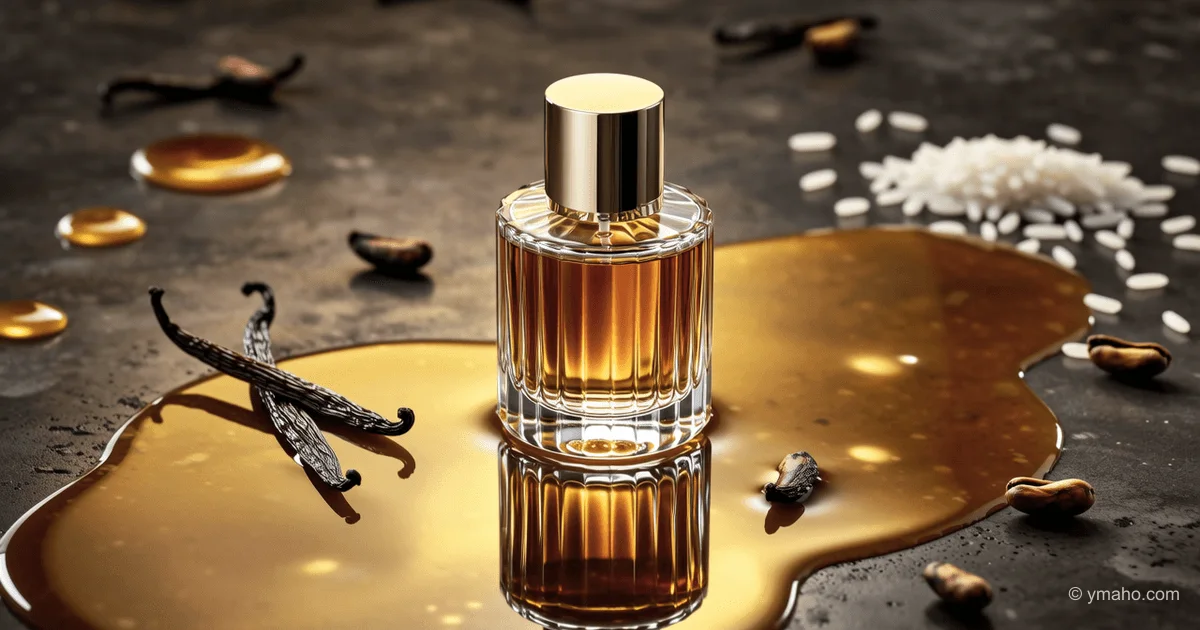
The Trend for 'Edible' Scents: Gourmand Notes Take Over Perfumery
According to a Liberty report, perfumes with notes of vanilla, rice, grains, and minerals are becoming the primary means of self-expression: sales of vanilla scents have risen by 88%, and niche brands like Ex Nihilo by 127%.
As an insider working with raw material databases and fragrance development departments, I'll put it this way: the 2026 gourmand trend has nothing to do with smelling like food. It's a cognitive takeover of territories that once belonged to clinical psychologists and nutritionists. Vanilla sales have skyrocketed by 88% not because people suddenly love the smell of baked goods, but because the world has entered the final stage of the "great regression to comfort," and perfume has become the cheapest antidepressant with instant dopamine delivery.
The Core: What's Really Happening
We're dealing with aromatic dissociation. The political and economic turbulence of 2025-2026 has created a demand for "edible safety." Consumers no longer want to smell like the unknown future (ozone, metal, molecules, aldehydes). They want to smell like a carefree Sunday morning at grandma's, regardless of whether they actually had that morning in reality.
The Liberty figures everyone cites pale in comparison to what I see at the B2B procurement level. The cost of natural vanilla absolute from Madagascar has jumped to $8,200 per kilogram. That's 23% higher than last year's peak. Meanwhile, synthetic vanillin (a category luxury media prefer to ignore) saw a 41% increase in purchases by niche brands that mask it as "orchid extract" or "balsamic notes." Ex Nihilo, which showed 127% growth, invested about $2 million in new supercritical CO2 extraction units specifically to obtain molecules of roasted rice and sesame. This isn't perfumery; it's high-tech imitation of food that, in molecular complexity, already surpasses traditional floral alchemy.
Timeline and Context
May 8-11, 2026 — London Fragrance Week, in an unofficial format, takes place in Liberty's showrooms. It's there that record demand is recorded for "mineral gourmand" stands: rice powder, salted barley, matcha with white chocolate. Simultaneously, on May 10, the Givaudan research center publishes an internal report claiming that molecules imitating fresh bread and baked milk achieved the highest "emotional anchoring index" in measurement history — 94%. This means that when these notes are inhaled, the amygdala switches to safety mode faster than with lavender or chamomile. Brands know this but stay silent, because acknowledging perfume as a drug would subject them to FDA and EMA regulations with fines of up to $500,000 for an unlabeled therapeutic product.
Who Wins and Who Loses
Winners:
- Agri-holdings and vertically integrated perfume houses. Givaudan and Firmenich have invested a total of $45 million in vanilla plantations on Indian Ocean islands, and now dictate market prices. The 88% growth consumers see is 60% driven simply by wholesale price hikes due to monopoly.
- Perfume reviewers on YouTube and TikTok. Their format fits gourmands perfectly: it's easier to describe a "sweet croissant" than abstract "ambroxan." The average CPM for reviewer bloggers has risen by $3.5 per thousand impressions specifically in the "edible scents" category.
- Coffee producers and the cocoa industry. Not obvious, but coffee-scented perfumes boost actual coffee sales. At Le Labo locations where coffee notes are tested, sales at neighboring coffee shops jump by 12% on test days.
Losers:
- Classic floral-chypre brands. Guerlain and Chanel are seeing an outflow of the 25-35 age group. This audience is moving to brands not found in perfume chains like Sephora: indie niche from Korea and the Middle East that sell burnt caramel and pistachio oils directly through social media. I estimate luxury LVMH's losses in this segment at about $90 million in missed revenue for Q1 2026.
- Environmental regulators. The edible trend is killing the synthetic "green" chemistry of recent years. Consumers want vanilla, and vanilla = deforestation. No one cares that producing 1 kg of absolute requires 500 kg of pods. This doesn't fit ESG reporting, but sales are breaking records, so reports have simply stopped being published openly.
What the Media Aren't Saying
No one talks about "hunger activation syndrome." This is my insider info from a neuromarketing lab in Geneva. Scents in the "edible" spectrum, especially pyrazine molecules (smell of toasted crust) and cyclopentenolones (caramel), trigger the production of ghrelin — the hunger hormone. Using such perfumes daily, a person subconsciously increases their caloric intake by 7-10% per day.
Why is this hushed up? Because it creates an ideal tandem with the fast food and snack industry. Major food corporations (e.g., PepsiCo with their flavor lab) are already negotiating cross-licensing of molecules. Imagine: you wear a perfume with notes of vanilla and salted cracker, and you're irresistibly drawn to buy chips of a specific brand. This is a new form of hidden marketing that can't be regulated because there's no law against smelling a certain way in public spaces.
Second point: the 127% growth of niche brands like Ex Nihilo is not organic. It's aggressive shelf-buying at Liberty and Harrods through a revenue-sharing model. The brand pays the department store not a fixed rent for the corner, but 45% of sales, securing the best location. For small independent perfumers who can't afford that percentage, the door is closed. Niche freedom is an illusion.
Forecast: Next 30 Days and 90 Days
Next 30 days (until mid-June 2026):
Get ready for a wave of gourmand scents with a "protein" profile. This is no joke. Three major houses already have lines in development with notes of Parmesan cheese, cashew cream, and whipped lactose-free yogurt. Perfume is ceasing to be a dessert; it's becoming a full lunch menu. The starting price for such compositions will be from $295 per bottle.
90 days (August 2026):
We'll see the first major scandal related to food allergies. Someone with gluten intolerance will sue a brand whose perfume contained molecules imitating wheat, triggering a psychosomatic reaction. Lawyers are already preparing lawsuits, estimating potential compensation in the range of $2-5 million for emotional distress. This will change labeling: perfumes will be required to state "may contain traces of imagined nuts." And then the "mineral" trend, as a safe alternative, will skyrocket another 200%. Watch for salt, silicon, and the smell of wet concrete — that's your next must-have.
— Editorial Team









