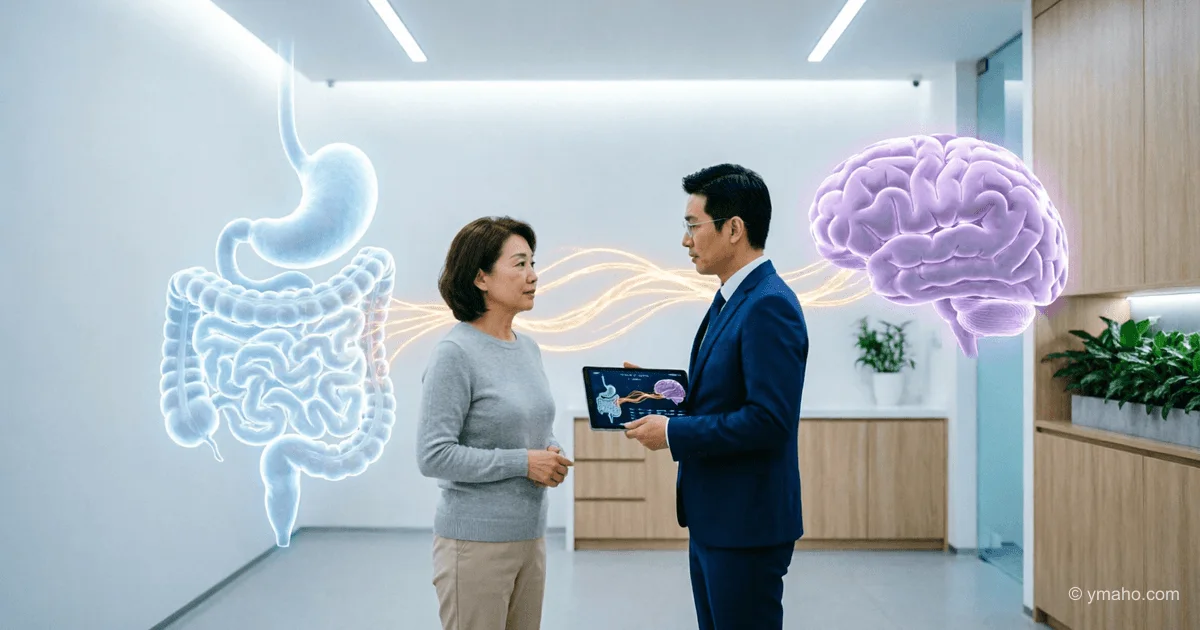
Gut Health and 'Brain Investment' as Global Wellbeing Trends
Globally, trends toward 'brain wealth' and the next generation of biotics for gut health stand out. The microbiome is seen as a key factor influencing mood, immunity, and even aging processes.
Gut Health and 'Brain Investment' as Global Wellbeing Trends
Introduction
In 2026, the concept of health has undergone a fundamental transformation. Just a few years ago, self-care was associated with proper nutrition and fitness; today, the focus has shifted to two key areas: cognitive longevity and the gut microbiome. Global wellbeing trends, tracked by leading think tanks and corporations, are labeled 'brain wealth' and 'the next generation of biotics.'
These are not just buzzwords—they represent a paradigm shift. Health is no longer a static state but a dynamic process of investing in one's own biological resources. The key idea uniting both trends is the gut-brain axis—a scientifically proven connection between the human microbiome and mental, cognitive, and emotional states. In this article, we will explore how these two trends are shaping the future of a healthy lifestyle.
Event Details and Timeline
Over the past two years, the global scientific and business community has consolidated around two interrelated directions.
Trend 1: Lifelong Investment in the Brain
In late 2025 and early 2026, several authoritative organizations published forecasts elevating cognitive health to the top of the agenda. Holland & Barrett, in its annual report, named 'Brain Wealth' one of the three mega-trends of the year, noting that consumers are moving from occasional 'memory vitamins' to systematic, personalized brain support protocols.
The Global Wellness Institute (GWI), a leading nonprofit in wellness, presented a detailed analysis in March 2026 based on a groundbreaking 2025 study from the University of Cambridge. Scientists identified five key epochs of brain development, highlighting special 'turning points' around ages 9, 32, 66, and 83. This discovery overturned the notion that the brain is stable in adulthood. It turned out that each epoch requires its own support strategy: from neuroplasticity in youth to protection against neurodegeneration in old age.
Trend 2: Evolution of Biotics—From Probiotics to Postbiotics and Pharmabiotics
Parallel to the 'reset' in views on the brain, microbiome science has made a qualitative leap. In 2026, the global healthy food industry is transitioning from 'raw' probiotics to so-called 'postbiotics'—metabolic products of beneficial bacteria that are highly stable and can be added even to bread and beverages.
Of particular interest are developments in psychobiotics—drugs that purposefully affect the psyche through the microbiome. In November 2025, at the 19th International Congress of Dietitians in Moscow, Professor Valery Danilenko (Institute of General Genetics, RAS) announced the upcoming market launch of Russian pharmabiotics 'AntiNIV' (for depression correction) and 'Superbakt' (for therapy of Parkinson's and Alzheimer's diseases) in 2026. These developments are part of a global race: as of early 2025, 53 live biotherapeutic products (LBPs) were in clinical trials worldwide, and about 800 were at the preclinical stage.
Impact and Significance (for the World / Industry / Society)
These trends are changing not only the supplement market but also social attitudes.
Cultural Paradigm Shift: The Brain as an Asset
The concept of 'brain wealth' moves cognitive health from the medical sphere to the economic one. In a society where life expectancy is increasing, the ability to maintain mental clarity, learn, and be productive at age 70–80 becomes a competitive advantage and a quality-of-life indicator. According to GWI, employers and governments are beginning to implement 'brain optimization' strategies at every life stage, rather than just treating dementia in old age.
Revolution in Therapy: From Symptoms to Mechanism
The shift to postbiotics and pharmabiotics means we are starting to treat the cause, not the consequence. Research shows that specific bacterial strains (e.g., Bifidobacterium breve MCC1274 from Japanese company Morinaga) can support cognitive function in the elderly, and microbiome metabolites (short-chain fatty acids, indoles) directly affect neuroinflammation and stress response. This means that in the coming years, depression or Alzheimer's disease may be treated not with pills that have side effects, but with 'nature-like' bacterial preparations.
Personalization as the Norm
Finally, the third layer of impact is the definitive departure from universal recommendations. As preventive medicine doctor A.V. Dubovik notes, formulas like 'drink 2 liters of water' or 'take 10,000 steps' are outdated. Modern healthy lifestyle is about managing biological resources through AI assistants that analyze glucose levels, sleep, and stress in real time. This also applies to the microbiome: in 2026, the norm is 'precision' intervention, not 'mass' intervention.
Key Players' Reactions
The global and Russian markets are responding to new challenges with lightning speed.
Large Retail is a barometer of consumer demand. Holland & Barrett (Europe's largest health product retailer) released a forecast in late 2025 predicting that in 2026, trends will merge: nootropics, adaptogens, and psychobiotics will unite under the banner of the 'nervous system.'
The Biotech Sector is experiencing a patent boom. The market is moving from isolating bacteria from kefir to creating synthetic consortia and encapsulating postbiotics. In February 2026, the specialized publication SupplySide Supplement Journal noted that the 'neurowellness' category is becoming a growth driver for the entire dietary supplement industry, on par with women's health.
Russian Science, represented by the 'Neuromicrobiome' consortium (including the Institute of General Genetics RAS, the Scientific Center of Neurology, and Pirogov Russian National Research Medical University), is keeping pace with global leaders. The development of the drug 'AntiNIV,' already tested in humans with depression and obesity, showed significant reduction in anxiety and improvement in cognitive functions. This confirms the high importance of the direction at the state level.
Forecast and Conclusions
Looking at 2026 and the near future, three main vectors of development can be identified.
First, there will be a convergence of technology and biology. Already, 'smart' rings and watches analyze sleep quality and heart rate variability, and new versions of devices will begin tracking markers of neuroinflammation and metabolites. AI assistants will become personal dietitians, teaching us to care for the microbiome in real time.
Second, we can expect the legalization of 'living drugs.' What is currently entering the market as dietary supplements (like Russian pharmabiotics) will likely gain drug status for treating specific mental disorders in the next 3–5 years. This will change the landscape of psychiatry and neurology.
Third, the social discourse on aging will change. Whereas previously health investments were seen as extending the 'survival period,' now they are investments in a period of 'active flourishing.' Caring for cognitive reserve, starting at age 30–40, will become as routine as brushing teeth.
Conclusion: Gut health and 'brain investment' are the two pillars supporting the new wellbeing philosophy of 2026. People no longer just want to 'look good'; they want to remain efficient, happy, and quick-thinking for as long as possible. The microbiome acts not just as part of digestion, but as the conductor of the orchestra of immunity and emotions, and the brain as the main beneficiary of this symbiosis. The future lies in personalized medicine, where probiotics and nootropics will be prescribed based on microbiome and genome analysis, ensuring the functioning of a person's main asset—their consciousness.
— Editorial Team









