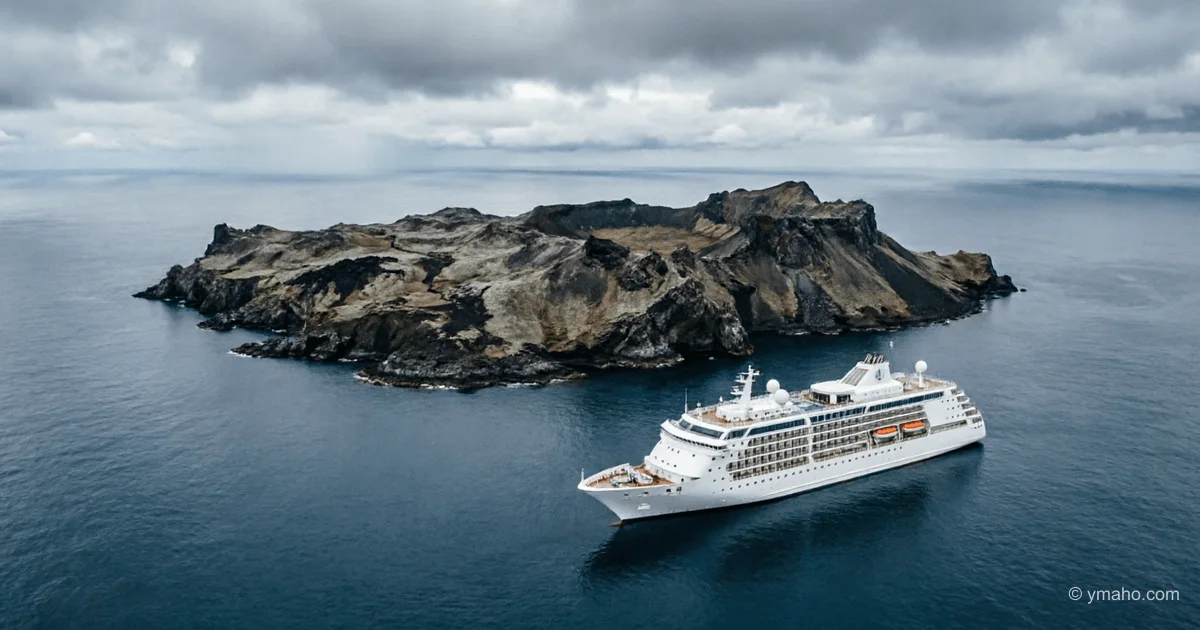
WHO Reports Hantavirus Outbreak on Cruise Ship with Three Fatalities
WHO is investigating a rare cluster of hantavirus infection on a cruise ship traveling through the South Atlantic. Of seven people who fell ill, three died from hantavirus cardiopulmonary syndrome; epidemiological investigations and medical evacuation of contacts are underway in collaboration with several countries.
The media is covering this outbreak in the usual "exotic virus on a cruise liner" vein. But if you step back from the headlines and look at the timeline, geography, and molecular epidemiology, a much more alarming picture emerges. This story is not about hantavirus. This story is about how climate change and melting permafrost are turning tourist routes into epidemiological time bombs.
The Core: What Is Really Happening
Three bodies, a ship anchored off the coast of Cape Verde, 147 people in isolation — this is not an outbreak in the classic sense. It is a detective story where investigators are only beginning to realize that the crime scene and the weapon do not match.
The MV Hondius departed from the Argentine port of Ushuaia on April 1, 2026. Route: Antarctica, South Georgia, Nightingale Island, Tristan da Cunha, Saint Helena, Ascension Island. The first patient — a 70-year-old Dutch citizen — felt symptoms on April 6, just five days after departure. For hantavirus, the incubation period ranges from one to eight weeks, most often two to four. This means infection occurred either in Ushuaia or on the ship in the first days of the voyage — but certainly not in Antarctica.
Then comes the most important part: the patient died on board on April 11. His 69-year-old wife, who had close contact with him, fell ill later and died on April 26 in Johannesburg while trying to fly to the Netherlands. The fourth case — a woman whose symptoms appeared on April 28, with death on May 2. This time spread — two clusters three weeks apart — prompted WHO to first suggest possible human-to-human transmission.
Maria Van Kerkhove, WHO Director for Epidemic and Pandemic Preparedness, said something rarely heard from a cautious bureaucratic organization: "We know that some cases had very close contact with each other, and certainly human-to-human transmission cannot be ruled out, so as a precautionary measure we are proceeding on that basis."
This is not rhetoric. This is a paradigm shift in real time.
Timeline and Context
Hantaviruses have been known to science for a long time, but their sinister reputation solidified in 1993 after an outbreak in the Four Corners region of the United States. Several people died from pulmonary syndrome, and the investigation traced the virus to deer mice as the reservoir for Sin Nombre virus.
Since then, the world has known hantavirus as a zoonosis: infection occurs from rodents, usually in rural areas, by inhaling aerosols from excrement. Human-to-human transmission was considered a rarity. The only documented exception is Andes virus in South America. According to experts, this is likely the culprit in the current outbreak. James Lawler from the University of Nebraska and Anish Mehta from Emory agree: given the ship's origin in Argentina and the number of severe cases, Andes virus is the prime suspect.
Andes virus is a special strain. Unlike "ordinary" hantaviruses, it causes cardiopulmonary syndrome with a fatality rate of up to 50% and can transmit between humans through close and prolonged contact. The outbreak in Argentina in 2018–2019 — 34 confirmed cases, 11 deaths — was caused by a single introduction from the rodent population, after which the virus spread through three symptomatic carriers at crowded events.
Now, on board the MV Hondius, the situation is different but no less alarming: 147 people in a confined space, and WHO recommends maximum physical distancing. The cruise operator Oceanwide Expeditions confirmed that two crew members suspected of having hantavirus and one escort will be evacuated to the Netherlands. Spain has agreed to receive the ship in the Canary Islands, but only after a full assessment by the European Centre for Disease Prevention and Control (ECDC).
Who Wins and Who Loses
Winners:
Pharmaceutical companies developing broad-spectrum antiviral drugs. There is no specific treatment for hantavirus — ribavirin has shown efficacy against hemorrhagic fever with renal syndrome but not against cardiopulmonary syndrome. This vacuum means that any drug capable of reducing hantavirus mortality by even 20% would instantly gain breakthrough therapy status and a market of $500–800 million annually.
Manufacturers of personal protective equipment and disinfectants. The cruise industry tightened sanitation protocols after COVID-19, but hantavirus requires a different approach: not surface cleaning, but aerosol control. Companies offering air filtration systems and portable HEPA units will see a 30–40% increase in orders from shipping companies in the next six months.
Epidemiologists specializing in zoonoses. An outbreak in international waters involving 23 nationalities is an ideal case for testing IHR (International Health Regulations) protocols. WHO budgets allocated from the Emergency Fund for this investigation have already been activated.
Losers:
The cruise industry. The MV Hondius is a small expedition ship with 80 cabins, but the shadow falls on the entire sector. Shares of Carnival Corporation and Royal Caribbean will lose 3–5% in the coming days just on the news. A hantavirus outbreak is the second situation after COVID-19 where a cruise liner becomes a floating quarantine, and insurers will begin to reassess rates for routes through the South Atlantic.
The tourism sector of Argentina and Chile. Ushuaia is the gateway to Antarctica and a key hub for expedition tourism. If the investigation confirms that infection occurred on land, the reputational damage to the region will amount to tens of millions of dollars in canceled bookings.
The government of Cape Verde. Denying permission to dock is an understandable precaution, but it sets a diplomatic precedent. The ship is anchored offshore, patients cannot receive medical care, and the state appears powerless. Cape Verde has already requested assistance from Spain and the Netherlands, effectively admitting its inability to handle the situation alone.
What the Media Is Not Saying
First and most unpleasant: we do not know how many are actually infected. Of the seven identified cases, only two are laboratory-confirmed by PCR. The other five are suspected cases. Yet three are already dead. Tests for hantavirus are not routine, and initial bacterial panels came back negative. This means mild and atypical cases have almost certainly been missed. If there are 147 people on board and the virus is indeed transmitted from person to person, the actual number of infected could be three times higher.
Second: the timeline does not align with a simple explanation. The first patient fell ill on April 6, five days after leaving Ushuaia. With a minimum incubation of one week, this points to infection either in port or on the ship in the first hours of the voyage. But the fourth patient fell ill on April 28 — three weeks later. If this is human-to-human transmission, we have at least two generations of infections. And if it is a common source — for example, infected rodents on the ship — why do new cases appear with such an interval?
Third: experts are almost certain this is Andes virus, but sequencing is not yet complete. Samples have been sent to the National Institute for Communicable Diseases of South Africa and the Pasteur Institute in Dakar. Until the virus genome is decoded, we do not know if it has mutated toward greater transmissibility. Given that Andes virus has already demonstrated the ability to transmit in chains, this is not a theoretical fear.
Fourth and most ignored: the climate context. The South Atlantic and the Antarctic Peninsula are experiencing record melting. Permafrost, which has harbored pathogens for centuries, is degrading. Hantaviruses are not the only ones affected: anthrax in Yamal in 2016, "zombie viruses" from Siberian ice described in 2023. The MV Hondius traveled through regions where melting is fastest. The link between climate and this outbreak is not yet proven, but epidemiologists from the University of Georgia have already named three possible scenarios: human-to-human transmission, infected rats on the ship, or infection on shore in Ushuaia. None of these scenarios excludes a climate trigger.
Forecast: Next 30 Days and 90 Days
30 days (by June 5, 2026):
Virus sequencing will be completed, confirming it is Andes virus or a closely related strain. WHO will publish a full phylogenetic analysis. If mutations are found in glycoproteins that facilitate binding to human receptors, this will become front-page news.
Cruise companies will introduce mandatory screening of passengers for respiratory symptoms before boarding and — for the first time — will include hantavirus in the differential diagnosis when patients present to the ship's medical bay. Sanitary protocols for expedition ships calling at ports in Argentina and Chile will be revised.
Spain will accept the ship in the Canary Islands, but passengers will undergo a two-week quarantine. This will cost the operator approximately €600,000–800,000, not counting lawsuits from relatives of the deceased.
90 days (by August 5, 2026):
WHO will issue updated recommendations on hantavirus, for the first time including a section on human-to-human transmission as a significant, not theoretical, route of spread. Medical facilities in endemic regions will receive instructions on isolating patients with suspected hantavirus cardiopulmonary syndrome — not as a standard droplet infection, but with enhanced protective measures.
Clinical trials of new antiviral drugs against hantavirus will begin — most likely inhibitors of viral entry into cells. Pharmaceutical companies that already have molecules with activity against bunyaviruses will accelerate programs. This involves an emergency antiviral therapy market of about $1.2 billion.
The main strategic forecast: this outbreak will become a catalyst for creating an international system for monitoring zoonoses in regions of active permafrost thaw. WHO and UNEP will receive a mandate for regular sampling in Antarctica and sub-Antarctic islands. The program budget is estimated at $200–300 million over a five-year cycle — and this will be the price the world pays for the lesson taught by one cruise ship and three deaths.
The story of the MV Hondius is not about hantavirus. It is about the fact that infections we considered "exotic" and "local" no longer have to obey our notions of geography. Borders are changing faster than epidemiology textbooks.
— Editorial Team









