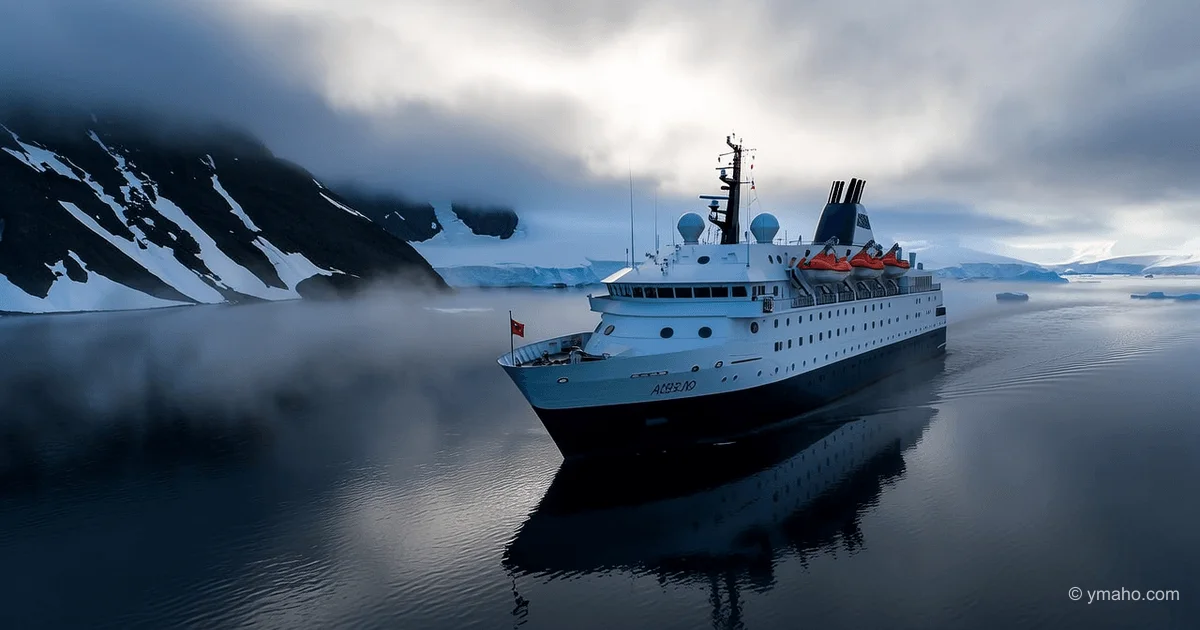
WHO: No New Hantavirus Deaths on Cruise Ship Since Early May, Global Risk Low
WHO Director-General Tedros Adhanom Ghebreyesus reported that as of May 12, no new fatalities related to the hantavirus outbreak on a cruise ship have been reported. A total of 11 cases have been recorded, 8 of which are laboratory-confirmed as Andes virus. The global risk remains low.
Hantavirus on a Cruise Liner: Why 'Low Global Risk' Is Not the End of the Story, but the Beginning of a Rule Change
[The Gist]: What's Really Happening
On May 14, 2026, WHO published its third Disease Outbreak News update on the hantavirus outbreak aboard the cruise ship MV Hondius, accompanied by a verdict: the global risk is assessed as low. WHO Director-General Tedros Adhanom Ghebreyesus personally addressed the residents of Tenerife, thanking them for their "moral courage." Formally, the crisis has passed: 11 cases, 3 deaths, passengers repatriated, the ship sailed to the Netherlands.
But in reality, the event—which the media is already beginning to forget—has left several tectonic shifts in three different industries: cruise, insurance, and biotech. None of them have been seriously analyzed yet.
The first and main shift: the Andes virus—the only hantavirus with confirmed human-to-human transmission—has for the first time in history caused an outbreak in the confined space of a cruise ship. This is not a laboratory curiosity but a precedent that changes risk assessment for the entire maritime travel industry.
Timeline and Context
A brief reconstruction of events: On April 1, MV Hondius departed from Ushuaia, Argentina, with 149 passengers and crew on board. On April 6, a 70-year-old Dutchman, Leo Schilperoord, developed symptoms—fever, headache, gastrointestinal distress. He died on April 11. His wife, Miriam, disembarked on April 24 on Saint Helena and died on April 26 in Johannesburg. The third death was a German citizen.
On May 2, WHO received a notification from the UK about a cluster of severe respiratory illnesses on board. On May 3, Andes virus was confirmed. Then came the classic drama: Cape Verde denied docking rights, the ship drifted off the coast of West Africa, and only on May 10 did Spain agree to accept the liner in Tenerife. By May 12, all passengers had been repatriated.
From a genetic standpoint, the situation is both reassuring and alarming. Whole-genome sequencing, performed by Geneva University Hospitals and published on May 8 on virological.org, showed that the virus is virtually identical to a lineage circulating in Argentina in 2018–2019. No significant mutations, reassortment, or abnormal evolution were detected. Professor Piet Maes of the Florskin Institute in Brussels confirmed: "This is a typical Andes virus lineage from Chilean and Argentine reservoirs."
But that is precisely what is troubling: if the virus has not mutated, then its ability to transmit from human to human in enclosed spaces is not a new acquisition but an inherent property that simply had not manifested in such conditions before.
Who Wins and Who Loses
Winners:
Biotech companies working on vaccines and therapeutics against hantaviruses. The market was niche and virtually invisible—229 cases of hantavirus pulmonary syndrome in the Americas for all of 2025. But the outbreak on MV Hondius turned hantavirus from an "exotic zoonosis for specialists" into a "potential threat to wealthy travelers." Venture capital funds specializing in biotech have already begun reviewing their portfolios. Companies with rapid mRNA vaccine development platforms—the same players that took off during COVID-19—could receive seed rounds for preclinical hantavirus programs within the next 6 months. Potential market: $200 million to $500 million annually if endemic regions are supplemented by cruise operator vaccination requirements.
Telemedicine and remote monitoring providers on cruise ships. The fact that the ship's doctor on MV Hondius himself became infected revealed a critical vulnerability: one medic for 150 people in isolation is not protection but a single point of failure. Cruise companies will now be forced to invest in satellite consultations with shore-based specialists and portable diagnostic equipment.
Losers:
The cruise industry as a whole, and Oceanwide Expeditions in particular. The market capitalization of public cruise operators could drop by 3–5% in the coming quarter as insurance companies begin to review coverage terms for routes passing through hantavirus-endemic regions. MV Hondius is a polar-class PC6 vessel specializing in expedition cruises to remote areas. It is precisely this segment—with its promise of "wild nature" and "untrodden paths"—that faces the greatest threat. If insurance against infectious risks rises by 15–20%, the profitability of expedition cruises costing between $10,000 and $25,000 per berth will be called into question.
Travel insurance companies. Most policies do not cover "denial of boarding" due to quarantine or evacuation during an outbreak of a rare disease. After MV Hondius, claims from passengers stranded on the ship or repatriated without adequate compensation could trigger a wave of revisions to standard insurance terms.
What the Media Isn't Saying
Non-obvious insight: The outbreak on MV Hondius is not an "emergency" but a predictable result of the combination of demographics, geography, and business model.
Most media present the story as a unique confluence of circumstances. But looking at the structure of the cruise market, everything falls into place. The average age of passengers on MV Hondius was 65. Expedition cruises attract a wealthy, older demographic—exactly the people for whom hantavirus pulmonary syndrome is most dangerous (overall HPS fatality rate 25.7% in the Americas in 2025, but for the elderly with comorbidities, it can reach 40–50%).
The route passed through regions endemic for Andes virus: Argentina, Chile. Passengers engaged in birdwatching and went ashore in habitats of rodent carriers—standard expedition cruise activities. In other words, the cruise industry for decades sent the most vulnerable demographic to areas with known infectious risk, relying solely on the low probability of infection.
Now that probability has materialized—and the industry was left without a protocol. Cape Verde denied docking not out of malice, but because a country with a population of less than 600,000 and two hospitals physically could not accommodate a ship with an outbreak. This is a precedent that will inevitably repeat: the world is full of ports unprepared for health crises.
Second insight: The genetic stability of the virus is a double-edged sword.
The absence of mutations means existing diagnostic tests work, and a potential vaccine based on Argentine lineages would be effective. But it also means that the Andes virus in its current form already possesses everything needed for limited human-to-human transmission in enclosed spaces. There is no need to wait for a "mutant"—it is already here; it just had not been given a cruise liner as an incubator before.
Forecast: Next 30 Days and 90 Days
30 days (by mid-June 2026):
The incubation period for hantavirus can reach 42 days, and WHO has explicitly warned: "further cases are possible." This means that until mid-to-late June, health services in at least 23 countries will continue monitoring repatriated passengers. Each new positive test will trigger local media spikes and keep the story in the information field.
Additionally, WHO has announced a "scientific consultation on medical countermeasures against hantavirus." This is a signal: the organization is moving hantavirus from the category of "endemic disease with low priority" to "threat requiring coordinated research." It is expected that by the end of June, the first grants for preclinical studies of therapeutics will be announced.
90 days (by mid-August 2026):
Key event: publication of the final investigation report. If human-to-human transmission is confirmed (and preliminary sequence analysis already shows "nearly identical genomes from different patients," indicating a chain of infection), this will lead to a revision of international health regulations for cruise ships. Likely changes: mandatory isolation facilities on board, expanded medical teams (at least two doctors for vessels with more than 100 people), pre-departure screening of passengers for infectious disease symptoms.
Also, it can be expected that at least one major insurance company—likely Allianz or AXA—will update its coverage policy for cruises, adding special provisions for zoonotic infections. This will raise the cost of insurance for expedition cruises by 10–25% and could slow the growth of this market segment, which until 2026 was expanding at an average of 7% per year.
In the long term—2027–2028—MV Hondius will enter textbooks on epidemiology and risk management as an example of how a low-probability, high-impact event can change the regulatory landscape of an entire industry within weeks. And those cruise companies that first invest in biosecurity will gain a competitive advantage in a market where the trust of passengers over 60 becomes a critical asset.
— Editorial Team









