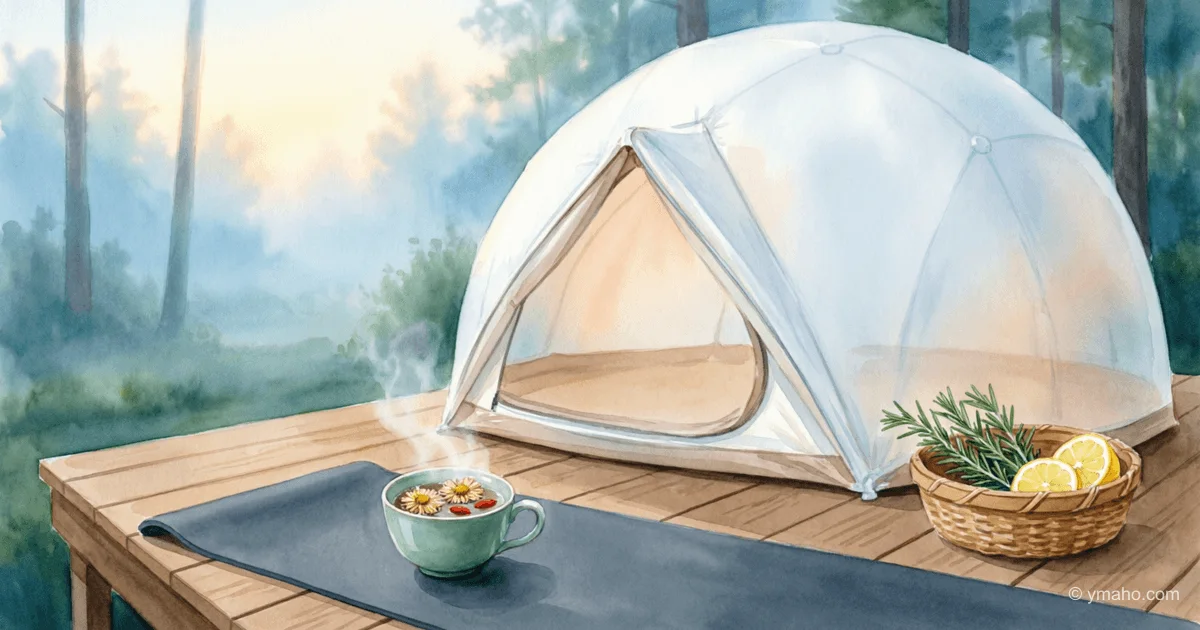
Wellness Tourism and Glamping: Vacation as an Investment in Longevity
Tourists are increasingly choosing not just hotels, but wellness retreats focused on sleep quality, stress reduction, and prevention. This sector of the economy is showing rapid growth.
Analytical article based on the provided news and current market data.
Title: Glamping as a Health Insurance Policy: Why 2026 Became the Year of the "Wellness Escape" and What Lies Behind the PVC Domes
If you think the news about the growth of wellness tourism and glamping is just a marketing ploy by tour operators to sell a tent at a higher price, you are mistaken. We are witnessing a fundamental restructuring of tourism consumption, where "investment in longevity" has become the main driver of decision-making.
Insiders call this the "scared city dweller effect" and "weekend climate migration." The 2026 consumer no longer goes to Turkey for "all-inclusive" out of habit. They go to the forest, a lake, or thermal springs to repair their nervous system, which has been destroyed by news, algorithms, and the office conveyor belt.
The numbers confirm: this is not a trend, it's a tectonic shift. Let's break down the essence.
## The Essence: What Is Really Happening
The news reports that tourists are choosing wellness retreats focused on sleep and prevention. But the reality is harsher: the wellness tourism sector has separated from "regular" tourism and operates by its own rules.
The global market for Eco & Boutique Wellness Retreats in 2026 is estimated at 5 billion US dollars, and by 2033 it will grow to 10 billion, showing a CAGR of 9.5%. This is twice the growth rate of traditional tourism.
In Russia, the picture is similar but with local specifics. Analysts from YuMoney and Sutoch.ru recorded explosive growth: demand for glamping increased by 30% compared to 2025, and sanatoriums were fully booked for popular dates as early as March 2026.
Key shift: consumers no longer separate "treatment" from "vacation." Previously, people went to sanatoriums on a doctor's prescription. Now, they go voluntarily to prevent burnout. Sanatoriums, which five years ago were associated with "pensioners and vouchers," have become a trend among millennials.
## Timeline and Context
- 2020-2022: Pandemic. People discover suburban real estate and camping as a "safe alternative" to hotels.
- 2023-2024: Post-COVID syndrome and an avalanche-like increase in anxiety. People go "nowhere" just to reset. The term "wellness migrancy" emerges.
- May 2026: The market reaches maturity. Booking sanatoriums and glamping is no longer spontaneous but 2-3 months in advance. In April 2026, the number of cruise payments tripled compared to March, and glamping trips for the May holidays were sold out as early as February.
Key nuance: this is not "rich people's whims." It is a structural demand for safety. Amid geopolitical instability and information noise (escalation in the Middle East in February 2026), people want predictability and silence.
## Who Wins and Who Loses
(+) Winners: Glamping operators and sanatoriums with a "youthful" package.
The average cost of renting a glamping site in Russia is 7,600 rubles per night (+10% compared to 2025), with an average booking of three nights. The profitability of such projects reaches 30-40% with proper management, because land lease costs pennies, and a "tent with a bed" pays for itself in 1-2 seasons.
Formats that integrate health into the product are especially successful. Not just a "house in the woods," but a "house + sauna + morning yoga + herbal tea from a local farmer." After its renovation in May 2026, the British Woodbridge Glamping and Wellness added a spa with a hydro-massage bathtub and opened it not only to guests but also to locals—this increased weekday occupancy by 25-30%.
( - ) Losers: Classic "beach" hotels in Turkey and Egypt without a medical license.
A tourist willing to pay for "longevity" considers a beach lounger "passive degradation." They want trekking, blood sugar monitoring, sleep in complete darkness and soundproofing. "Ultra all-inclusive" hotels are losing the premium segment. Their clients are moving to specialized retreats, where the same bed-night costs not $100 but $300-500, but with a program.
## What the Media Are Not Saying
The most non-obvious insight that ordinary analysts miss: glamping and retreats are becoming a tool for the "quiet redistribution" of agricultural land and "green" real estate.
In Canada, according to Coldwell Banker, rural plots that were previously sold as "hobby farms" or "dachas" are now positioned as "wellness retreat opportunities." Buyers are no longer retirees but investors aged 35-45 who calculate the ROI from renting out five geodesic domes on Airbnb. In Russia, a similar process is underway: investors lease land for social projects (e.g., a glamping for people with disabilities in Bashkiria for 292 million rubles) and later repurpose them into commercial retreats.
The second hidden factor is "wellness tourism" as a new opium war for the wallet. A 2026 study by Canopy & Stars shows that 60% of glamping bookings are made by women. And it is women who make decisions about family vacation spending. Marketers know this well and sell a woman not "a night in the woods" but "resource restoration" so she can return to her husband and children "renewed."
This is pure manipulation of guilt. But it works.
Third, the media hide the problem of the "dead season." Glamping sites in Russia and Europe operate for 4-5 months a year. In April 2026, due to early heat (+30°C in Moscow in mid-May), the season started earlier, and operators will be able to recoup last year's losses. But if the summer is rainy, 30% of new glamping sites built on credit will go bankrupt by October.
## Forecast
Next 30 days (June 2026):
The market will be flooded with a wave of Wellness subscriptions. The first services will appear that sell not a single trip but an "annual recovery package": 4 seasons x 4 retreats = 16 nights at different glamping sites. This is an attempt to tie down the client and smooth out seasonality. Also expect a shortage of qualified yoga and breathwork instructors—glamping sites will start poaching them from each other, raising salaries by 30-40%.
Next 90 days (August 2026):
- Merger of medical tourism and glamping. Retreats will appear with mandatory blood tests upon arrival and departure. The client pays $2,000 for 7 days and receives a free bioimpedance analysis and dietary recommendations for six months ahead. This is a "gold mine" for startups.
- Regulatory blow. Rospotrebnadzor and its foreign counterparts will turn their attention to glamping sites that "masquerade as hotels but do not meet fire safety and sanitation standards." Expect stricter requirements for septic tanks and emergency exits. 20% of small operators will leave the market, further driving up prices.
- Growth of the Canadian and Scandinavian segments. According to forecasts, wellness tourism in Canada will reach $81 billion by 2030, and the glamping market will triple by 2033. Investors will flock to "cold" regions where there is no heat but there is a "northern wellness effect" (clean air, dark skies, silence). Bashkiria, Karelia, and Murmansk Oblast in Russia are the next hot spots.
Conclusion for investors and analysts: Forget about "tents and barbecues." Invest in wellness architecture: soundproofed dome houses, air recovery systems, trekking routes with digital guides, and certified sleep coaches. The 2026 consumer votes with their feet and wallet for silence and predictability. Those who sell not a place but a state of being will win this race. The global wellness real estate market of $1.1 trillion by 2029 is the battlefield, and glamping is the vanguard in this war.
— Editorial Team









