“Hobby-Maxxing”: Why Everyone Is Buying Craft Kits in 2026
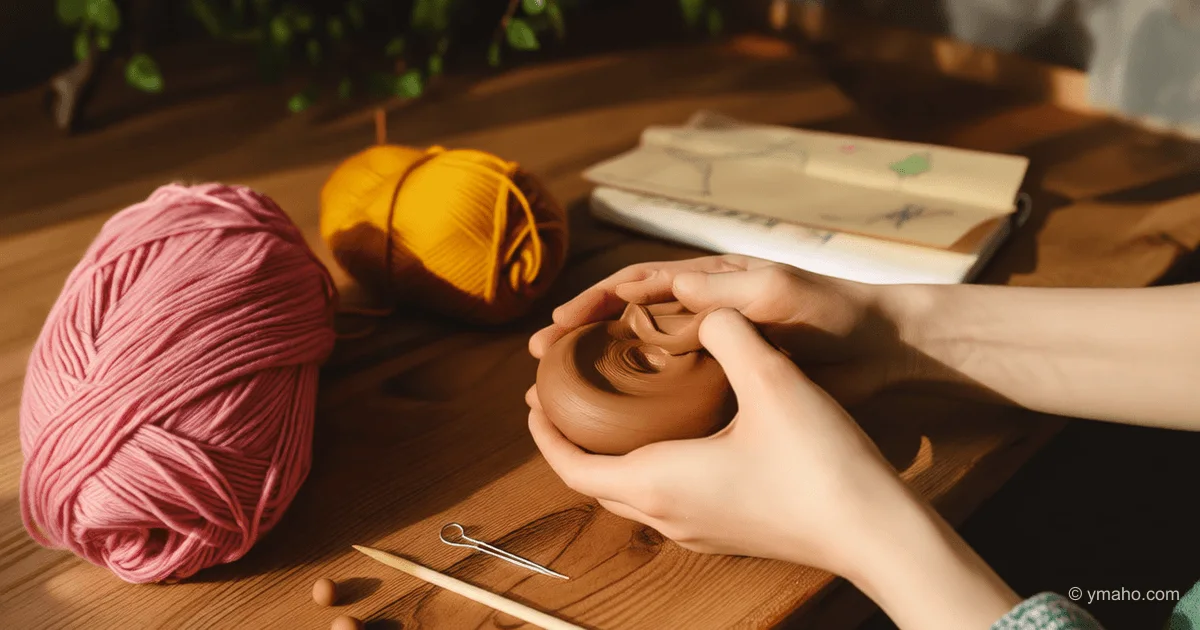
A new lifestyle trend targets doomscrolling and digital fatigue. Tactile hobbies (clay, knitting) engage the brain’s reward system by creating real, tangible objects.
We used to think of hobbies as cute pastimes, a way to kill time on maternity leave or in retirement. But what’s happening in 2026 has nothing to do with grandma’s knitting. “Hobby-maxxing” isn’t a trend—it’s a counterattack. A counterattack of the tangible against the digital, of real neurogenesis against the dopamine pit of algorithms.
[The Core]: What’s Really Happening
This isn’t a rise in handicrafts. This is a mass exodus from digital identity into physical identity. The essence of “hobby-maxxing” isn’t that people started making pots or knitting. It’s that the feeling of self-worth and status has sharply migrated from the space of “likes” to the space of “skills.”
Social capital used to be measured by story reach. Now it’s measured by the ability to knit a sweater, bake sourdough bread, or assemble a complex puzzle in one evening. There’s been a fundamental revaluation of “friction.” For a decade, startups fought for seamlessness, Uber-ization, and one-click delivery. In 2026, Michaels CEO Heather Bennett precisely articulates the new demand: consumers are actively seeking the “friction of a physical hobby” to regain control of time stolen by algorithms.
Why did this explode now? Because generative AI killed the last illusion of the internet. When feeds are filled with synthetic content and the average user spends nearly 30% of waking hours on online media, it’s not just fatigue—it’s disgust. The term “human-made” becomes a mark of quality and premium. Tactile experience has turned into a luxury item and an investment object.
Timeline and Context
- Early 2026. Crystallization of the term. Social media users launch the viral hashtag #hobbymaxxing, showcasing not “outfits” and “breakfasts” but packed calendars: “hip-hop,” “watercolor,” “surf.” It’s a manifesto: my schedule is filled not with calls but with creation.
- March 2026. Data from offline retail. Michaels publishes its annual creativity trends report. The numbers are staggering: searches for analog hobbies (knitting, embroidery, journaling) surged 136% in six months, yarn accessory sales rose 40%. The retailer immediately declares 2026 the “Year of Creative Life in the Analog Era” and expands needlecraft lines in 90% of its nearly 1,400 stores.
- May 2026. Institutional recognition. The Mastercard Economics Institute notes that Europeans are consciously cutting spending on technology and streaming (46% of respondents) to fund real experiences and hobbies. Consumers are willing to pay more for activities that provide tactile satisfaction, and the share of experience spending in the consumer basket is steadily climbing to 20.4%.
- May 2026. Medical legitimization. Studies confirm that creative hobbies lower cortisol levels, and two hours per week of art practice yields “significantly better mental well-being.” Hobbies are no longer just a “whim” but become part of clinical stress-management recommendations.
Who Wins and Who Loses
Winners:
- Offline craft retailers (Michaels, Hobbycraft). They transform from hobby supply stores into infrastructure hubs of the new economy. In-store offline events and “charm bars” aren’t just retail—they’re capturing consumer social time.
- Niche interest platforms. The knitting social network Ravelry (9 million users), book site Goodreads (150 million members), and fitness app Strava are experiencing a renaissance. Users migrate from toxic algorithmic feeds into “interest gardens” with no politics, only pattern charts.
- Small local businesses (SMEs). Pottery studios, cooking classes, local book clubs. Mastercard reports that 57% of consumers are willing to pay more if it benefits local business and provides a unique tactile experience.
Losers:
- Streaming services and giant social networks. They’re losing the battle for the ultimate resource: time. Passive scrolling is branded as “junk time,” and consumers consciously claw hours away from them, reallocating budgets.
- The digital “metaverse” junk market. NFTs and digital luxury items pale next to a real sweater you can wear or a mug you can drink coffee from. The value of tangible objects soars.
What the Media Isn’t Saying
The standard mainstream media narrative: “People are taking a break from screens, how cute.” But there’s a hard economic insight being missed.
Insight: “Hobby-maxxing” is a covert form of accumulating protective assets in the AI era.
The mass obsession with pottery, sewing, and woodworking isn’t just nostalgia. It’s a deeply rational response to the fear of becoming redundant. When white-collar workers watch generative AI write code, design layouts, and compose texts (their jobs), creating a physical, real object becomes a form of psychological insurance.
A lathe or knitting needles can’t be replaced by an algorithm. The skill of “making a table” or “growing a tomato” is subconsciously valued by the brain as an invulnerable survival skill in a post-work world. To quote a Reddit user who brilliantly captured the trend’s essence: “The best way to find joy as an adult is to do what brought you joy as a child.” And as children, we didn’t scroll feeds—we molded, built, squished, and got dirty.
This isn’t a retreat. It’s a reassembly of human capital outside the digital matrix.
Forecast: Next 30 Days and 90 Days
- Next 30 days (by June 11, 2026). Summer will cement the trend outdoors. We’ll see explosive growth in “crafting picnics” and plein air events. Michaels and competitors will launch aggressive ad campaigns like “Summer of Screen-Free Skills.” Expect Sephora or similar chains to test in-store “Beauty & Craft” corners (making your own balms, soap casting), blending beauty rituals with hobby-maxxing.
- Next 90 days (by August 10, 2026). The big institutional play begins. We’ll see at least one major M&A deal where an education platform (e.g., MasterClass or Skillshare) buys/absorbs a major DIY or craft retailer to create a closed-loop ecosystem of “learning—material—finished product.” The price tag: at least $50–100 million. Major employers (Big Tech) will start introducing “handcraft rooms” in offices as a new must-have for employee retention and combating AI anxiety. Hammers and clay will become office staples alongside capsule coffee.
— Editorial Team









