How Pendle Brings Bond-Like Certainty to the Wild World of DeFi
Imagine you lend money to a friend, but instead of getting back a set amount on a set date—like with a bank CD—you only find out how much you’ll earn after months have passed. That’s how most crypto “savings” work today: unpredictable and nerve-wracking. Pendle changes that by letting people lock in fixed returns upfront, just like buying a bond. For anyone tired of guessing what their crypto will earn next month, this matters.
Fixed Income in Crypto? Yes, It’s Possible
In traditional finance, fixed income means you know exactly how much you’ll earn and when—think government bonds or savings certificates. In DeFi (decentralized finance), however, nearly all yields float like gas prices: they swing up and down based on demand, borrowing activity, or market hype. You deposit your tokens today, and tomorrow your return could be half—or double—what it was.
Pendle fixes this by splitting a yield-generating asset into two separate pieces: one representing your original money (the principal) and another representing the future interest. This lets people choose: do you want predictable returns, or are you okay betting on where yields might go?
The Magic Trick: Splitting Yield Into Two Tokens
Here’s how it works. When you put a yield-bearing token—say, one that earns staking rewards—into Pendle, the protocol gives you two new tokens:
- PT (Principal Token): This is your stake in the original amount you deposited. At a set future date, you can redeem it for exactly that amount.
- YT (Yield Token): This represents all the interest or rewards that will be earned between now and that future date.
Because PT doesn’t include any future yield, it usually trades below its eventual redemption value. If you buy PT at a discount and hold it until maturity, you get a guaranteed return—just like a zero-coupon bond, which is sold cheaply and pays full face value later.
Why This Feels Like Buying a Bond
Think of PT like a gift card you buy for $90 that’s worth $100 in six months. No matter what happens in the market, you’ll get $100 when the time comes. That predictability is rare in crypto, where even “stable” yields can vanish overnight if users pull their money out.
Meanwhile, YT acts like a bet on the future. If staking rewards surge, YT becomes more valuable. If they drop, YT loses value. By separating these two risks, Pendle lets cautious savers avoid volatility while letting speculators chase upside—without forcing everyone into the same uncertain pot.
Building a Real Interest Rate Market On-Chain
What makes Pendle more than just a neat trick is that it creates a live marketplace for interest rates. The price of PT tells you what fixed return people are willing to accept today. The price of YT shows what the market expects yields to be in the future.
Together, these prices form an on-chain interest rate curve—something traditional banks use daily to price loans and bonds. Now, for the first time in DeFi, interest isn’t just set by a protocol’s code; it’s discovered through real trading, just like in the real financial world.
Benefits Beyond Predictability
Pendle’s system offers several practical advantages:
- Certainty: Savers can plan ahead without worrying about yield swings.
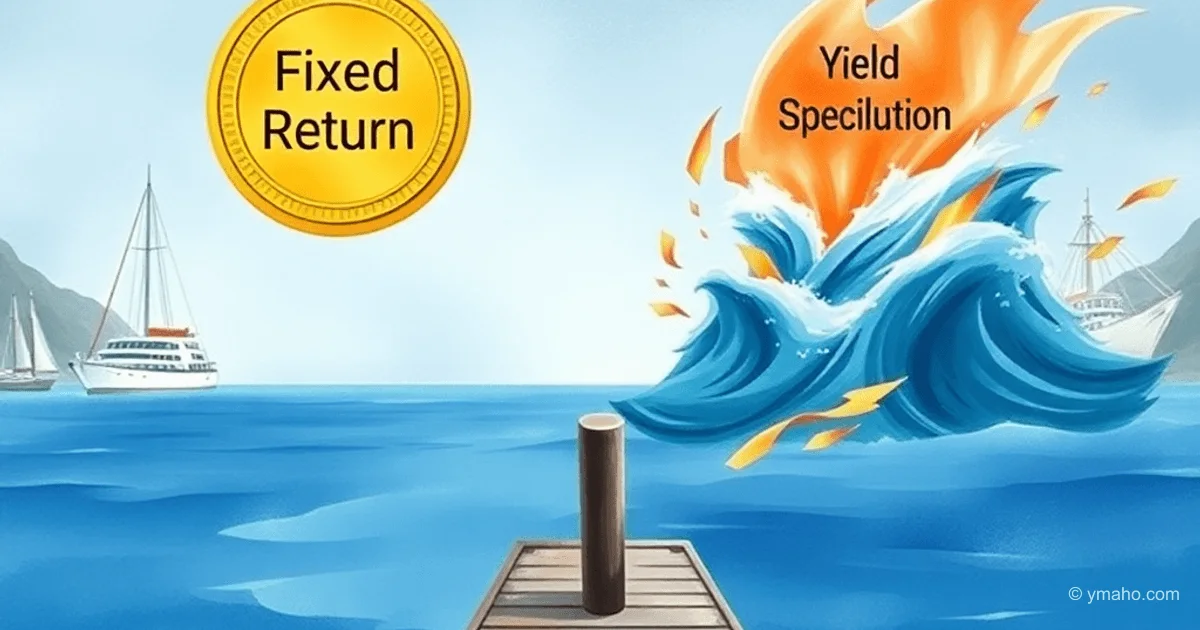
- Choice: Users pick their risk level—fixed income or yield speculation.
- Efficiency: Capital isn’t locked into one strategy; it flows to those who value it most.
- Transparency: Market prices reveal collective expectations about future yields.
But It’s Not Risk-Free
Pendle’s model is powerful, but not simple—and not without risks:
- Smart contract risk: Bugs in the code could lead to losses (though audits help).
- Liquidity risk: If few people trade PT or YT, you might not sell them easily before maturity.
- Complexity: Misunderstanding how PT and YT interact could lead to unexpected outcomes.
This isn’t a “set and forget” tool. It works best for users who understand the mechanics or are willing to learn.
What Does This Mean for Regular People?
If you’ve ever wished your crypto savings account worked more like a real savings account—with clear, reliable returns—Pendle offers a path toward that. It won’t make you rich overnight, but it brings stability to a space known for chaos. As more people seek safety alongside innovation, tools like this could make DeFi feel less like a casino and more like a real financial system.
Key Takeaways
- Pendle splits yield assets into Principal Tokens (PT) and Yield Tokens (YT).
- Buying PT at a discount locks in a fixed return, similar to a zero-coupon bond.
- YT holders take on yield volatility in exchange for potential upside.
- Together, PT and YT create a market-driven interest rate system on-chain.
- The model adds predictability to DeFi but requires understanding and carries smart contract and liquidity risks.
— Editorial Team









