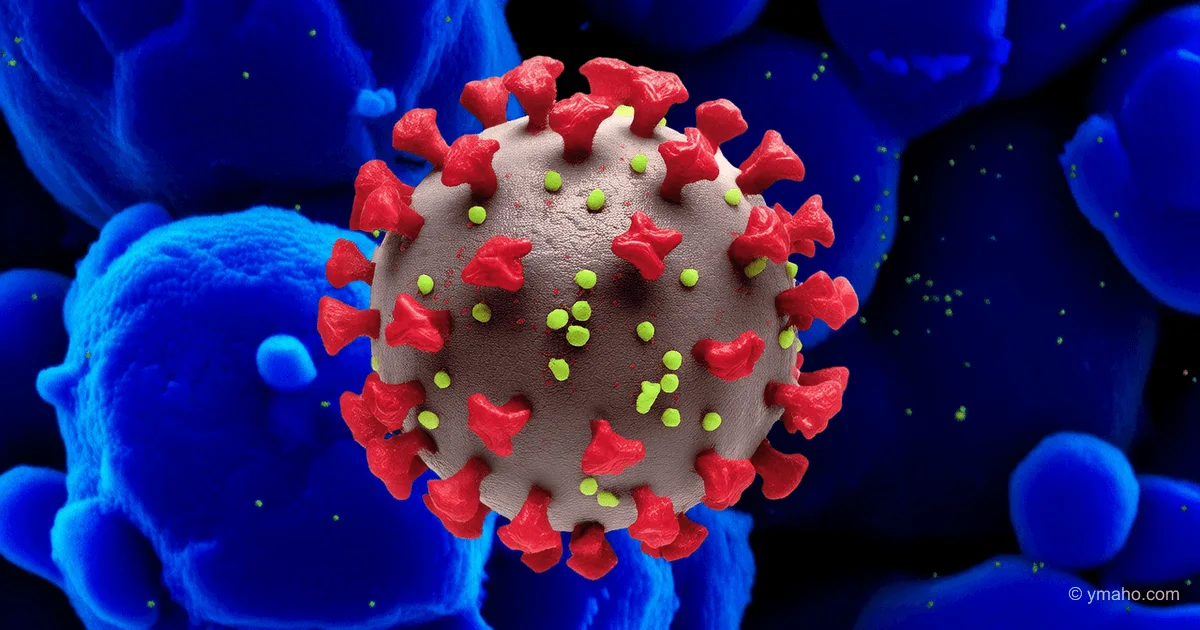
Scientists Map the Complete Set of Human Antibodies Against Measles Virus for the First Time
NIH researchers isolated and mapped over 100 human monoclonal antibodies against the measles virus using cryo-electron microscopy. One antibody, targeting the F protein, reduced viral load in the lungs of infected rats to undetectable levels.
The Antibody Shield Against a Virus That Steals Immune Memory: Why the NIH Discovery Is Not Just 'Another Cell Paper'
The Bottom Line: What's Really Happening
On May 14, 2026, the U.S. National Institutes of Health (NIH) announced a breakthrough that most media covered in a cookie-cutter fashion: 'scientists mapped antibodies against measles.' But the real story runs much deeper. A team led by Erica Ollmann Saphire at the La Jolla Institute for Immunology has, for the first time, produced a complete structural atlas of human monoclonal antibodies against the measles virus—and uncovered findings that overturn established dogma.
For decades, the prevailing belief was that protection against measles was almost entirely driven by antibodies to hemagglutinin (H protein). Antibodies to the fusion protein (F) were seen as auxiliary, secondary. Saphire and her team showed the exact opposite. Of the nine identified epitope clusters—four on H and five on F—the most potent neutralizing antibodies targeted the F protein. Antibody 4F09 (referred to as 3A12 in some publications) reduced viral load in rat lungs to zero. Zero. The virus became completely undetectable.
What matters most here is not just the antibody itself, but its mechanism of action. Antibodies against H block the virus from attaching to cell receptors. Antibodies against F work differently: they physically lock the fusion protein in its prefusion conformation, preventing the structural rearrangement required for the virus to enter the cell. The virus is trapped—attached but unable to enter. This is a fundamentally different neutralization mechanism, and it turns out to be the most effective.
Timeline and Context
2019–2024 — Global surge in measles cases. According to the WHO, over 470,000 cases were reported worldwide in 2024. The U.S., which declared measles eliminated in 2000, experienced its largest outbreak in three decades in 2025—over 2,200 confirmed cases. As of April 2026, there were already over 1,700 cases across more than 30 states.
Concurrently, awareness grew of a problem rarely discussed openly: the MMR vaccine contains a live attenuated virus. Millions of people cannot receive it: infants under 12 months, pregnant women, immunosuppressed patients, transplant recipients. Previously, herd immunity protected them. Now, with vaccination rates falling below the 95% threshold, that protection has vanished.
2025 — Saphire's group publishes preliminary results on mouse antibodies. It becomes clear that cryo-electron microscopy methodology can answer questions about human antibodies.
2026, May 7 — Publication in Cell Host & Microbe of the full study: 52 antibodies to H, 46 antibodies to F, isolated from memory B cells of a 56-year-old woman vaccinated three times with MMR. The last dose was five years before blood draw. The donor's immune system retained a powerful arsenal of antibodies years after vaccination.
2026, May 14 — Official NIH press release brings the discovery into the public domain.
Winners and Losers
Winners.
La Jolla Institute for Immunology and Erica Ollmann Saphire personally. She gains first-mover advantage in a new therapeutic niche—'human monoclonal antibodies against measles.' The patent landscape is currently open, and whoever first published the complete structural map of epitopes gains an edge for years to come.
Invivyd Inc. — the biotech company that, on April 9, 2026, a month before the NIH publication, announced its own candidate VMS063, a monoclonal antibody against the measles F protein. They position it as potentially the first-in-class drug for treating and preventing measles. Saphire's study now serves as independent scientific validation of their strategy: the target is correct. Invivyd shares (Nasdaq: IVVD) will get a strong catalyst. The company plans to file an IND (Investigational New Drug) by the end of 2026.
Vulnerable patient groups. Millions of people who cannot be vaccinated finally have a real prospect of protection—not through others' antibodies in the population, but through direct injection of ready-made neutralizing antibodies. The analogy with palivizumab for RSV is direct and workable.
Losers.
Proponents of 'natural immunity,' anti-vaccination advocates. The discovery was made using material from a vaccinated individual and proves that MMR generates a robust, diverse, and long-lasting pool of protective antibodies. There is no 'natural' alternative—measles causes immune amnesia, destroying previously acquired immunity to other pathogens.
Pharma companies that failed to enter the race. The window for 'second' and 'third' movers is shrinking: structural data is published in open access, and leaders are already building patent portfolios.
What the Media Leaves Out
Insight #1: The story of measles antibodies is really a story about immune amnesia.
Most publications focus on measles as an acute disease: fever, rash, risk of pneumonia and encephalitis. But the key word that should be in every headline is immune amnesia. The measles virus attacks and destroys memory B cells and T cells developed against other infections. After measles, a person is vulnerable for 2–3 years to pathogens their immune system had previously learned to fight.
This is what makes monoclonal antibodies not just 'another antiviral drug.' They are a means to prevent a cascade of secondary consequences. A child protected by antibodies against measles retains immunological memory of all prior infections and vaccinations. The economic impact of preventing immune amnesia has never been calculated—it potentially exceeds direct costs of treating acute measles many times over.
Insight #2: The donor was a single person—and that was enough.
The entire panel of over 100 antibodies, all structural data, all in vivo experiments—all derived from the memory B cells of one donor: a 56-year-old woman vaccinated three times with MMR. One person. One blood draw. This means the diversity of the human antibody response to the measles vaccine is far broader than assumed. And it also means the technological platform—memory B cell isolation, cryo-EM mapping, functional screening—has reached a maturity that allows in months what used to take years.
This same approach will now be replicated for other infections. Saphire and her colleagues have essentially created a reproducible protocol: take a vaccinated donor, isolate memory B cells, map epitopes, select the most potent antibodies, test in vivo.
Insight #3: Antibodies work 48 hours after infection—and that's a window for real clinical practice.
In rat experiments, antibodies were administered 24–48 hours after infection—and viral load dropped hundreds of times. Why does this matter? Because the incubation period for measles lasts 10–14 days, and clinical symptoms appear only on days 7–10. The 48-hour window in an animal model, scaled to humans, means post-exposure prophylaxis could be effective even several days after contact. This fundamentally expands the range of applications.
Forecast: Next 30 Days and 90 Days
Days 1–30 (mid-May to mid-June 2026):
NIH and La Jolla Institute will begin actively seeking a pharmaceutical partner for clinical development. Most likely candidates are companies with experience in large-scale monoclonal antibody production: Regeneron, AstraZeneca, Invivyd. The latter looks like a frontrunner: they are already conducting IND-enabling studies for VMS063 and plan to file by end of 2026.
The Cell Host & Microbe publication will be cited in dozens of new grant applications. NIH will likely allocate additional funding for preclinical safety studies of selected antibody candidates—especially 4F09/3A12.
On the stock market, a short-term surge of interest in companies working on measles antibodies. Invivyd may raise additional funding or announce a strategic partnership. Market potential estimate: at a therapy cost of $1,500–3,000 and an annual need of 2–4 million doses for vulnerable groups in the U.S. alone, the market exceeds $3 billion per year.
Days 31–90 (June to August 2026):
Initial discussions with the FDA on clinical trial design. Given the orphan status of the potential indication (treatment of measles in immunocompromised patients), an accelerated approval pathway is possible. Since Invivyd already interacts with the FDA on COVID antibodies and RSV, they have an established communication channel.
Preclinical studies will begin on safety and pharmacokinetics of combination therapy: a cocktail of two antibodies—one against H, one against F. This is the approach recommended by the study authors to prevent viral mutations that escape neutralization.
One major U.S. insurance company (likely UnitedHealth or Anthem) will publish an analysis of the economic burden of immune amnesia after measles. This will become an argument for including future drugs in high-coverage formularies.
Fundamentally, this study marks a paradigm shift in the fight against measles. For forty years, we had one strategy—vaccination. Now a second, complementary one emerges: direct passive immunization for those the vaccine cannot protect. This is not a replacement for the vaccine, but a way to close its blind spots.
— Editorial Team









