First Phase of Human Cell Rejuvenation Therapy Trials Begins
The first clinical trial of a therapy aimed at resetting the biological age of cells in glaucoma patients has launched, potentially marking the first step toward reversing cellular aging in humans.
The Essence: What's Really Happening
Behind the news of the first human trial of a rejuvenation therapy lies not just a scientific experiment, but a strategic maneuver designed to circumvent a fundamental obstacle: the FDA does not recognize "aging" as a disease. That's why Life Biosciences, co-founded by Harvard geneticist David Sinclair, chose the niche of optic neuropathies for the debut of its platform. The goal is not to cure glaucoma per se—the goal is to prove to the FDA and the world that in vivo epigenetic reprogramming actually works in humans. If successful, it will open the door to therapies across the spectrum of age-related diseases, from MASH to neurodegeneration.
The therapy ER-100 is based on three Yamanaka factors (Oct4, Sox2, Klf4—"OSK"), with c-Myc deliberately excluded to avoid oncogenic risks. This is not simply "cell rejuvenation" but partial epigenetic reprogramming—a technology that resets a cell's epigenetic marks to a younger state without erasing its identity. Gene expression is controlled by a genetic switch that is activated only upon administration of the antibiotic doxycycline. In simple terms, it's a rheostat of youth with a safety catch that can be turned off at any moment.
Timeline and Context
The time horizon here is critical. Early 2026 marked the moment when the "eternal tomorrow" of longevity biotech finally turned into "today." Key dates form a clear timeline. On January 15, 2026, the FDA approved the IND (Investigational New Drug) application for ER-100—the first-ever authorization for clinical trials of a cellular rejuvenation therapy. In late January, Life Biosciences officially announced patient enrollment. In April 2026, Nature published a major review featuring the story of Yuancheng Lu, whose work at Harvard underpins the platform. Finally, on April 7, Life Bio closed an $80 million Series D round, fully subscribed, with a funding horizon through the second half of 2027. Today, May 8, 2026, we are at the point where the first patient has already received an injection of ER-100 into the eye, with initial results expected by the end of the year.
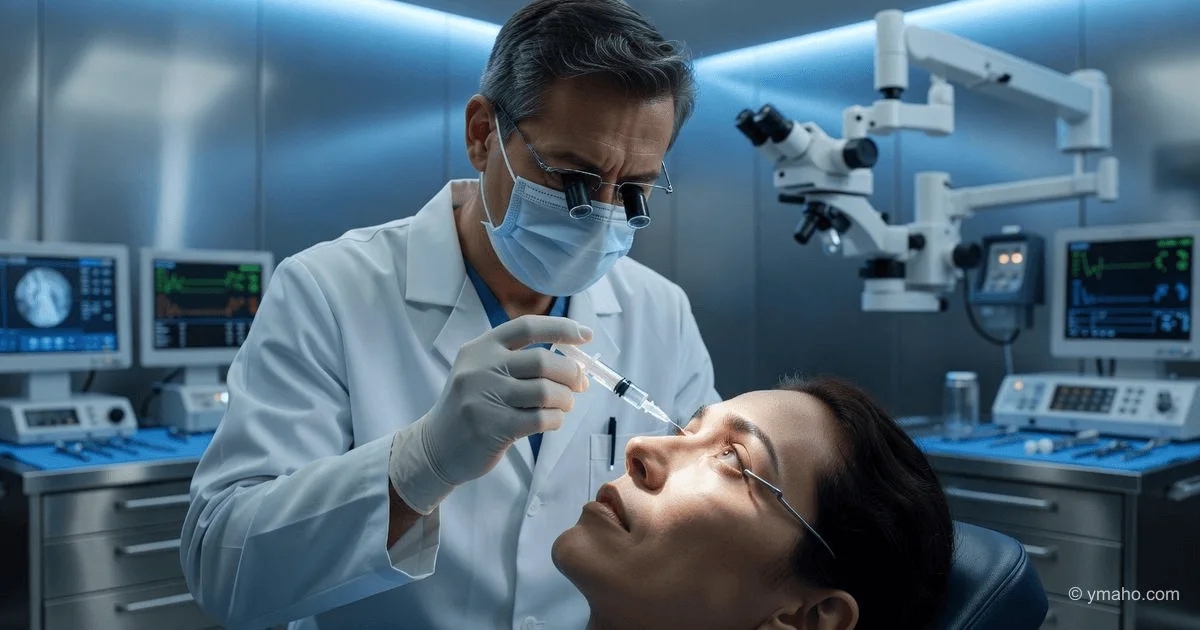
Why was the first injection given in the eye? Because it offers unprecedented control: the tissue is localized, outcomes are measurable, and crucially, the experiment is conducted on one eye of the patient while the other remains untreated and serves as a control. In case of unforeseen toxicity or oncogenic transformation, the affected eye can be removed without killing the patient. From a risk management perspective, this is not a choice but the only feasible design for the first-ever human experiment in reversing cellular age.
Who Wins and Who Loses
Winners:
- Life Biosciences and its investors: With fewer than 20 employees, the company has effectively become a monopoly in clinical longevity after IND clearance. If Phase I shows even a hint of efficacy, the company's valuation in the next round could soar above $500 million. Series D investors (still undisclosed) could see a 3–5x return within two years.
- Patients with NAION: This is a "stroke of the eye"—an acute neuropathy with no approved drug worldwide. For them, ER-100 is the only hope for recovery, not just slowing vision loss.
- Geneticist Yuancheng Ryan Lu and his career: A graduate student who endured years of setbacks is now the father of the world's first clinical rejuvenation therapy. His position at the Whitehead Institute is now unassailable, and if the trial succeeds, it paves the way for his own lab with a nine-figure budget.
Losers:
- Altos Labs and other "heavy" longevity players with billion-dollar budgets: Jeff Bezos invested about $3 billion in Altos Labs, but they have yet to reach IND. Life Bio, with $80 million, has outpaced the giants simply by choosing a narrow, measurable, surgically controlled target.
- Glaucoma drug manufacturers (Santen, Novartis, Allergan/AbbVie): Their portfolios rely on lowering intraocular pressure through mechanical or pharmacological means. If ER-100 shows it can restore already-dead retinal ganglion cells, it will devalue the multi-billion-dollar symptomatic therapy market, estimated at around $6 billion annually.
- Skeptics within the scientific community: Tamir Chandra from the Mayo Clinic has already warned that cells losing their identity could become malignant. If the trial fails due to cancer, the entire field of epigenetic reprogramming could be discredited for at least a decade.
What the Media Isn't Saying
Here's where it gets interesting. David Sinclair is a deeply controversial figure in academia. For years, he made bold claims about resveratrol and sirtuins that other labs could not replicate. Part of the scientific establishment considers him a showman rather than a scientist. And now his company, not anyone else's, is the first to enter clinical trials. This creates immense tension: if ER-100 works, Sinclair becomes untouchable. If not, the entire longevity sector will take a hit from which it will take years to recover. Meanwhile, Sinclair is no longer the operational leader—he is a co-founder and the face of the brand. The company is operationally run by CEO Jerry McLaughlin, a former top executive at Merck.
A second serious issue: Nature openly discusses the problem of immunogenicity. The genetic switch controlling OSK expression is made from bacterial and viral components. The patient's immune system may attack not only the AAV vector but also the control mechanism itself. If the first patients develop uveitis or a systemic immune reaction, the design will have to be completely rethought. This is the "skeleton in the closet" that the company does not advertise but that appears in the original publication.
Finally, an insider observation: Life Biosciences previously tested this approach in a MASH (fatty liver disease) model and obtained encouraging results. But they switched to the eye. Why? Because the regulatory path for the eye is shorter, and the liver is an organ where an oncogenic error kills not in months but in weeks. The company waited for a moment when the FDA would be most receptive to breakthrough therapies. They chose the window of January 2026—when the regulator had already granted Fast Track to dubodenacel and clearly signaled a readiness for bold decisions.
Forecast: Next 30 Days and 90 Days
Next 30 days (until June 7, 2026):
Patient enrollment in Phase I (NCT07290244) will accelerate. Life Bio will secure another $10–15 million in venture debt from Silicon Valley Bank or Hercules Capital, backed by the Series D round. The company will also begin closed-door negotiations with the FDA on the Phase II design—the key question will be whether the regulator requires data from the contralateral eye or if comparison with historical controls is sufficient. Meanwhile, Altos Labs will make an aggressive attempt to poach key Life Bio employees who worked on preclinical phases—salary information with bonuses of $300,000–$400,000 is already circulating in Boston biotech circles.
Next 90 days (until August 7, 2026):
The first interim safety data will emerge. If at the 3-month mark, 12 glaucoma patients show no signs of inflammation, tumors, or systemic toxicity, the market will react instantly: shares of public companies in the longevity sector (if any) will surge, and Life Bio's private valuation will cross $1 billion. Sinclair will speak at a major conference (likely the American Aging Association meeting in late July) and present the first retinal images before and after therapy.
However, the most important marker is the behavior of Pfizer and Novartis. If rumors surface in July 2026 that one of the Big Pharma companies has begun due diligence on Life Bio for a potential acquisition at a 200–300% premium over current valuation, it means the data is truly groundbreaking. If such talks do not start by August, it likely indicates ambiguities in the data, and Sinclair will have to navigate between scientific pride and business reality. Either way, these 90 days will determine whether "partial reprogramming" is the major scientific breakthrough of the decade or another chapter in the history of longevity biotech disappointments.
— Editorial Team









