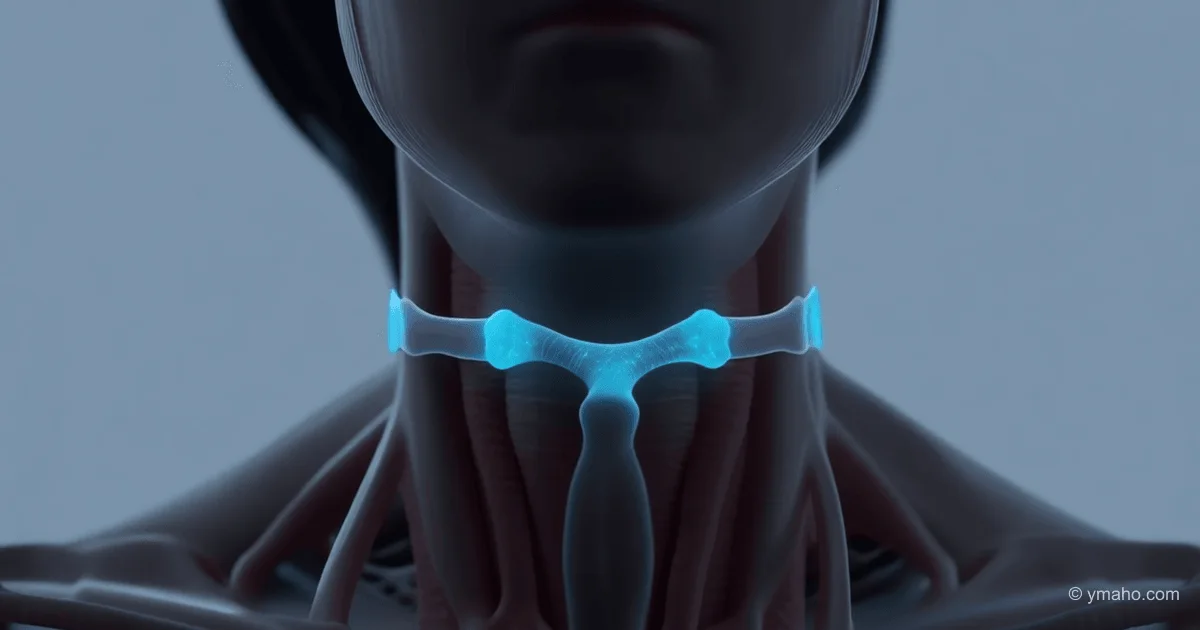
Implantable Stretchable Devices Show Potential in Treating Resistant Hypertension
Researchers at Penn State University have developed tiny elastic artery implants that deliver gentle electrical stimuli to lower blood pressure. The technology targets the 10% of hypertension patients who do not respond to medication.
Electricity instead of pills: why the flexible implant from Pennsylvania is not 'just another rat study'
The Essence: What Is Really Happening
On May 14, 2026, Penn State University published results on CaroFlex — the world's first 3D-printed bioelectronic hydrogel implant that adheres to the carotid artery and lowers blood pressure with electrical impulses without a single suture. In a rat model, four out of five tested frequencies reduced pressure by an average of over 15% within a 10-minute stimulation window. After two weeks, the tissue around the implant remained clean, with no signs of inflammation or immune response.
Most outlets reported this as a 'curious university development.' But those inside the industry see it differently. CaroFlex is not a device in itself. It is an answer to a fundamental problem that has held back the entire baroreflex therapy niche for years: the mechanical mismatch between a rigid metal electrode and a living, pulsating artery.
Existing devices — primarily Barostim from CVRx — use platinum electrodes fixed with sutures. Sutures eventually damage both the tissue and the electrode itself. The artery constantly expands and contracts, while rigid metal resists this movement. The result is loss of contact, reduced efficacy, and risk of vascular injury. CaroFlex solves this problem at the material level: the hydrogel stretches to more than twice its original size, and the adhesive layer maintains strong adhesion even after six months of storage.
Timeline and Context
Baroreflex therapy is not a new idea. Baroreceptors in the carotid sinus detect stretching of the arterial wall and send signals to the brain, which modulates heart rate and vascular tone. The idea of stimulating these receptors electrically to lower blood pressure has existed for decades.
The commercial flagship is Barostim from CVRx. The device received Breakthrough Device Designation from the FDA and approval in 2019 for heart failure. In January 2026, CVRx launched BENEFIT-HF — one of the largest cardiac device studies in history, with 2,500 patients. The company closed the first quarter of 2026 with revenue of about $14.8 million and growth of roughly 20% year-over-year. New Category I CPT codes took effect in January, eliminating automatic prior authorization denials — a huge step for commercialization.
It would seem: the market exists, the technology is approved, codes are in place. So what's the problem? The problem is that Barostim is an implant in the classic sense: two components, surgical implantation, sutures on the artery. The procedure is invasive. Indications are limited. Patients and doctors hesitate.
CaroFlex attacks precisely these limitations. No sutures. Minimal invasiveness. Hydrogel adhesion instead of surgical fixation. Scalable 3D manufacturing instead of complex medical device assembly. Tao Zhou, the group leader at Penn State, puts it bluntly: 'For many patients, even a combination of three to five drugs does not lower blood pressure.' His lab is actively pursuing several 3D-printed bioelectronics developments for different parts of the body.
Who Wins and Who Loses
Winners.
Penn State and Tao Zhou personally. He gains priority in the field of soft bioadhesive bioelectronics. The patent portfolio is just forming, and the publication in Device with DOI 10.1016/j.device.2026.101150 establishes a priority date.
CVRx — paradoxically. CaroFlex is not a competitor to Barostim for the next 5–7 years. But it validates the very concept: baroreflex therapy works. Every publication on successful baroreceptor stimulation expands the evidence base for the entire niche. Moreover, a large pharmaceutical company seeing promise in soft implants could acquire CVRx as a ready-made commercial channel for future technology.
The 10% of patients with resistant hypertension — about 12 million people in the US alone. For them, medications do not work. CaroFlex promises a solution without systemic side effects and without major surgery.
3D printing in medtech. CaroFlex is a demonstration of additive manufacturing capabilities for implantable electronics. If a prototype printed in a university lab shows such results in animals, the logical next step is printing personalized implants tailored to a specific patient's anatomy.
Losers.
Big pharma in the hypertension segment. The antihypertensive drug market is worth tens of billions of USD. The three-to-five drug combinations Zhou mentions are a steady revenue stream for pharma companies. An implant that lowers blood pressure without drugs threatens not just one drug but entire classes — from ACE inhibitors to diuretics.
Manufacturers of traditional implantable electrodes. Platinum, titanium, silicone insulation — the industry standard for decades. CaroFlex, with its hydrogel and absence of sutures, makes this architecture obsolete — not tomorrow, but the direction is set.
What the Media Isn't Saying
Insight #1: CaroFlex is not a device but a technology platform. The bet is not on hypertension.
A careful reading of the publication reveals the true scale of ambition. Zhou does not talk about treating hypertension — he talks about '3D-printed bioelectronics for use across the body.' The carotid sinus was chosen as the first target because it is low-hanging fruit: good access, well-understood physiology, competitors (Barostim) have already paved the regulatory path. But the same technology — a soft, adhesive, stretchable electrode — is applicable to any part of the body where neuromodulation is needed. The vagus nerve. Sacral nerves. Deep brain structures.
Penn State has essentially created a universal building block for bioelectronic medicine — a field that DARPA funds through the ElectRx program and NIH through the SPARC program. Zhou's next publications will not be about hypertension.
Insight #2: The competition is not between CaroFlex and Barostim, but between two philosophies of neuromodulation.
CVRx built the classic medtech model: implant + surgery + reimbursement code + clinical trial on thousands of patients. The result is predictable, regulated, insurable. Penn State is building a 'plug-and-play' model: print, stick, wear. These are two different philosophies, and they do not directly compete — they target different generations of patients and different regulatory regimes.
The key question is long-term stability of the hydrogel in vivo. Two weeks in rats is proof of concept, but months and years of data are needed before human implantation. Barostim has existed in the human body for years; CaroFlex, two weeks in rats. Comparing them clinically is not yet appropriate.
Insight #3: Is 15% reduction in 10 minutes a lot or a little? The correct answer: it's unclear, and that's normal for this stage.
Critics will say 15% is modest; some drugs achieve more. But this is an acute study with a limited set of frequencies. Optimal stimulation parameters have not yet been found. Moreover, the baroreflex in rats differs from that in humans. The actual reduction in humans could be 5% or 25%. Penn State's regulatory strategy will depend on the percentage shown in subsequent large animal experiments.
Forecast: Next 30 Days and 90 Days
Days 1–30 (mid-May to mid-June 2026):
The Penn State publication will spark a surge of interest in CVRx — the only public company in the baroreflex therapy niche. Analysts at William Blair and other investment houses will issue notes mentioning CaroFlex as market validation. CVRx's market capitalization (about $149 million) could temporarily rise 10–15% amid the news flow.
Zhou's lab will receive inquiries from major medtech companies (Medtronic, Abbott) about collaboration or licensing. The patent landscape is still open, and whoever first strikes a deal with Penn State will gain an advantage.
Days 31–90 (June to August 2026):
Penn State will announce a transition to large animal studies — likely pigs, whose cardiovascular system is close to humans. This is a necessary step before an IND submission.
Tao Zhou will speak at a major bioelectronics conference (IEEE EMBC or Bioelectronic Medicine Gordon Conference), where he will present a technology roadmap beyond hypertension.
One of the big pharma companies with an antihypertensive drug portfolio (Novartis, AstraZeneca) will initiate an internal bioelectronic medicine project — if it hasn't already. CaroFlex will become a cited reference in their strategic documents.
CVRx will likely announce its own R&D initiative on soft electrodes or a partnership with an academic group. The company cannot ignore a technology that threatens the architecture of its own device in the long term.
Historical parallel: In the 1960s, pacemakers were bulky, with rigid wires and required abdominal surgery. Today, they are miniature, wireless, and implanted via catheter. The path from CaroFlex to a commercial product is a decade. But the direction is set: the future of neuromodulation is soft, adhesive, and printed. And the fact that a small university group has outpaced big industry in this regard says that the big players have been optimizing hardware for too long, forgetting about materials.
— Editorial Team









