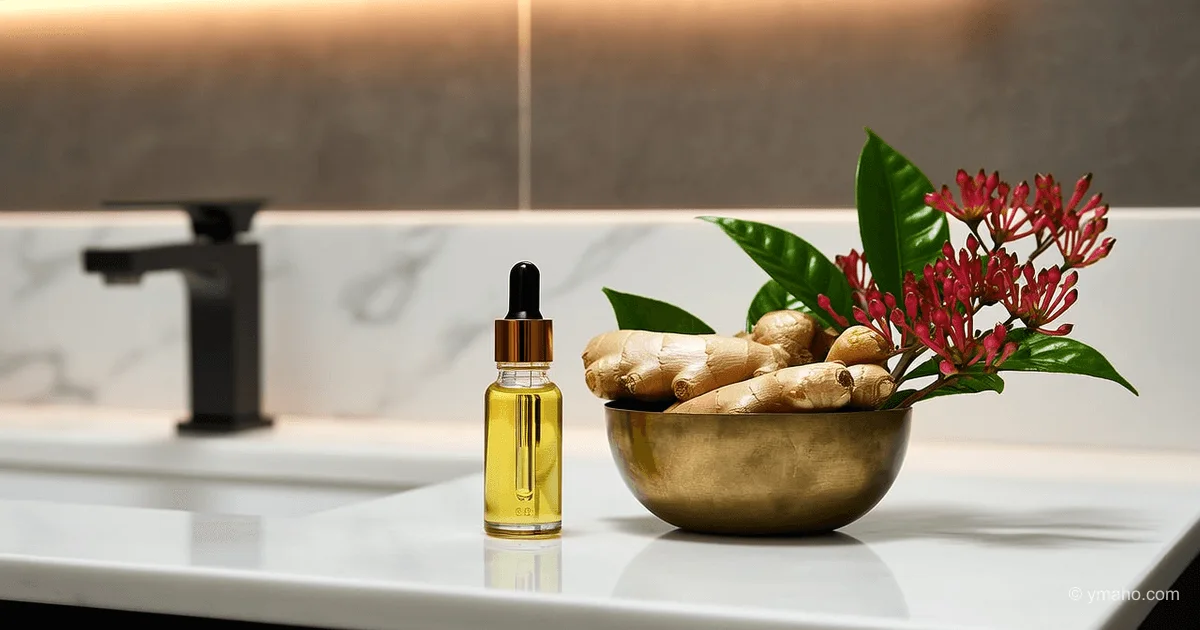
I-Beauty: India Becomes the New Global Trend in Skincare
The Indian beauty industry is entering the global arena, blending Ayurveda with modern science. Major corporations like L'Oréal and Estée Lauder are actively acquiring local brands, and India's cosmetics exports have surged to $768 million in 2025.
I-Beauty: How India Is Rewriting the Rules of the Global Beauty Industry
What's Really Happening
The story of I-Beauty as of May 2026 is not just about export growth to $768 million or another exotic wave following K-Beauty and J-Beauty. It's about how multinational corporations, having lost the ability to create organic growth, have started buying cultural codes. L'Oréal, Estée Lauder, Unilever—they all see in Ayurveda not just an ingredient for another cream, but a ready-made marketing platform with a thousand-year history and zero trust barrier for 1.4 billion consumers.
The Indian beauty and personal care market is worth $23.73 billion in 2025 and is projected to reach $42.54 billion by 2034. But the key word here is not "growth" but "structural gap": the premium segment holds a tiny share despite a massive middle class. Global players are entering precisely this gap. Estée Lauder's full acquisition of Forest Essentials (deal closing in the second half of 2026) is not an isolated case but a template: first a minority stake, then 49%, then full control. Unilever Ventures is simultaneously taking indē wild into Sephora US with a projected $20 million annual revenue by end of 2026.
Timeline and Context
The story didn't unfold spontaneously. Forest Essentials was founded in 2000; Estée Lauder took a minority stake in 2008. For twenty years, the corporation observed and tested the hypothesis: "Does Ayurveda work as a premium narrative outside India?" The answer: yes.
Parallel track—indē wild: DTC launch in 2021, $5 million strategic investment from Unilever Ventures, entry into Sephora UK in September 2024 with 677% quarter-over-quarter growth, and now a shelf in 178 Sephora US stores since March 2026. This is the first Indian brand built and scaled entirely domestically to enter US Sephora retail.
Meanwhile, K-Beauty increased exports to India by 44.7% in the first half of 2025, and Korean cosmetics exports to India exceeded $50 million. This is a two-way movement: India is not only exporting its own but also becoming a battlefield for other beauty waves.
Who Wins and Who Loses
Winners—global corporations with long planning horizons. Estée Lauder gets a ready-made asset with profitability, a retail network of nearly 200 stores, and cultural authenticity that a Western R&D team cannot replicate. Unilever Ventures bets on indē wild as a bridge between the two largest beauty markets—India and the US.
Indian founders who have learned to package Ayurveda in a format understandable to Western consumers also win: not temple exoticism, but "clinically proven efficacy based on ancient knowledge." This is exactly the narrative that resonates with Sephora, Ulta, and luxury retailers.
Losers—independent Western brands without cultural background. When Sephora shelf space is limited and indē wild enters with premium product margins and "affordable luxury" pricing, there is less room for, say, a fourth vitamin C serum brand.
Local Indian players without venture capital also lose. While Forest Essentials and indē wild scale globally, thousands of small Ayurvedic manufacturers remain in the domestic market, where competition only intensifies with the arrival of K-Beauty and C-Beauty.
What the Media Isn't Saying
Insight: Ayurveda is not just a "tradition"; it's a way around regulatory barriers for claims.
Western brands spend years and millions of dollars on clinical trials to earn the right to write "anti-aging" on a jar. Ayurvedic brands take a different path: they don't make direct medical claims. They say "balance your doshas," "kindle your inner Ojas," "align Panchamahabhuta." This doesn't require FDA approval as a drug claim, but consumers perceive it as a promise of efficacy. Forest Essentials has spent decades building a narrative around concepts like Alankaras, Gunas, and Rasa—and it works without a single pharma-grade clinical trial.
A second non-obvious point: the real margin of I-Beauty is higher than it seems. The cost of ingredients—turmeric, neem, saffron—is minimal when sourced at scale within India. Add domestic manufacturing (Forest Essentials will retain its own facilities even after acquisition) and "affordable luxury" pricing, and you get a margin structure that Western contract manufacturers can only envy.
Third: I-Beauty enters the wellness territory, which is much broader than cosmetics. indē wild sells "Champi Pre-Wash Treatment Hair Oil"—and it's simultaneously hair care, a ritual, and mental wellness. Such a product is harder to commoditize.
Forecast
Next 30 days (until mid-June 2026):
Expect the closing of L'Oréal India's acquisition of a majority stake in Innovist—negotiations are already underway, and this will be the next signal after Estée Lauder. Also expect an official announcement of the India-EU trade agreement with a cosmetics section, opening the European market to Indian brands.
Next 90 days (until mid-August 2026):
By the end of summer, we will see at least two new Indian brands in global beauty conglomerates' portfolios. A likely candidate is RAS Luxury Skincare, in which Unilever has already invested. Also expect Sephora to announce an expansion of the I-Beauty shelf to more doors after indē wild's initial results. The key risk is consumer fatigue: consumers may start ignoring "yet another wave" if brands cannot differentiate within the I-Beauty segment itself.
The main question is not whether I-Beauty will become a global trend—it already has. The question is whether Indian brands can maintain authenticity when backed by corporate quarterly profit KPIs. Forest Essentials promises to stay true to its roots. Let's see how long that promise holds under pressure from Estée Lauder shareholders.
— Editorial Team









