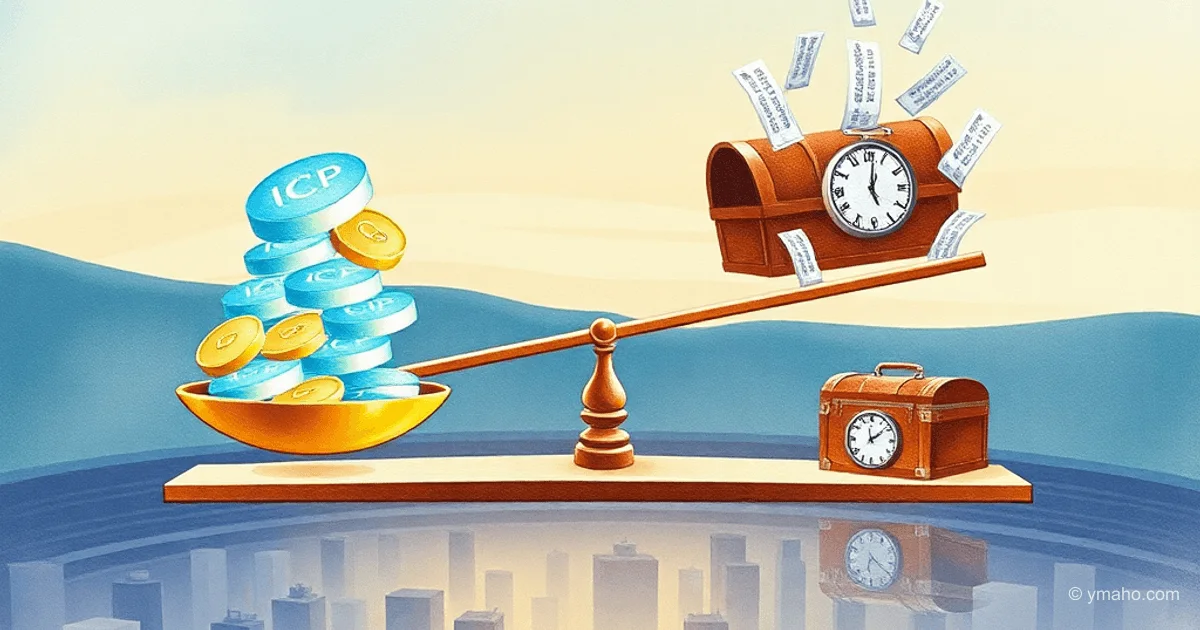
What Is the ICP Token Really For? A Simple Breakdown of Its Role in Internet Computer
The Internet Computer (IC) network runs on a token called ICP—but it’s not just another cryptocurrency you buy and hold. Instead, ICP acts like both the fuel and the voting ballot for the entire system. If you’ve ever wondered how a blockchain can run websites, apps, and smart contracts without relying on traditional servers, understanding ICP’s role is key.
Why ICP Isn’t Just Another Crypto
Unlike Bitcoin—which mainly stores value—or Ethereum—which powers smart contracts with gas fees—ICP has a dual job: it pays for computing power and lets holders vote on how the network changes over time. Think of it like owning shares in a company that also double as prepaid credits for using its services. You’re not just investing; you’re actively keeping the system running and helping steer its future.
This design means ICP isn’t meant to sit idle. Its value comes from real use: developers spend it to run apps, and users lock it up to vote on upgrades. If no one used the network or participated in decisions, ICP would lose much of its purpose.
How ICP Pays for Computing (Without Price Swings Ruining Your Budget)
When developers build apps on Internet Computer, those apps need computing power—just like your phone needs battery to run apps. But instead of paying directly in ICP, they convert it into something called Cycles.
Cycles are like prepaid electricity tokens: stable in cost, so a developer always knows how much “juice” their app will get, regardless of whether ICP’s market price doubles or halves that week. This separation protects builders from crypto volatility while still tying resource usage back to the ICP economy.
Every time ICP is turned into Cycles, those ICP tokens are burned—permanently removed from circulation. So the more people use the network, the fewer ICP tokens exist overall, which can affect scarcity over time.
Voting Power Comes From Locking Up ICP
To have a say in how Internet Computer evolves, you don’t just hold ICP—you stake it into something called a Neuron. A Neuron is like a locked savings account that gives you voting rights.
Your influence depends on two things:
- How much ICP you lock up
- How long you agree to keep it locked (up to 8 years)
The longer you commit, the more voting power you get—and the bigger the rewards you earn. This encourages people to think long-term, not just flip tokens for quick profit. It’s similar to getting extra voting shares in a co-op if you promise to stay a member for five years instead of one.
Through Neurons, the community decides everything: Should the network speed up? Add new features? Change fee structures? No CEO or board makes these calls—it’s all decentralized.
How ICP’s Supply Grows and Shrinks
ICP doesn’t have a fixed supply like Bitcoin (which caps at 21 million). Instead, its total number of tokens changes based on what the network is doing:
- New ICP is minted as rewards for people who vote with their Neurons.
- ICP is burned whenever someone converts it to Cycles to run apps.
At launch, about 469 million ICP existed, split among early supporters, developers, investors, and the community. Since then, the supply has floated up or down depending on how active governance and usage are.
This dynamic model aims to balance incentives: reward participation, but also tie token creation to real work being done on the network.
What Does This Mean for Regular People?
You don’t need to run a node or code an app to be affected by ICP’s design. If you hold ICP, your tokens gain utility beyond speculation—they can earn rewards and shape the network’s rules. And if you use apps built on Internet Computer (like decentralized social media or enterprise tools), you’re indirectly supporting a system where users, not corporations, control the infrastructure. That shift—from centralized tech giants to user-governed networks—is what makes tokens like ICP matter in the real world.
Key Takeaways
- ICP is used to create Cycles, which pay for computing power on the Internet Computer network.
- Converting ICP to Cycles burns the token, reducing total supply.
- Staking ICP creates Neurons, which grant voting rights in network decisions.
- Voting power increases with both amount staked and lock-up duration.
- ICP has no fixed supply—it expands through governance rewards and shrinks through usage.
— Editorial Team









