IMF Warns: Middle East Conflict Could Slow Global Economy
Even if you live thousands of miles from oil fields, a prolonged conflict in the Middle East could ripple across the global economy. The IMF has revised its global growth forecast downward and explains how rising oil prices could push the world toward recession.
Why This Affects Everyone
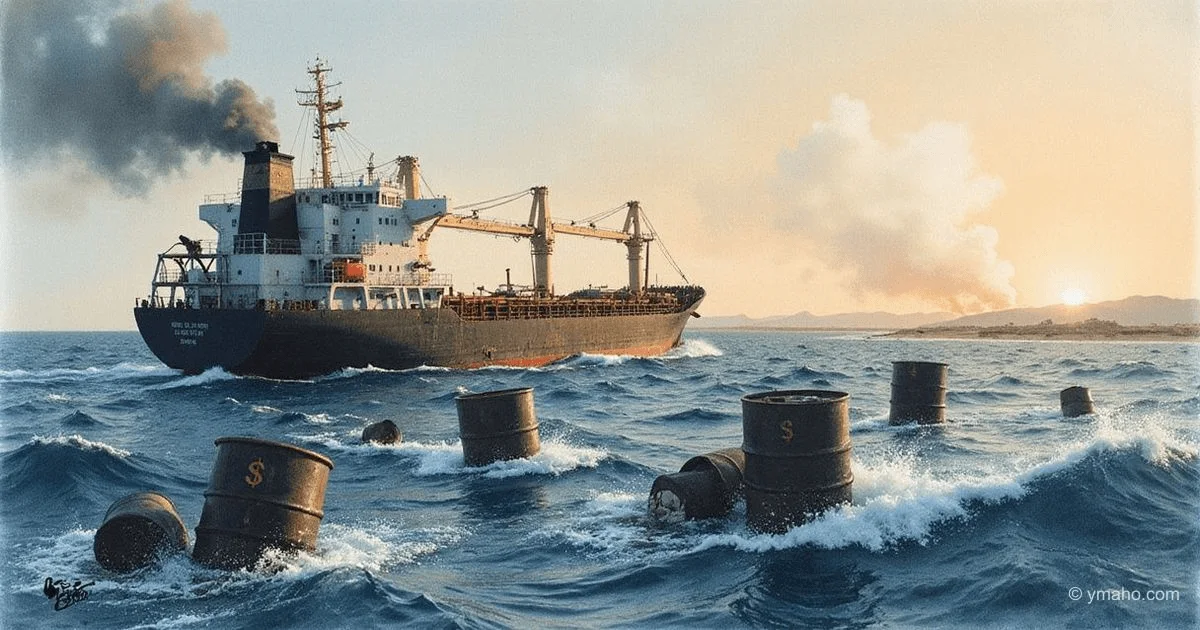
Imagine the global economy as a massive ship. Oil is its fuel. When fuel gets more expensive, the entire journey slows down and costs more—shipping, manufacturing, retail prices all rise. Currently, oil hovers around $100 per barrel, already above normal levels. If prices stay high or climb further, global economic growth could slow to dangerously low levels.
The International Monetary Fund (IMF), the watchdog monitoring global economic health, now expects just 3.1% growth in 2026—down from a previous forecast of 3.3%. That may seem like a small difference, but for a trillion-dollar global economy, even 0.2% can mean losses in the hundreds of billions of dollars.
Three Possible Futures
The IMF has outlined three potential scenarios—from optimistic to alarming:
- Optimistic: The conflict resolves quickly, oil stabilizes at $82 per barrel by 2026. Global growth reaches 3.1%, inflation nears 4.4%.
- Base Negative: Oil remains expensive (~$100 in 2025–2026), then slightly drops. Growth falls to 2.5%.
- Crisis Scenario: The conflict escalates, oil spikes to $110–$125 per barrel. Growth slows to just 2.0%—a level many countries define as the start of a recession.
For context, during the pandemic and after the 2008 crisis, growth was similarly low—around 2% or less. That’s when companies cut jobs, wages grow slowly, and prices surge.
Who Will Be Hit Hardest?
Countries in the Middle East will take the biggest blow. Iraq’s GDP could shrink by 6.8%, Qatar by 8.6%. But the effects won’t stop there. High oil prices raise shipping costs, plastic prices, fertilizers, airfares—essentially anything tied to transport or production.
Inflation—simply rising prices for goods and services—could return. In the worst case, it could exceed 6% annually. That means your grocery bill will rise noticeably, while paychecks fail to keep pace.
Key Takeaways
- The IMF has lowered its 2026 global growth forecast from 3.3% to 3.1%.
- The main risk: escalation in the Middle East and oil prices exceeding $100 per barrel.
- At $110–$125 per barrel, growth could drop to just 2%, bringing the world close to recession.
- Inflation may accelerate again—up to 6% or higher.
- Impacts will be global, affecting even nations far from the conflict zone.
What This Means for You
If things worsen, you might notice groceries, clothing, and gas getting pricier—and new gadgets becoming harder to afford. Companies may cut hiring, and travel could become a luxury. But if diplomacy succeeds and the conflict avoids full-scale war, consequences will remain moderate. For now, the outcome hinges on how fast the parties find a way out of the crisis.
— Editorial Team









