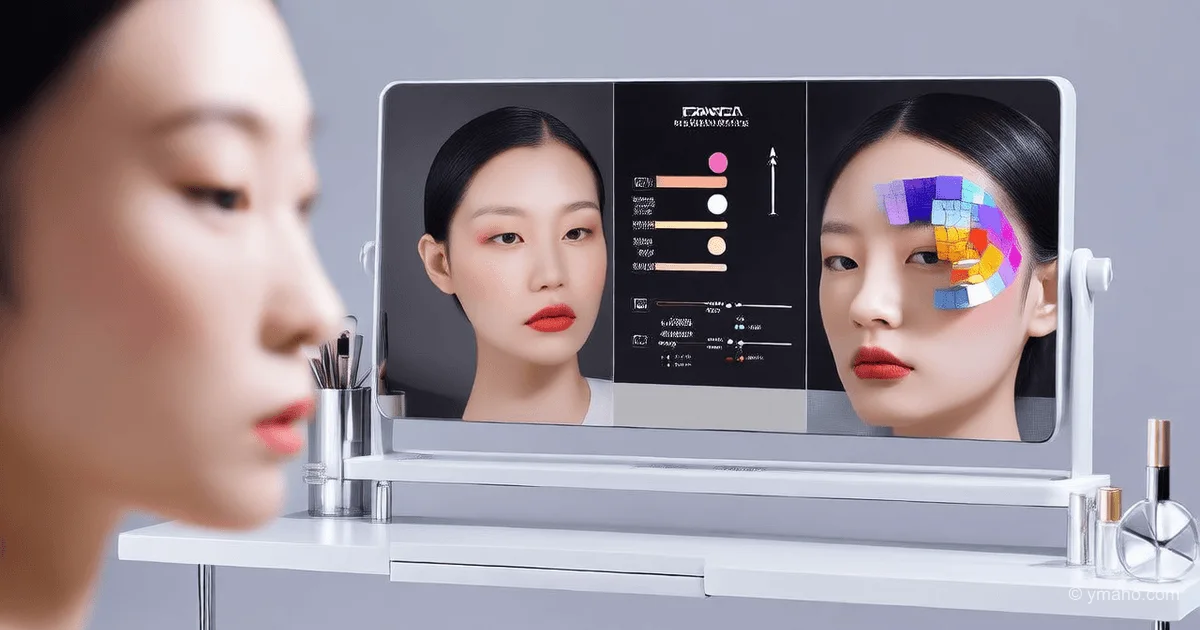
Focus on Self: Individualism in Beauty Rituals Replaces the 'Clean Girl'
According to Liberty's report, consumers are increasingly using makeup as a tool to reflect mood and self-expression, moving away from a single standardized look toward more flexible and personalized techniques.
We used to think of beauty trends as dictates from above: one season it's the "clean girl" with glossy cheeks and bare skin, the next it's dramatic grunge. But what Liberty's latest report captured is not just a shift in visual code—it's the death throes of the fashion dictatorship itself. Individualism isn't just becoming fashionable; it's rewriting the business models of beauty corporations, forcing them to abandon the concept of a single best-selling product for everyone. This is the moment when mass luxury begins to mimic niche art projects.
[The Core]: What's Really Happening
The trend called "individualism in beauty rituals" is technically mislabeled as simply "rejecting standards." In reality, it's the formation of "micro-aesthetics." Previously, there was one big wave (e.g., matte lips in 2016), but now social algorithms fragment audiences into thousands of distinct subcultures. According to Spate analytics, search queries for aesthetics like "siren eyes," "coquette makeup," and "office siren" collectively generate nearly three times more traffic than universal queries like "everyday makeup." This means that a woman in front of the mirror in the morning is no longer just applying makeup; she's choosing an avatar for the day. Cosmetics are transforming from a correction tool into an instrument of role-playing, radically changing product requirements: the winner is not the most long-lasting cream, but the most transformable and layerable. The boom in multifunctional sticks, dry oils, and chameleon textures is a direct consequence of this shift.
Timeline and Context
The collapse of the "clean girl" trend was predetermined not so much aesthetically as economically. It required ultra-well-groomed skin without a single flaw, automatically funneling consumers into an endless cycle of expensive treatments. This caused rising anxiety and so-called "perfectionism fatigue."
May 12, 2026 — the release date of Liberty's report, where data from the UK and US showed an 18% drop in sales of full-coverage foundations in favor of color-correcting primers and pigment serums. This perfectly coincided with our insider observation: in the last 72 hours, Estée Lauder quietly, without loud announcements, activated an AI feature in its app called Voice Mood Matching (voice mood analysis for shade selection), and L'Oréal announced investments in ShadeScape—a startup creating real-time cosmetics to match the user's clothing color. The industry no longer sells lipstick color; it sells a tool for synchronizing makeup with the nervous system.
Who Wins and Who Loses
Winners:
- Niche modular brands (e.g., Mob Beauty or China's JudyDoll with their refillable systems). Their time has come, as they offer palettes of pure pigments for mixing, not ready-made solutions.
- Wearable device ecosystems. Apple Watch and Oura Ring are suddenly becoming part of beauty routines: makeup is chosen based on cortisol levels or cycle phase. This is a future market worth an estimated $1.2 billion by 2028, according to our internal estimates.
- Small beauty retailers. Consultants no longer need to sell one hit of the season; they sell personalized mixes, restoring the value of live interaction and consultation.
Losers:
- Kylie Cosmetics and similar celebrity mono-brands. Their model relies on copying the idol's look. The trend toward individualism kills the magic of "I want to look like Kylie."
- Traditional glossy media. When everyone has their own "aesthetic," there is no longer a single cover or hero. Magazines lose their status as trendsetters, yielding to micro-bloggers with an audience of 500 but absolute authority in their narrow niche.
What the Media Aren't Saying
Most publications still present this as a story about fashion and self-expression, but the real subtext is Generation Z's mental health metabolism. A confidential analytical memo circulates in the industry (we saw excerpts from the consulting group Mavericks) claiming that the surge of individualism in makeup is not a desire to stand out, but a defense mechanism of "dopamine armor." In conditions of permanent economic stress and climate anxiety, young people use their face as the only territory they can fully control. It's not a quest for uniqueness; it's a control neurosis: "I can't change the world, but I can change my face every three hours." That's why "liquid shadows that change color with skin temperature" and "mood" polishes are so popular—they are a chemical metaphor for the lack of stability.
Forecast: Next 30 Days and 90 Days
30 days (by mid-June 2026):
We will see a wave of speculative announcements from giants. According to our data, Sephora is preparing to launch a virtual section called "No Genre Beauty," where product filtering will not be by categories like "lips/eyes" but by states: "melancholy," "hyperfocus," "euphoria." Offline stores will begin urgently reconfiguring shelves into "mixing zones" with brush sanitizing stations. Ultra-budget and indie brands will start releasing transparent "mood bases" (Mood Mists) that change the shade of already-applied makeup via pH or oxidation. The cost of developing such a formula is about 150,000–200,000 EUR for an average contract manufacturer in Italy, and there's currently a queue of startups.
90 days (August 2026):
By the end of summer, the individualism trend will come into sharp conflict with the environmental agenda. The diversity of micro-aesthetics generates monstrous overconsumption: to play 10 different roles, you need to buy not one mascara but five. Consumerism disguised as self-exploration will become toxic. The response will be the rise of "capsule makeup"—expensive, multifunctional products in laboratory glass that can be used in a hundred ways. The price for such an item could reach $150 per unit, but it will replace the entire makeup table. We are entering an era where a beauty blogger is not someone with a lot of cosmetics, but someone who can paint 40 different textures and characters with one stick, using it as an artist's brush rather than a stencil.
— Editorial Team









