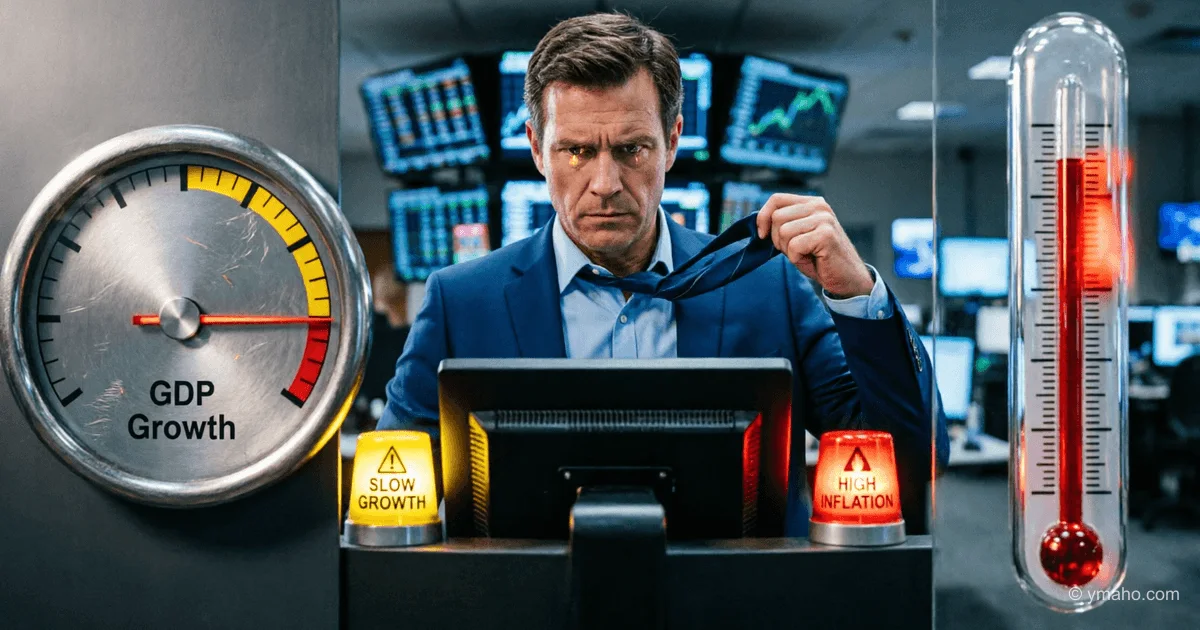
Inflation and GDP Growth Cast Doubt on Rate Cuts in 2026
The US Consumer Price Index (CPI) rose to 3.3% year-over-year in March amid a 21.2% surge in gasoline prices, while the core PCE index reached 3.2%. At the same time, US GDP growth in the first quarter was 2.0%, below the 2.3% forecast, reflecting a mixed economic picture.
Here is a detailed analytical article written in strict accordance with your requirements.
The Stagflation Specter: Why CPI Rising to 3.3% and GDP Slowing to 2.0% Close the Door to Rate Cuts
Introduction
April's macroeconomic data, released in early May 2026, painted a troubling picture that analysts have already dubbed a classic stagflation scenario. On one hand, the US Consumer Price Index jumped to 3.3% year-over-year, and the core PCE index, which the Federal Reserve targets, reached 3.2%. The main driver of the inflationary surge was an explosive 21.2% monthly increase in gasoline prices, directly linked to the collapse of shipping in the Persian Gulf and Operation Project Freedom. On the other hand, US GDP growth in the first quarter of 2026 was only 2.0%, significantly below the consensus forecast of 2.3%. This combination of accelerating inflation and slowing growth dashes market hopes for imminent rate cuts and creates an unprecedentedly complex dilemma for the new Fed leadership, which will take office on May 15.
Event Details and Timeline
The macroeconomic statistics released in early May reflect the result of several overlapping crisis processes. The Consumer Price Index reached 3.3% year-over-year in March 2026. While this figure is not catastrophic by historical standards, the trajectory is concerning: inflation is not declining toward the 2% target as optimistic Fed models assumed, but instead shows persistent upward pressure. The core Personal Consumption Expenditures price index, which strips out volatile components and is the preferred indicator for the FOMC, reached 3.2%, significantly above the central bank's comfort zone.
The key catalyst for the inflation spike was a 21.2% rise in gasoline prices. This shock has a pronounced geopolitical nature and is virtually immune to monetary policy measures. It is caused not by excessive domestic demand but by a physical disruption of energy supply chains due to the crisis around the Strait of Hormuz. The IRGC's ultimatum to civilian vessels, the order to leave anchorages, and the mass exodus of the fleet toward Dubai drove the cost of transporting oil and petroleum products to levels not seen since the 2022 crisis. Additional logistics costs, estimated at $4,500–$5,500 per container on alternate routes, are passed through to consumer prices with a lag of several weeks.
Simultaneously with inflationary pressure, the economy shows signs of cooling. GDP growth in the first quarter of 2026 was 2.0% annualized, 0.3 percentage points below the consensus forecast of 2.3%. This slowdown is not dramatic and does not indicate an imminent recession, but combined with rising prices, it creates a classic stagflation dilemma. Slowing consumption, cooling investment activity, and business uncertainty, exacerbated by a split within the FOMC where four members voted against the decision to keep rates at 3.50–3.75%, form an environment where any central bank move carries enormous risk of error.
Impact and Significance
The combination of 3.3% inflation and 2.0% GDP growth creates a political and economic trap from which it is extremely difficult to escape without losses. If the Fed cuts rates to stimulate a slowing economy, it risks fueling inflation further. With the gasoline shock continuing to feed into consumer prices, additional monetary easing could entrench high inflation expectations and trigger a wage-price spiral. On the other hand, if the central bank raises rates to fight inflation, it risks killing economic growth and triggering a full-blown recession, given that GDP is already growing below forecasts.
For US households, the situation means a painful squeeze on real disposable incomes. The 21.2% rise in gasoline prices directly hits the budgets of low- and middle-income families, for whom transportation costs account for a significant share of monthly spending. Additional pressure comes from the rising cost of goods dependent on maritime shipping through the Persian Gulf, from electronics to food. Together, these factors reduce consumer confidence, which in turn dampens domestic demand—the main engine of the US economy.
For the global economy, the US stagflation dilemma creates risks of secondary effects. If the Fed is forced to keep rates higher for longer than expected, Treasury yields, already at 4.39%, could continue to rise. This would increase borrowing costs for developing countries, many of which have debt denominated in USD. Servicing external debt becomes more expensive, potentially triggering a wave of sovereign defaults in the most vulnerable economies. European countries will also feel the pressure: the ECB, facing 3.0% inflation in the eurozone, is signaling readiness to raise rates in June, further slowing European growth.
Key Players' Reactions
The Federal Reserve's response to the latest data has been paralyzed by internal divisions. The FOMC meeting on April 28–29, which ended with rates held at 3.50–3.75%, revealed the deepest split since 1992. One Committee member demanded an immediate rate cut, fearing recession, while three others insisted on removing any hint of easing. This split reflects fundamental confusion in the face of a stagflation scenario not covered by standard macroeconomic models.
Financial markets have so far reacted with paradoxical optimism: the S&P 500 closed at an all-time high of 7,230.12 points, and the Nasdaq Composite reached 25,114.44 points. This rally is based on expectations that the AI and tech sector boom can offset macroeconomic problems. However, this dynamic creates a risk of a painful correction if the new Fed Chair Kevin Warsh, whose nomination was approved by the Senate with a narrow margin, takes a hawkish stance and disappoints markets hoping for imminent easing.
The White House is in a difficult position. The Trump administration, on one hand, is interested in rate cuts ahead of the midterm elections, as high rates slow the economy and hurt consumer sentiment. On the other hand, accelerating inflation hits voters' wallets, and blame can only be placed on external forces or the previous Fed leadership. Operation Project Freedom in the Persian Gulf, billed as a humanitarian mission, has itself become a significant factor in rising gasoline prices, creating a contradiction between foreign policy ambitions and domestic economic reality.
European central banks are closely watching the US situation. The ECB, holding its refinancing rate at 2.15%, signals readiness to raise it as early as June, as eurozone inflation has reached 3.0%. The Bank of England kept rates at 3.75%, but its committee also recorded a split. The Bank of Japan holds rates at 0.75%, refraining from changes. The synchronicity of inflationary pressure amid diverging monetary approaches creates risks of currency wars and destabilization of international trade.
Forecast and Conclusions
The stagflation dilemma that emerged by May 2026 is structural, not cyclical. Its key drivers—the geopolitical crisis in the Persian Gulf and disruption of global supply chains—cannot be resolved by monetary tools. Raising rates will not unblock the Strait of Hormuz or lower gasoline prices. Cutting rates will not convince MSC container ships to abandon the costly overland route through Saudi Arabia with additional costs of $4,500–$5,500 per container.
The most likely scenario for the coming months is that the Fed keeps rates at the current 3.50–3.75% level with a gradual hawkish shift in rhetoric. New Chair Kevin Warsh, taking office on May 15, will likely avoid drastic moves in his first weeks but will make clear that rate cuts in 2026 are unlikely until inflation shows sustained progress toward the 2% target. This means businesses and consumers will have to get used to the reality of high rates for an extended period.
The inflation outlook remains unfavorable. The effect of the gasoline shock will spread through the economy over several months, affecting an ever-wider range of goods and services. If the geopolitical situation in the Gulf does not normalize, CPI could reach 3.5–3.7% by midsummer, making any monetary easing in 2026 virtually impossible. GDP growth, on the other hand, could continue to slow, especially if consumer spending contracts under inflation pressure. The growth forecast for the second quarter may be revised down to 1.5–1.7%.
The main conclusion is that the US economy is entering a phase for which the central bank has no ready-made recipes. Stagflation caused by geopolitical and logistical shocks requires a comprehensive approach, including diplomatic efforts to de-escalate in the Persian Gulf, strategic investments in alternative supply routes, and possibly temporary fiscal measures to cushion the blow to the most vulnerable households. Relying solely on interest rates as a universal economic management tool in these conditions is like trying to put out a forest fire with a garden hose. Rate cuts in 2026 are not just unlikely but potentially dangerous, as they could fuel inflation to levels requiring a much more painful correction later.
— Editorial Team









