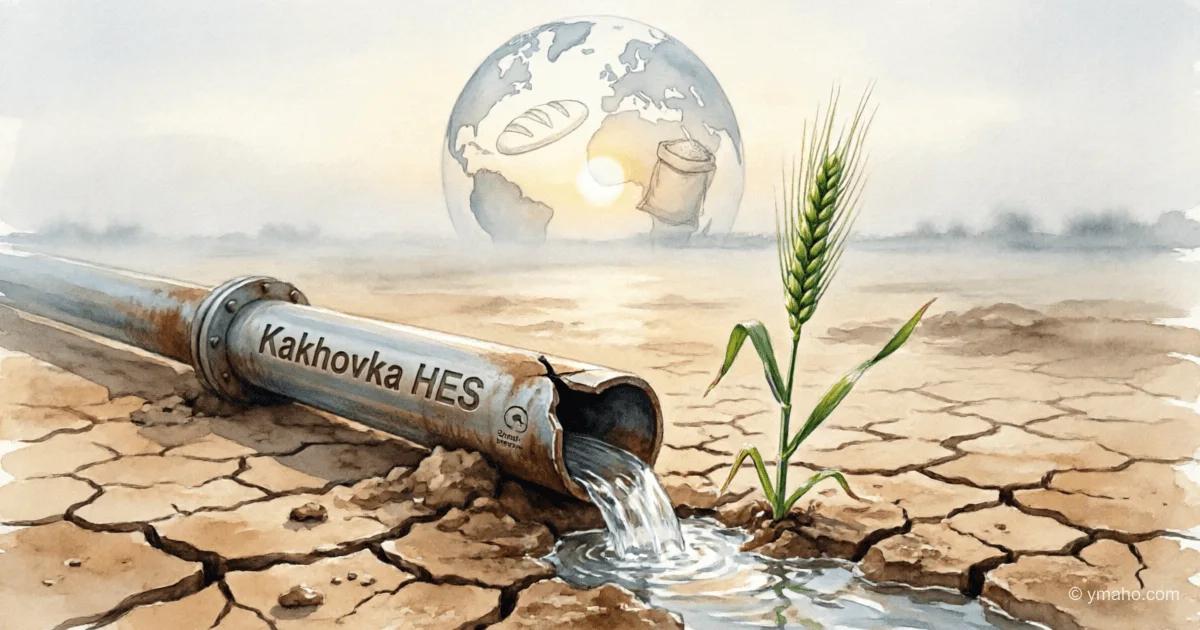
How a Destroyed Dam in Ukraine Affects the Price of Your Bread
Imagine your bread prices rising not just due to inflation, but because of a dam destroyed by Russian forces far away in Ukraine. New agricultural land valuation rules in southern regions could act as a buffer between the war and your wallet—especially since Ukraine supplies one out of every ten tons of wheat globally.
Why Land Valuation Matters More Than It Seems
For a farmer, land is like a lathe for a machinist: its condition dictates how much bread makes it to market. Previously, Ukraine assessed fields based on outdated data, as if the Kakhovka Hydroelectric Plant were still irrigating hundreds of thousands of hectares. But after its destruction in 2023, entire districts turned into arid wastelands. Imagine still paying property taxes on an apartment flooded by a disaster—farmers were effectively paying taxes on "dry" fields that no longer yielded crops.
This directly hit household budgets: higher land valuations meant higher taxes. Meanwhile, ruined irrigation systems left fields barren. The government has now introduced amendments to reflect reality. It’s like recalculating insurance premiums after a crash—fair, but overdue.
How War and Climate Are Breaking the Old Rules
The Kakhovka Hydroelectric Plant was the heart of southern Ukraine’s irrigation network. Its destruction by Russian forces cut off water to 600,000 hectares of farmland—an area roughly the size of Cyprus. Without irrigation, wheat and sunflower yields plummeted, yet tax assessments remained unchanged. It’s like being billed for a desert air conditioner.
Compounding the issue, the war has worsened local climate conditions. Sandstorms and droughts are now commonplace in the Kherson region. The new rules rely on real-time weather station data to measure actual soil moisture. Think of it as a doctor diagnosing a patient based on current lab results rather than an outdated medical file.
What Changed: New Rules for Survival
The government has rolled out three key updates:
- Accurate Moisture Tracking — Instead of averaged historical figures, assessments now factor in specific hydro-meteorological data for the growing season. If there’s been a month-long dry spell, the valuation drops accordingly.
- Accounting for Irrigation Loss — Fields cut off from water sources are no longer classified as "fertile" on paper.
- Farmer Transparency — Landowners can request detailed calculation breakdowns, much like checking a store receipt.
This isn’t just bureaucratic paperwork. For a farmer in Zaporizhzhia whose fields lay fallow after the dam blast, a tax reduction could mean the difference between shutting down operations and successfully planting winter crops.
Global Ripple Effects: From Ukrainian Fields to Your Table
Ukraine ranks as the world’s fourth-largest wheat exporter. In 2022, wartime disruptions sent bread prices soaring by 30% in Egypt and Turkey. Today, these updated rules aim to prevent another crisis spike. If southern farmers can keep their businesses afloat, grain shipments to vulnerable nations will stabilize.
There’s a catch, though: restoring the irrigation infrastructure will take years. Until then, the world relies on harvests grown amid conflict. Every percentage point drop in Ukrainian production could drive up flour prices at your local grocer. It’s like a single broken gear in a watch—the hands won’t stop immediately, but eventually, everything grinds to a halt.
Key Takeaways
- New land valuation metrics account for the actual damage caused by the Kakhovka dam collapse and prolonged droughts.
- These changes ease the tax burden on farmers in frontline regions, helping them stay solvent.
- Since Ukraine supplies 10% of the world’s grain, these adjustments have direct implications for global food security.
- However, without restored irrigation, long-term market risks remain significant.
So what does this mean for everyday consumers? These policy tweaks serve as a small but crucial buffer between geopolitical conflict and your grocery bill. If Ukrainian farmers can survive, it will help keep bread and cereal prices stable. But until the dam is rebuilt, we all remain vulnerable to price spikes triggered by events on battlefields thousands of kilometers away. A simple meal might just be a reminder of how fragile our global food supply chain truly is.
— Editorial Team









