Ukraine Connects to European Power Grid: How This Will Change Everyday Life
Imagine your home connected to a shared power network across an entire neighborhood — if your electricity goes out, your neighbors can share their surplus. That’s exactly how the new law signed by Zelensky works: Ukraine is now officially joining the European power grid. This means Ukrainians will enjoy more stable electricity even during wartime, while Europe gains a new source of "green" energy.
How the Energy Market Will Work Now
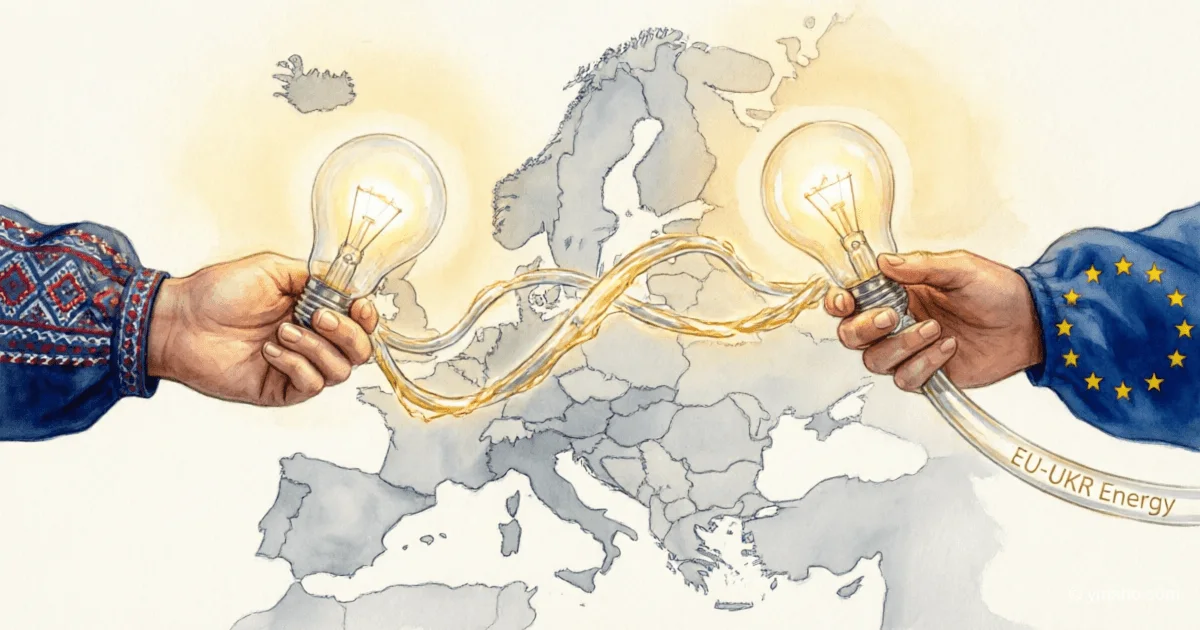
In the past, Ukraine traded electricity alone, like a small island with its own power plant. Now, its energy market is merging with Europe’s — much like connecting two aquariums with a tube so water (in our case, electricity) flows freely between them. This mechanism is called "market coupling."
Here’s what this actually means in practice:
• Trading for tomorrow and in real time: Ukraine can now sell excess power to Europe in advance (like booking a flight seat) or in real time (like hailing a taxi via an app).
• Flexible demand management: Large industrial facilities can reduce consumption during peak hours for bonuses — for example, a factory might pause its assembly line when electricity prices spike, just as you’d turn off your AC on a hot day to save energy.
• Aggregation of small sources: Solar panels on rooftops will be grouped into "virtual power plants." Imagine a thousand lanterns in a park creating one bright glow — similarly, small generators will become a significant force.
These changes implement Europe’s risk management model. Where once Ukraine feared that losing one power plant would collapse the entire grid (like breaking a single thread in a rope), the system now automatically redistributes load — like a cable made of many strands.
Why This Matters Beyond Ukraine
At first glance, this seems like a purely Ukrainian law. But its impact will ripple across all of Europe — and even affect global energy prices. The truth is, Ukraine is Eastern Europe’s largest producer of "green" energy: 55% of its electricity comes from nuclear plants, and another 20% from wind and solar.
For the EU, this is a strategic move. After cutting ties with Russian gas, the bloc urgently needs alternative sources. Ukraine could become a "green bridge" between Europe and future supplies from Moldova or Georgia. It’s similar to adding a new node to a metro system — speeding up travel across the entire city.
Moreover, integration protects Ukraine from energy attacks. When Russian missiles strike substations, European networks can supply damaged regions — like neighbors lending fuel for a generator during an emergency.
What Changes for Ordinary People
Many will ask: "How will this affect my electricity bill?" Let’s break it down without jargon.
First, stability. The more "neighbors" in the power grid, the fewer outages. If the lights go out in your area, the system automatically pulls reserves from abroad — like a bank transfer instantly covering a shortfall.
Second, pricing. Right now, Ukraine must sell surplus power at low rates. With integration, prices will align with European levels. For consumers, this may mean a modest tariff increase (5–10%), but it’s balanced by greater reliability. Think of it like paying slightly more for a taxi — but knowing it’ll always arrive on time.
Third, green opportunities. Homeowners with solar panels can now sell energy directly to Europe. It’s like monetizing your balcony: if you grow tomatoes there, they won’t just be bought by your neighbor — a supermarket might pay a premium price.
What’s important
• Ukraine gains an "energy umbrella" from Europe — protection from attacks and stability during war.
• Europe strengthens energy security by reducing reliance on a single supplier.
• Average consumers will see fewer outages, though tariffs may rise slightly.
• Small-scale energy producers (private solar installations) gain access to the European market.
• This step brings Ukraine closer to full EU membership — energy was the main barrier.
— Editorial Team









