Political Scientist Assesses Iran's Missile Potential for Inflicting Damage in Case of Escalation
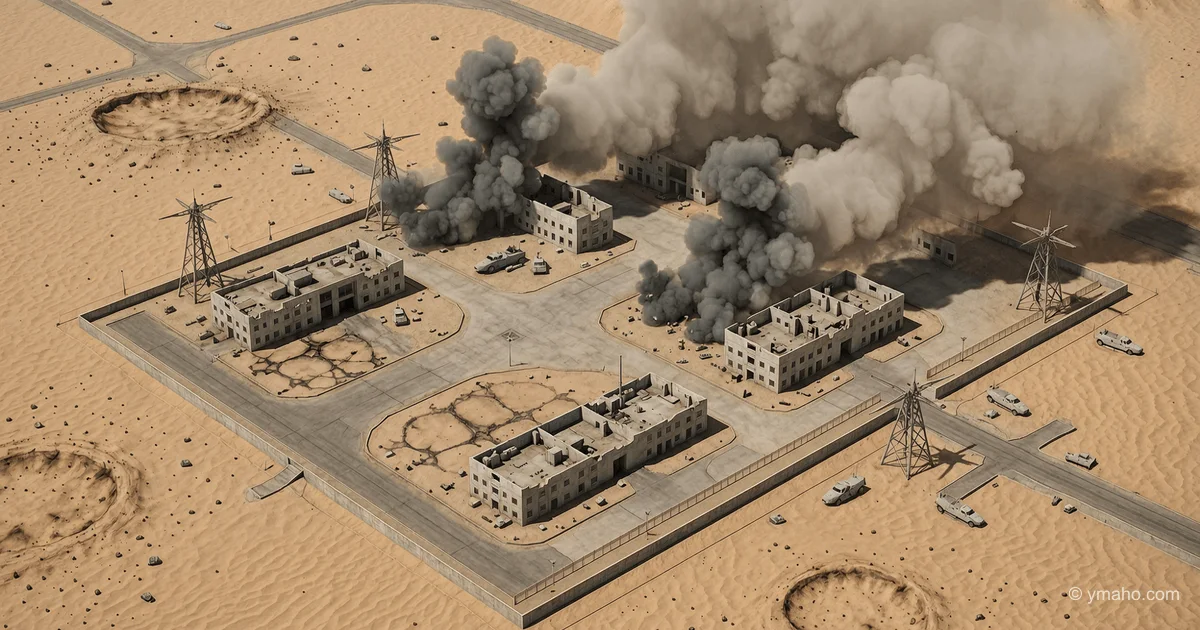
According to Western and American researchers, Iran has sufficient missile potential to inflict serious damage. It is reported that 16 US military bases in the region have already been attacked and partially destroyed.
Iran's Missile Arsenal: Why the Figure of '16 Bases' Is Just the Tip of the Iceberg
The Core: What Is Really Happening
When CNN reported on May 1, 2026, that Iran had destroyed or seriously damaged 16 US military bases in the Middle East, the public outcry was powerful but short-lived. The news played out its information cycle and faded into the shadow of hotter headlines—negotiations in Pakistan, the suspension of 'Project Freedom,' the blockade of the Strait of Hormuz.
However, in reality, Iran's missile potential is the foundation on which the entire current crisis architecture rests. 16 bases are not the final damage figure but a conservative estimate that the US military could confirm without completely undermining allied morale or triggering panic in financial markets. The actual scale of destruction is far more severe—and this is the main understatement that needs to be examined.
Timeline and Context
On February 28, 2026, the US and Israel launched a military operation called 'Epic Fury' against Iran. Tehran's retaliatory strike followed immediately and proved far more powerful than Western military analysts had anticipated.
According to CNN's investigation on May 1, at least 16 US bases were damaged by Iranian missile strikes, with some destruction so extensive that the facilities became unusable for further operations. However, on May 5, The Washington Post published a satellite analysis that recorded 228 damaged structures and pieces of equipment at 15 US bases, including 217 buildings and 11 items of military property. The gap between CNN's 16 bases and the Washington Post's 228 objects is not coincidental—it is the difference between what the Pentagon is willing to admit and what is visible from satellites.
More than half of the damage occurred at the US 5th Fleet headquarters in Bahrain and three bases in Kuwait. Patriot air defense systems in Bahrain and Kuwait, THAAD radar systems in Jordan and the UAE, and a satellite antenna at Naval Support Activity Bahrain were destroyed. An E-3 Sentry AWACS aircraft was destroyed at Prince Sultan Air Base in Saudi Arabia, and a tanker aircraft was also lost.
Destruction at the 5th Fleet headquarters is described by US officials as 'extensive'—the command was forced to relocate to MacDill Air Force Base in Florida. Two official sources told the Washington Post that US forces may never return to regional bases in their previous numbers.
Casualties: 7 US service members killed, more than 400 wounded, with at least 12 in critical condition.
Who Wins and Who Loses
Losers—primarily the US and its regional allies. Direct losses are estimated at over 100 billion USD, not including infrastructure restoration costs. The destruction of Patriot and THAAD systems creates critical gaps in the region's air defense that cannot be quickly filled—the production cycle for a single Patriot battery takes up to 30 months. The cost of one PAC-3 MSE interceptor is about 4 million USD, and their expenditure in the first weeks of the conflict was enormous.
The loss of the E-3 Sentry aircraft is particularly painful—it is the 'eyes and ears' of US air operations across the Middle East. The cost of one such aircraft is estimated at 400 million USD. Its destruction on the ground, on an unprotected taxiway, is not just a financial loss but evidence of a failure in the basic security system of Prince Sultan Air Base.
Paradox: The side that suffered the heaviest military losses in 2024–2025 is winning. Iran, which lost an estimated 120 air defense batteries during Operation 'Rising Lion,' managed not only to restore but to qualitatively strengthen its air shield. Admiral Mahmoud Mousavi, Deputy Commander of the Iranian Army for Operations, stated that air defense systems were restored using pre-prepared reserve complexes. Even if these statements are partly propaganda, the fact remains: US aviation failed to achieve the total air superiority the Pentagon had counted on.
What the Media Is Not Saying
Insight one: Ballistic missiles are not the main threat. The primary damage to US bases was caused not by ballistic missiles but by cruise missiles and Shahed-136 drones. These devices fly low, slow, and are virtually invisible to radars tuned to detect high-speed targets. According to The Express Tribune, the Shahed-136 has a range of 2000–2500 km and can loiter while waiting for a target. It is drone swarms that create the main problem for US air defense: intercepting one Shahed costs about 2–3 million USD (cost of an interceptor missile), while the drone itself costs Iran roughly 150,000 USD. This is a classic example of 'interception economics': Iran imposes a deliberately losing expenditure of ammunition on the enemy.
Insight two: US air defenses fired on their own. On March 1, Kuwaiti air defense shot down three US F-15E Strike Eagle fighters, mistaking them for enemy targets. This incident is downplayed or mentioned in passing, but it reveals a fundamental vulnerability of coalition forces: the lack of a unified IFF system in the face of a massive drone attack. The Shahed-136 uses the Chinese satellite navigation system Baidu-III, which, according to some reports, can use GPS signals to create interference and disrupt enemy identification systems.
Insight three: Iran has restructured its air defense on a decentralized network principle. A former Israeli Air Force commander, speaking on condition of anonymity, told the Tehran Times that Iran has completely overhauled its air defense architecture. The country is divided into 31 autonomous zones, each capable of operating independently if central command is cut off. Batteries are placed in underground 'missile cities,' use passive infrared sensors instead of active radars, and employ a 'shoot-and-scoot' tactic. New Majid air defense systems operate on passive infrared detection, emitting no signals and remaining invisible to attacking aircraft's warning systems.
Insight four: Satellite images are classified. The US government demanded that two major commercial satellite operators—Vantor and Planet—restrict public access to images of the Middle East. The Washington Post had to verify 100 Iranian satellite images through the European Copernicus program to compile a real picture of the damage. This means the public sees far from everything, and the Pentagon's actual losses may be even higher.
Forecast: Next 30 Days and 90 Days
30 days (until early June 2026)
In the coming month, Iran will continue to demonstrate its ability to conduct precision missile strikes but will refrain from massive salvos. Tehran benefits more from maintaining the current level of tension than from provoking a new wave of escalation. Meanwhile, the IRGC will methodically restore and strengthen underground infrastructure—the 'missile cities' continue to expand.
For the US, the main challenge will be not so much military base restoration as political communication. Trump notified Congress of the 'end of the war' because the 60-day period during which the president can conduct military operations without legislative approval expired on May 1. This creates a paradoxical situation: the war is legally 'over,' but Iranian missiles continue to control the skies over the Middle East.
90 days (until late July–early August 2026)
By August 2026, Iran's missile potential will become a determining factor in the regional balance of power. Even if negotiations in Pakistan lead to a signed memorandum, Tehran's nuclear program will remain a bargaining chip, and underground missile factories will continue to operate at full capacity.
The main consequence that the media is not discussing: Iran's missile arsenal has irreversibly changed the military mathematics of the Middle East. The US physically cannot restore all destroyed Patriot and THAAD systems within a single budget cycle—this will take 3 to 5 years and an additional 40–60 billion USD on top of the current defense budget. Bases in Kuwait and Bahrain may never return to their previous operational capacity.
The former Israeli Air Force commander succinctly summed up the new reality: 'The days when flights over Iran were a walk in the park are over.' This acknowledgment, made by a military professional, is worth hundreds of peaceful memorandums. The Pentagon will either have to learn to fight without air superiority—something it hasn't done since 1953—or admit that a military solution to the Iranian issue no longer exists and move to diplomatic settlement from a deliberately weakened position.
The last word belongs to the cost of interception: as long as one Iranian Shahed for 150,000 USD forces the Pentagon to expend a 3 million USD missile, the math of the conflict works against the US. And this math does not depend on the outcome of negotiations, memorandums, or Trump's statements about 'ending the war.'
— Editorial Team









