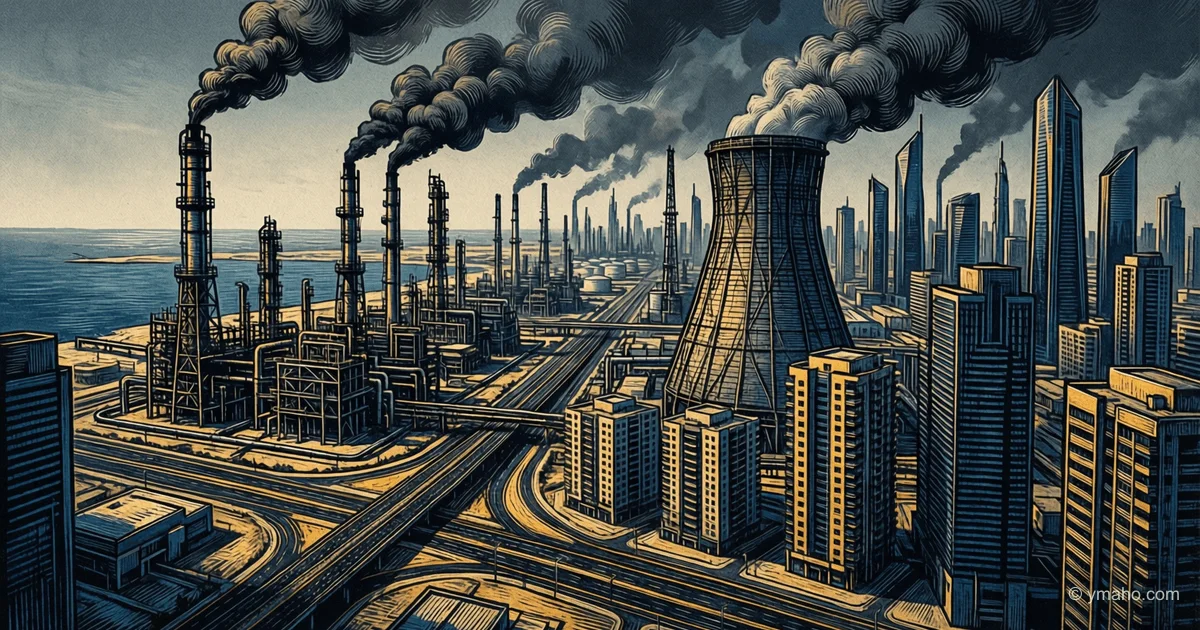
Iran Threatens Harsh Retaliation Against Gulf States if US Strikes Civilian Infrastructure
Analysts warn that if the US strikes Iran's civilian infrastructure, it could provoke Tehran into even harsher retaliatory measures against Gulf states. Experts note that, unlike the US, for the Iranian regime this conflict is a matter of survival.
Infrastructure as Hostage: Why Iran Will Strike Neighbors, Not US Aircraft Carriers
[The Gist]: What's Really Happening
Tehran's threat to deliver "harsh retaliation" against Gulf states if the US strikes civilian infrastructure is not just rhetoric. It reveals a military doctrine that flips the standard logic of deterrence.
The usual scenario: US hits Iran → Iran retaliates against US bases. But Tehran says otherwise: US hits our power plants, desalination plants, or nuclear facilities → we hit infrastructure in the UAE, Saudi Arabia, Qatar, and Bahrain.
Why? Because directly attacking a US carrier group guarantees escalation to a level Iran cannot survive. But striking civilian targets in Dubai or Doha is:
1) Much easier militarily (less air defense around commercial areas).
2) Inflicts comparable economic damage (oil terminals, desalination plants—billions of dollars).
3) Creates pressure on the US through its allies—"you bomb our hospitals, we bomb their skyscrapers."
And most importantly: for the Iranian regime, this is a matter of survival. The US can afford to back down. Iran cannot.
Timeline and Context
This threat has a specific history that began long before the current escalation.
- March 2026: Iran officially stated that in response to US strikes on Iranian power plants, it would strike energy and desalination facilities in Gulf states. The list of targets published by Iranian media even included a nuclear power plant in the UAE.
- April-May 2026: A truce brokered by Pakistan temporarily reduced the intensity of threats. But the status quo was unfavorable to both sides. For Iran, the US blockade means economic strangulation—$435 million in daily losses, storage facilities near capacity, over 70 tankers blocked.
- May 22, 2026: NATO foreign ministers meet in Sweden. US Secretary of State Marco Rubio states the need for a "Plan B" if negotiations fail.
- May 23, 2026: Analysts publish the warning we are analyzing—if the US strikes Iran's civilian infrastructure, Tehran will retaliate against Gulf states. The conflict ceases to be "US vs. Iran" and becomes a regional firestorm.
Who Wins and Who Loses
Winners:
- Oil volatility speculators. Any strikes on oil infrastructure in the Gulf will cause an immediate price spike. Brent options with a strike of $120-130 become gold.
- Air defense system manufacturers. The threat of Iranian strikes on civilian targets will force Gulf states to urgently purchase additional Patriot, THAAD, and short-range air defense systems to protect critical infrastructure. One Patriot battalion costs about $1.1 billion.
- China. Any diversion of US attention to the Middle East reduces pressure in the South China Sea and on the Taiwan issue.
Losers:
- UAE and Saudi Arabia. They find themselves hostage. Their oil terminals, desalination plants (providing up to 90% of drinking water in the region), and civilian airports are within range of Iranian missiles and drones. Cruise tourism in the region has already collapsed—six major cruise ships are blocked in Dubai and Doha ports.
- Global war risk insurers. If Iran systematically strikes civilian infrastructure in Gulf cities, insurance payouts could run into tens of billions of dollars. Major reinsurers (Munich Re, Swiss Re) have already notified clients of policy revisions for assets within 500 km of Iran's coast.
- Foreign real estate investors in Dubai. Dubai positioned itself as an "island of stability" in the Middle East. If Iranian missiles start falling near Dubai Marina or Burj Khalifa, that image will shatter instantly.
What the Media Isn't Saying
Non-obvious insight: The main target of Iranian threats is not Washington, but Riyadh and Abu Dhabi. Tehran is trying to pressure Gulf states into pushing the US not to strike Iranian infrastructure.
Behind the scenes, the UAE and Saudi Arabia are formally allied with the US. But they do not want their territory to become a battlefield. They have already denied the US bases for Operation Epic Fury. Now Iran tells them: "You didn't give the US bases—good. But if the Americans still decide to bomb our power plants, we will consider that you didn't do enough to stop them. And we will retaliate against your cities."
This is a classic wedge-driving game. Iran cannot defeat the US militarily. But it can make the war so painful for US allies that they demand Washington de-escalate.
A second hidden detail: "civilian infrastructure" in Iran's interpretation includes not only power plants and desalination plants. According to a statement by parliament speaker Mohammad Bagher Ghalibaf, targets could include "all facilities where Americans have stakes." This means commercial buildings, shopping malls, and hotels partially owned by US investment funds could be hit. Legally, these are not military targets. Practically, this would make the war unbearable for business.
Third: within the US, there is awareness of this vulnerability. Political scientist Malek Dudakov notes that Gulf states have realized that "US security guarantees no longer work." The US has depleted its stocks of precision missiles and air defense systems—it will take 5-7 years to replenish them. This means that if Iran launches a massive barrage against targets in the UAE, the Pentagon simply cannot fully protect them.
Forecast: Next 30 Days and 90 Days
30 days (by end of June 2026)
- If the US conducts limited strikes on Iranian military infrastructure (no civilian targets), Iran will likely respond symmetrically—against US bases in the region. This is a "controlled escalation" scenario. Brent oil: $105-110.
- If the US decides to strike Iranian power plants or desalination plants (unlikely but not impossible), Tehran will launch missile strikes on targets in the UAE and Saudi Arabia within 24-48 hours. This is a "regional firestorm" scenario. Oil: $120-135.
90 days (by end of August 2026)
- Optimistic scenario (40%): Diplomacy works. Iran gets partial sanctions relief, the US refrains from striking infrastructure. Threats remain rhetorical. Oil: $85-95.
- Baseline scenario (45%): "Attrition stalemate." The US and Iran exchange limited strikes on military targets. Gulf states panic but are not directly drawn in. Oil: $100-110. Markets adapt to a "new normal"—war continues but does not wreck the global economy.
- Pessimistic scenario (15%): Iran follows through on its threat. A series of strikes on desalination plants in the UAE leaves millions without drinking water. The US retaliates against Tehran. Full-scale regional war. Oil: $140-160. Global recession.
Editorial Forecast
Asset: Brent crude. Direction: Sideways with elevated upside risk over the next 24-72 hours in the $100-108 per barrel range. The market prices the probability of Iranian threats materializing as low but non-zero, so the risk premium remains elevated. Key levels: Support—$97 (level where Chinese buying kicks in), resistance—$112 (psychological level where traders start mass profit-taking). Confidence level: Medium (55%). Main risk: If within the next 72 hours news breaks of a US military operation against Iran, even limited, Brent will break $110 within 6-8 hours. Buyers should not expect a pullback below $95 under current conditions.
The editorial opinion is analytical in nature and does not constitute individual investment advice.
— Editorial Team









