Fuel Protests Shake Ireland as Global Oil Crisis Hits Home
Ireland is facing its biggest wave of public unrest in decades, sparked by soaring fuel prices that are choking the country's economy. This matters to everyone because when the trucks can't move and farms can't run, the things we buy—from food to medicine—start to disappear from shelves.
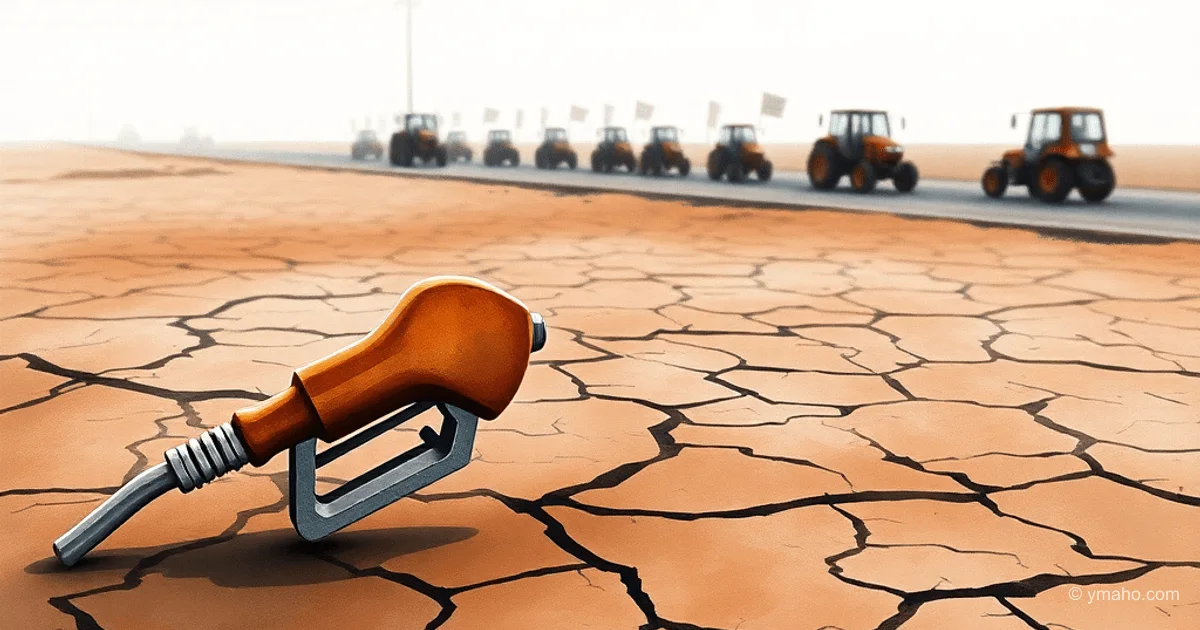
The protests began when truckers and farmers, whose work depends on diesel, started driving slowly in large convoys to block major roads and ports. They've even blocked Ireland's only oil refinery. Imagine a city's main highway suddenly becoming a parking lot for hundreds of tractors and trucks; that's what's happening. The government has called in the army to clear some blockades, leading to arrests and a tense standoff.
Why Fuel Prices Suddenly Skyrocketed
The root cause isn't a local tax, but a global crisis. In late February, a military conflict in the Middle East led to the closure of the Strait of Hormuz. The Strait of Hormuz is a narrow sea channel, like a major highway for oil tankers. When it closes, a huge portion of the world's oil supply simply can't get out. This has caused a sudden shortage, pushing prices up nearly 30% in Ireland. The effect was immediate: by last weekend, about 40% of Ireland's gas stations had run completely dry.
For people who drive trucks or operate farm machinery, this isn't just an inconvenience—it's a threat to their livelihood. Their fuel costs have jumped dramatically, but the prices they get for their goods haven't. It's like being told you must pay much more for the gas in your car, but your salary stays the same. The frustration has boiled over into sustained protest.
The Government's Response: Force and Money
The Irish government has responded with two main tools: police power and financial relief. After days of blockades disrupting ports and threatening fuel supplies, soldiers and police moved to physically clear protesters from critical sites like refineries. At the same time, the government announced a package of support worth almost $600 million. This includes a temporary 10% cut in the price of diesel and petrol at the pump, and a delay to a planned environmental tax.
The situation became so serious that it triggered a political crisis. The main opposition party tried to force a vote to remove the government over its handling of the protests. The government survived, but the turmoil shows how deeply the issue has shaken the country's leadership.
A Divided Public and Wider Implications
Initially, public opinion polls showed most people supported the protesters' cause. However, as the blockades continued, the widespread disruption began to change minds. Reports emerged that planned hospital surgeries might be cancelled because medical supplies couldn't be delivered. Elderly people in remote areas couldn't receive care because caregivers couldn't reach them. The protest is starting to affect daily life far beyond the fuel industry.
Some observers worry these protests could become a channel for broader political movements. In other European countries, similar rural discontent has been harnessed by populist political parties. In Ireland, a small right-wing party holds a few key seats in parliament, enough to influence the fragile government coalition. While they haven't taken a leading role in these protests yet, the simmering anger provides a potential platform.
Key takeaways from the situation:
- A global oil supply shock, caused by a closed shipping route, is the direct trigger for local price spikes.
- The protests are led by workers whose businesses are directly threatened by the cost increase, not by political activists.
- The government is trying to balance ending the disruptive blockades with addressing the economic pain through subsidies.
- Public support is waning as the negative effects of the protests—like healthcare delays—become more apparent.
- The stability of the Irish government has been tested by the crisis, showing its deep political impact.
What Does This Mean for Regular People?
When essential goods like fuel become scarce or too expensive, it doesn't just affect the people buying gas. It disrupts the entire chain that brings food to supermarkets, medicine to hospitals, and goods to stores. Regular people may face higher prices for everything, delays in services, and a more unstable daily life. It also shows how a conflict in a faraway part of the world can directly impact the price of your next tank of fuel.
— Editorial Team









