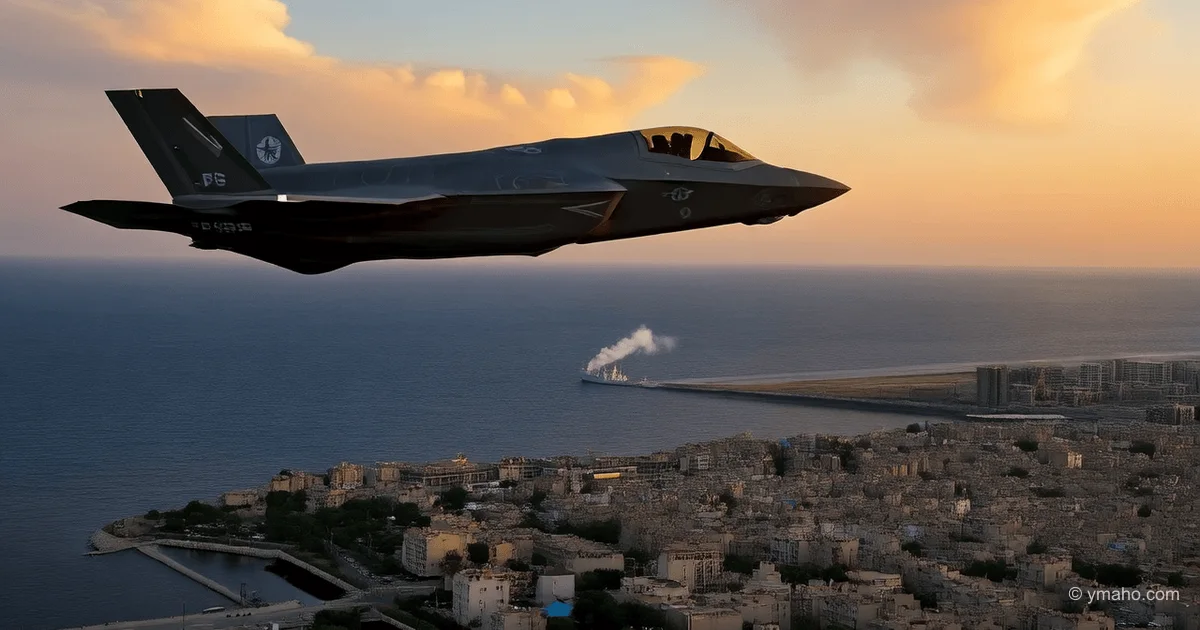
Israel intensifies strikes on southern Lebanon despite ceasefire
In a series of airstrikes by the IDF on southern Lebanon, 16 people were killed, including rescue workers. Lebanese authorities report 380 deaths since the ceasefire took effect on April 17.
The current escalation in southern Lebanon is not a violation of the truce in the usual sense, but its complete implementation death. The figure of 380 dead since April 17 is not a statistical error, but evidence that the agreement announced by Donald Trump was from the very beginning a fiction to divert attention from the Iranian track.
The essence: what is really happening
The ceasefire agreement, which came into force on April 17, was initially not a comprehensive peace treaty, but a selective "decoy deal." Pakistani Prime Minister Shehbaz Sharif, who acted as mediator, stated that the ceasefire should apply throughout the region, including Lebanon. However, Israel, through Prime Minister Benjamin Netanyahu, made it clear: the truce regarding Iran does not concern the Lebanese direction. Officially, Lebanon did not participate in the ceasefire negotiations, and Israel directly stated that Lebanon was not included in the agreement.
Thus, we are dealing not with a "violation," but with the fiction of the ceasefire itself. The IDF continues a systematic clearance of southern Lebanon from Hezbollah's military infrastructure, using the window of opportunity while Tehran is constrained by the threat of Israeli-American strikes on its nuclear program. On May 12-13, the Israeli Air Force struck more than 40 Hezbollah targets, including weapons depots, command posts, and launchers.
Timeline and context
The root of the current escalation goes back to events in early March 2026. Although the ceasefire formally took effect on April 17, Israeli strikes were recorded daily. The Lebanese Army documented numerous violations from the first hours of the truce, urging residents not to return to southern areas due to the ongoing threat.
By May 6, for the first time since the ceasefire was declared, Israel struck the southern suburbs of Beirut—Haret Hreik—firing three missiles from a warship at a residential building. The target was said to be Radwan Force commander Malki Blout, whom Israeli security services consider eliminated. This marked a qualitative shift in Israel's approach: from tactical attacks on southern villages to strategic elimination of Hezbollah's top command deep inside Lebanese territory.
Total Lebanese losses so far stand at 2,869 killed and 8,730 wounded since the conflict began on March 2. Since April 17, when the ceasefire formally took effect, 380 people have died, including civil defense rescuers, women, and children. Over 1.6 million people have been displaced—roughly one-fifth of Lebanon's population. On the Israeli side, 18 soldiers and 4 civilians have been killed in the same period.
Who wins and who loses
Israel — tactical winner. The elimination of key Radwan commanders, destruction of depots and infrastructure seriously weaken Hezbollah's military potential. The Israeli military is preparing to expand ground operations in Lebanon, awaiting only political approval. Three IDF divisions continue operations south of the forward defense line, methodically destroying what the military calls "terror infrastructure."
Lebanon — absolute loser. The country, already in deep economic crisis since 2019, is losing the remnants of its sovereignty. The government of Joseph Aoun expresses "sadness and regret" over the deaths of rescuers but lacks military leverage to force Israel to comply with the ceasefire. The Health Ministry accuses Israel of deliberate attacks on medics, reporting 108 emergency workers killed and over 140 attacks on ambulances since the conflict began. Meanwhile, the Lebanese Army remains an observer, not engaging in direct conflict with the IDF.
Hezbollah — in an ambiguous position. On one hand, the organization is forced to respond to Israeli strikes to save face with its supporters, as evidenced by continued shelling of Israeli positions. On the other, it is deprived of full Iranian support, as Iran is constrained by its own war. Hezbollah uses fiber-optic-controlled drones as the main weapon of the current campaign, creating a serious threat for which Israel has no effective operational solution yet.
What the media is not telling
The main non-obvious insight is that the ceasefire was deliberately designed by Trump as a tool to isolate Iran from its proxy forces. The Israeli-Lebanese talks in Washington, scheduled for May 14-15, will essentially be an attempt by the US to impose a separate peace treaty on Beirut, breaking the Hezbollah-Lebanese state link.
The second overlooked point is the economic dimension of the conflict. Israel is systematically destroying not only military targets but also civilian infrastructure in southern Lebanon. The strikes on May 9 near the power plant supplying the Nabatieh region and the attack on May 13 on a humanitarian aid truck on the Jiyeh highway are part of a deliberate strategy to push out the civilian population, making it impossible for Hezbollah to rebuild in these areas. Post-war reconstruction of southern Lebanon, by conservative estimates, will cost $8-10 billion—a sum that Lebanon's shattered economy cannot raise without external aid.
Forecast: next 30 days and 90 days
Next 30 days (by mid-June 2026).
The talks on May 14-15 in Washington will end in failure—Hezbollah will not capitulate, and Israel will not agree to a return to the status quo. Immediately after, the IDF will launch an expanded ground operation in Lebanon, as announced by Israeli media, aiming to create a deep "buffer zone" north of the border. The death toll on the Lebanese side will exceed 3,500. The flow of refugees into Syria and Europe will trigger a new migration crisis, requiring emergency EU budget injections of at least $2 billion.
Next 90 days (by mid-August 2026).
By this time, Israel will complete the active phase of the ground operation and begin building permanent fortifications in the buffer zone. Hezbollah, having lost up to 40% of its military capability, will shift to tactics of lone asymmetric attacks, including the use of fiber-optic drones against targets deep inside Israel. A peace treaty between Israel and Lebanon will be signed under heavy US pressure on terms dictated by Tel Aviv. The Lebanese Army will be deployed in the south with international support, but Hezbollah will maintain underground cells, laying the groundwork for the next round of conflict. The cost of rebuilding Lebanon will exceed $15 billion, and Iran will lose a crucial land bridge near Israel's borders.
— Editorial Team









