Kalshi Wins Court Battle Over Who Gets to Regulate Prediction Markets
A federal appeals court just ruled that Kalshi—a platform where people bet on real-world events like election results or sports scores—should be regulated by the federal government, not by individual states like New Jersey. This decision matters because it could shape whether everyday Americans can legally use prediction markets across the country without running afoul of state gambling laws.
What’s a Prediction Market, Anyway?
Think of a prediction market like a stock market for real-life events. Instead of buying shares in a company, you’re buying “shares” in an outcome—like “Will Team X win the championship?” or “Will inflation drop below 3% by June?” If you’re right, you get paid. If you’re wrong, you lose your stake. These markets are designed to collect and reflect what lots of people believe will happen, turning crowd wisdom into prices.
Unlike traditional sports betting, which is mostly about chance and odds set by bookmakers, prediction markets let prices shift based on how confident traders are. The U.S. Commodity Futures Trading Commission (CFTC)—the agency that oversees futures and derivatives—has already approved Kalshi as a legal exchange for these kinds of contracts.
Why New Jersey Objected
New Jersey’s gambling regulators argued that Kalshi’s sports-related markets were just another form of illegal sports betting, disguised with fancy labels. They sent Kalshi a cease-and-desist order, saying the platform needed to follow state gambling rules—or shut down its sports offerings in the state.
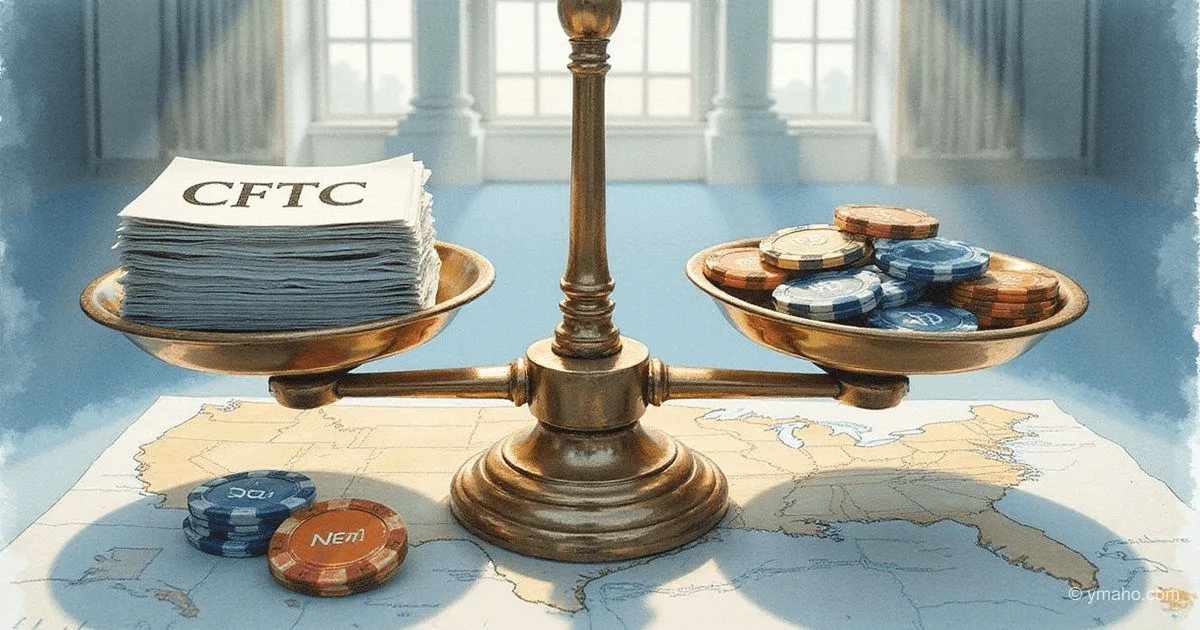
But Kalshi pushed back, saying its products aren’t bets—they’re “event contracts” regulated at the federal level. A federal judge agreed last year, issuing a temporary injunction that blocked New Jersey from enforcing its ban while the case played out. Now, a federal appeals court has backed that decision, ruling 2-1 that the CFTC—not state gambling commissions—has authority here.
The Bigger Legal Picture
This isn’t just about one state or one company. Across the U.S., courts and regulators are split:
- Nevada recently banned Kalshi temporarily, siding with state gambling interests.
- Illinois, Arizona, and Connecticut are being sued by the federal government for trying to regulate prediction markets under state law.
- The Trump-era CFTC and Department of Justice argue that once a platform is federally licensed, states shouldn’t be able to override that.
The disagreement is so deep that experts expect the U.S. Supreme Court will eventually have to decide who’s in charge: Washington or the states.
What Does This Mean for Regular People?
- If federal oversight wins out, platforms like Kalshi could operate nationwide with consistent rules—making it easier for anyone to participate.
- If states keep control, access might depend on where you live, with some states banning these markets entirely.
- Either way, this case is testing a core question: when does a financial contract become gambling—and who gets to draw that line?
Key Takeaways
- Kalshi won a major appeals court ruling saying it falls under federal, not state, regulation.
- The court found that CFTC-approved “event contracts” are not the same as traditional sports bets.
- New Jersey and other states still argue these markets are just gambling in disguise.
- The legal battle is likely headed to the Supreme Court due to conflicting rulings nationwide.
- The outcome will affect whether millions of Americans can legally use prediction markets.
— Editorial Team









