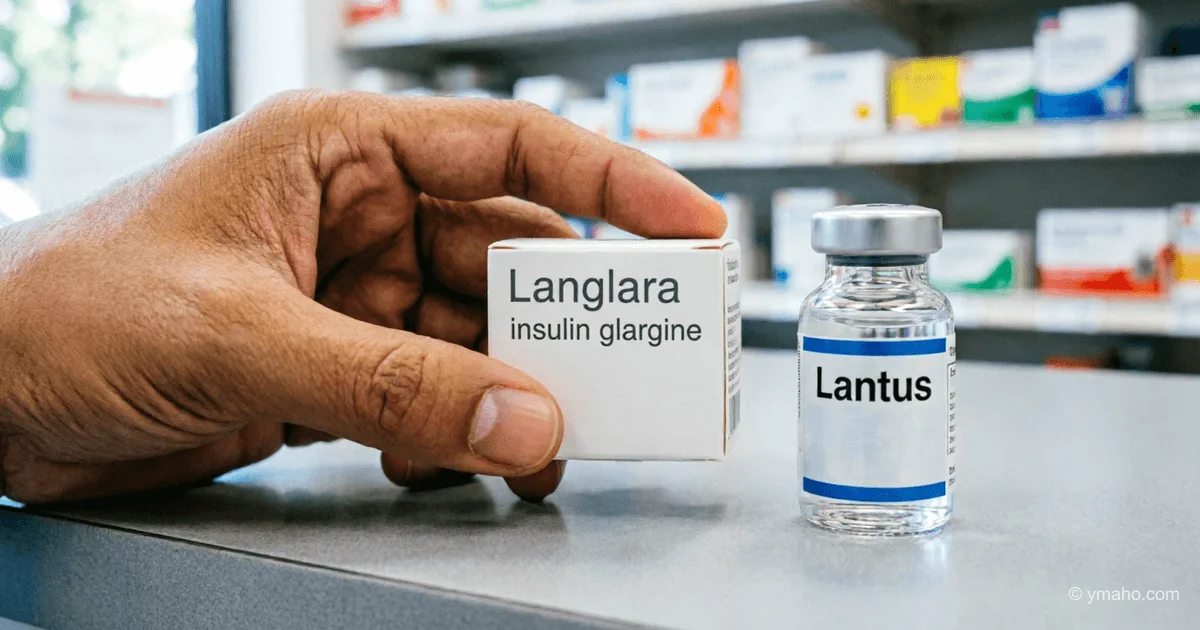
FDA Approves Interchangeable Biosimilar Insulin Glargine Langlara
The FDA has granted interchangeable status to the biosimilar insulin glargine Langlara, allowing pharmacies to substitute it for Lantus without physician involvement. The drug is indicated for the treatment of type 1 and type 2 diabetes and aims to improve the affordability of this life-saving insulin.
In May 2026, the FDA approved Langlara, an interchangeable biosimilar of insulin glargine. To most observers, this looks like routine regulatory work: another generic on the market, another step toward cheaper insulin. But when you know who stands behind the manufacturer, what order volume has already been placed, and what geopolitical cracks this deal exposes, the story stops being about insulin. It becomes about how the global pharmaceutical order is being reassembled right now—and who pays for the entry ticket to the world's largest drug market.
The Core: What's Really Happening
Langlara is not just the fourth insulin glargine on the US market. It is the first Chinese insulin approved by the FDA. The difference is fundamental. The three previous players—Sanofi (original Lantus), Eli Lilly (Basaglar), and to some extent Novo Nordisk—formed a closed club where US and European companies competed. Now, Chinese Sunshine Lake Pharma (a subsidiary of the HEC Group) enters this club with a production capacity of over 100 million insulin units per year and plans to expand to 180 million.
The interchangeable status means that Langlara has passed additional trials, proving that switching from Lantus to Langlara and back does not reduce efficacy or increase risk. In states that allow substitution, a pharmacist can dispense Langlara instead of Lantus without calling the doctor. This is not just a regulatory checkbox—it is the key to the mass market.
But the most sensational detail is not found in FDA press releases. It comes from Chinese sources: Lannett, Sunshine Lake's US partner, has already placed a firm order for at least 18 million units of Langlara, with delivery within 18 months. This is not a trial batch. It is a full-scale commercial launch with volumes that immediately eat into market share.
Timeline and Context
The story of Langlara does not begin in 2026. Sunshine Lake Pharma entered the insulin business in 2008 and has since invested over USD 2.8 billion in development. These are very long and very patient investments—18 years from start to registration.
The market entry strategy was smartly built. First, the company registered insulin in the UAE, Algeria, Mali—countries with lenient regulations where production processes could be fine-tuned and real safety data collected. Now, with FDA approval, it is accelerating registration in Brazil, Argentina, Indonesia, and Turkey. This is a classic expansion model: colonize the periphery, then storm the center.
The timing is close to perfect. Sanofi, the owner of original Lantus, is in a difficult position. According to Q3 2025 data, Lantus sales in the US fell 23% due to exclusion from CVS and UnitedHealth formularies in favor of Eli Lilly's biosimilar Basaglar. European sales declined 3.2%. Sanofi is openly pivoting to Dupixent, viewing its diabetes business as a shrinking asset. This is the window Sunshine Lake enters with Langlara: the market leader is retreating, pharmacy benefit managers are seeking cheaper alternatives, and here comes a manufacturer with massive capacity and low production costs.
The anti-diabetic biosimilar market was valued at USD 5.8 billion in 2026, with a projected growth to USD 13.4 billion by 2033. Insulin glargine holds about 48% of this market. The US consumes over 60% of the world's insulin glargine. So Langlara is not entering a marginal segment; it is entering the main battlefield.
Who Wins and Who Loses
Winners:
Sunshine Lake Pharma and the HEC Group. They have just bought a ticket to a market worth tens of billions of USD annually. 18 million units of firm orders are just the first batch. If Langlara secures formulary positions, volumes will multiply.
Lannett Company and its subsidiary Lanexa Biologics. The company gains exclusive rights to commercialize Chinese insulin in the US. This transforms Lannett from a niche player into a serious participant in the biotech market. It is no coincidence that Aurobindo Pharma has already announced plans to acquire Lannett.
American patients and payers. Langlara is positioned as a cheaper alternative. Given Sunshine Lake's production scale, their unit cost is lower than Sanofi's or Eli Lilly's. This puts pressure on the entire market: pharmacy benefit managers gain leverage in negotiations with other manufacturers.
Pharmacy chains. The interchangeable status allows pharmacists to substitute Lantus with Langlara without physician approval. For chains like CVS and Walgreens, this means faster turnover and additional margin.
Losers:
Sanofi. Lantus is already losing formulary positions due to Basaglar. The entry of a third player with massive production capacity and Chinese cost structure will accelerate market share erosion. Sanofi is diversifying into Dupixent, but Lantus still brings in over a billion euros annually.
Novartis/Sandoz and other biosimilar manufacturers operating in the US market. Langlara enters not as "another competitor" but as a competitor with a fundamentally different cost structure. Sunshine Lake invested in plants with enormous capacity, and its target unit cost is likely significantly lower than European or American ones.
Indian insulin manufacturers (Biocon, Wockhardt). They traditionally claimed the role of cheap biosimilar suppliers for developing markets. Langlara outplays them on their own turf: Sunshine Lake has already registered insulin in several Asian and African countries, and now, with FDA approval, it gains a trump card for regulators in those countries—"the drug is approved in the US."
What the Media Leaves Out
First: the real order volume. The figure of 18 million units over 18 months means about 1 million units per month. This is not a test launch; it is a full commercial start. For comparison, the total US insulin glargine market is tens of millions of units annually. Langlara captures a noticeable share with its first shipment.
Second: the FDA approved Langlara under new rules. In June 2024, the FDA updated its interchangeability guidance, removing the requirement for multiple switches in clinical trials. Instead, the manufacturer can provide analytical justification that data from a single switch is sufficient. This sped up the process—and Sunshine Lake took advantage. Most commentators miss this point: Langlara is one of the first insulins approved under the new accelerated pathway. This sets a precedent for other Chinese manufacturers.
Third: the acquisition of Lannett by Aurobindo Pharma. Aurobindo is an Indian pharmaceutical giant. If the deal closes, Langlara will end up in the portfolio of a company with vast experience in bringing generics to the US market and existing relationships with all major pharmacy chains. This multiplies Langlara's commercial potential. Currently, this is mentioned in passing, but in a few months it will become the main news.
Fourth: the geopolitical optics. A Chinese company receives FDA approval for a life-saving drug manufactured in China. In an era when the US talks about reducing dependence on Chinese supply chains in critical sectors, this looks paradoxical. But insulin is not semiconductors. Insulin shortages mean dead patients. FDA pragmatism won over geopolitical rhetoric. This is a precedent that could open the door for other Chinese biosimilars—from monoclonal antibodies to vaccines.
Forecast: Next 30 Days and 90 Days
30 days (by June 5, 2026):
First shipments of Langlara to pharmacies will begin. Major chains (CVS, Walgreens, Walmart) will start internal procedures for formulary inclusion. The speed of this process will depend on negotiations between Lannett/Lanexa and pharmacy benefit managers.
Sanofi shares may decline 1–3% as investors realize the new competitive reality. Aurobindo Pharma shares, on the other hand, will get a boost—the market will start pricing in synergies from combining Langlara with Aurobindo's distribution network.
Sunshine Lake and HEC Group will announce plans to accelerate registration of a second insulin—aspart—which is already in development. The target FDA date for Sunshine Lake's insulin aspart is 2028.
90 days (by August 5, 2026):
First real sales data for Langlara will emerge. If Lannett meets its supply plan, Langlara sales in the first three months could reach 3–4 million units. This is enough to noticeably impact Sanofi's share in the insulin glargine segment.
Aurobindo Pharma will likely close the acquisition of Lannett. After that, Langlara will gain access to Aurobindo's commercial infrastructure, including relationships with pharmacy chains and hospital systems. This is a key moment: the deal turns Langlara from a single-company product into a product of a global generic platform.
A wave of price competition will begin in the market. Sanofi may lower Lantus prices to maintain formulary positions. This is good for patients but bad for Sanofi's already pressured margins.
Main strategic forecast: Langlara opens the door for other Chinese biosimilars. The regulatory precedent is set. Manufacturing expertise is confirmed. Sunshine Lake is already working on the next product. In the next 18–24 months, the FDA will receive several more applications for Chinese biosimilars—from insulins to monoclonal antibodies. Langlara will enter textbooks as the product that broke the monopoly of Western pharma companies on the US biotech drug market.
This is not just an insulin approval. It is an entry point, after which a wave will follow. And those who now read this news as routine will, in two years, be surprised at how quickly the market changed.
— Editorial Team









