Laser-Acoustic Imaging Boosts Safety in Robotic Surgery
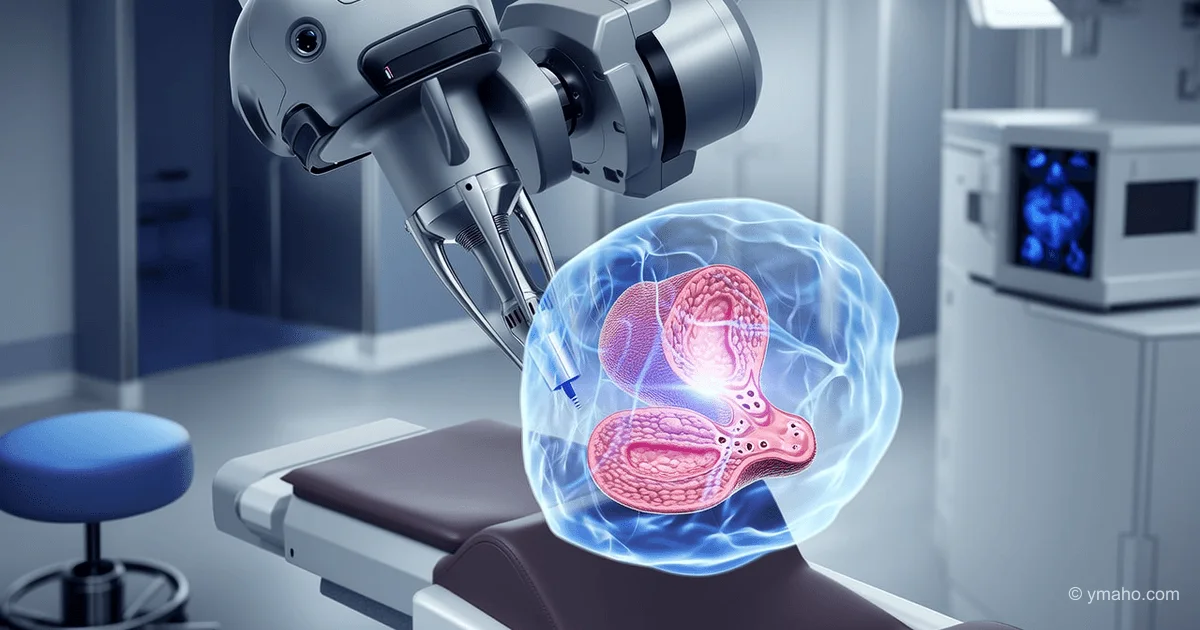
Scientists at Worcester Polytechnic Institute have successfully integrated photoacoustic imaging into the laparoscopic surgery workflow. The technology builds real-time 3D maps of nerves and blood vessels hidden beneath tissue and overlays them onto augmented reality video, reducing the risk of fatal complications.
As someone who has watched sensor integration into surgical platforms from inside the industry for the past seven years, I'll say this: Worcester Polytechnic Institute just drove the last nail into the coffin of "blind surgery." The presentation at the 190th meeting of the Acoustical Society of America in Philadelphia is not just an elegant engineering project. It is a direct challenge to the multi-billion-dollar ecosystem of Intuitive Surgical, which has ignored the problem of "subsurface blindness" for decades.
The Core: What's Really Happening
The average person sees a headline: "Laser and sound help a surgical robot see nerves." That's cute, but the reality is much harsher. The real revolution of Professor Kai Zhang's technology is not in visualization, but in the shift from mechanical precision to cognitive assistance.
The modern da Vinci robot is a perfect manipulator, but it is absolutely deaf and blind to tissue texture. It gives the surgeon 10x optical magnification and tremor filtering, but it does not show what lies beneath a millimeter of fat or connective tissue. Photoacoustic (PA) imaging, integrated by Zhang's team, solves exactly this problem. A laser pulse heats hemoglobin in blood vessels or lipids in nerves at the subsurface level, causing thermoelastic expansion and generating an ultrasound wave. This is not just an image—it's a real-time minefield map.
The key insight here is solving the latency and spatial registration problem. Overlaying a 3D map of neurovascular bundles onto the laparoscope video in real time, so that the image doesn't "drift" with instrument movement or patient breathing, is a computational feat. That's why previous attempts (even inside Intuitive itself) failed.
Timeline and Context
This research did not come out of nowhere. It is the evolution of a years-long race for the "smart scalpel":
- 2018: Establishment of the Medical FUSION Lab at WPI under Professor Haichong Zhang. Focus on the intersection of robotics, ultrasound, and photoacoustics.
- 2023: Key publication in Biomedical Optics Express. The team, including PhD student Shang Gao, successfully integrated a photoacoustic probe into the da Vinci system for the first time, proving the feasibility of obtaining a signal under laparoscopic conditions. This was a proof-of-concept.
- 2025: Intuitive Surgical reports 20 million procedures performed on its platforms to date. Revenue reaches approximately $10 billion USD, and the da Vinci 5 system receives FDA clearance. However, even in version 5, the main emphasis is on force feedback, not subsurface vision.
- May 2026: Presentation at ASA 190. Demonstration of a fully integrated workflow: laser-acoustic probe, 3D neurovascular map reconstruction, and real-time augmented reality overlay on the surgical field.
Who Wins and Who Loses
Winners:
- Urology patients: Prostatectomy is a battlefield where preserving neurovascular bundles means the difference between maintaining potency and continence or lifelong disability. The 1-2% catastrophic bleeding rate cited in statistics translates into thousands of ruined lives annually. PA imaging promises to reduce this "normal" complication rate to a statistical anomaly.
- Insurance giants: The cost of a single intraoperative vascular injury, with subsequent resuscitation, reoperation, and lawsuit, can exceed $500,000 USD. Paying $50,000 USD for a robot upgrade module is not an expense—it's an instant return on investment.
- WPI itself: The patent for a miniature photoacoustic probe compatible with trocars could become a licensing goldmine for decades.
Losers:
- Intuitive Surgical (short term): Their 2026 strategy is scaling the da Vinci 5 and its digital ecosystem. They are betting on AI analytics and haptic feedback, but they missed optical-acoustic sensing. Now they will either have to buy the technology from WPI at a huge premium or watch competitors (Medtronic, Johnson & Johnson) start building "robots that see through tissue," changing the definition of the gold standard in surgery.
- "Old school" surgeons: Those accustomed to working by anatomical landmarks and relying on experience risk losing out to younger tech-savvy surgeons who are native to AR interfaces.
What the Media Misses
The least obvious insight is the problem of "smart noise." The photoacoustic signal is generated by blood (hemoglobin). In areas of inflammation or active tumor growth, angiogenesis creates a wild tangle of microscopic capillaries. Kai Zhang's model, trained on clear vascular trunks, may fail in tissues with chronic inflammation or fibrosis, showing "false positive" neurovascular structures where none exist. This is called "chronic pathology speckle noise." If a surgeon starts avoiding every such artifact, the surgery will drag on for hours, and the risk of complications from prolonged anesthesia will exceed the risk of injury.
The second important point is the cost of energy safety. Laser radiation in tissue requires strict dosimetric control to avoid photothermal damage during prolonged scanning.
Forecast: The Next 30 and 90 Days
First 30 days (through mid-June 2026):
The medical device market will experience classic post-conference hype. We will see many speculative articles about the "death of da Vinci." However, real manufacturers will begin behind-the-scenes negotiations with WPI to license the miniature diffusion fibers described in Shang Gao's publications. The hottest action will not be in scientific journals, but in the legal departments of patent offices.
Next 90 days (through September 2026):
I expect an announcement of a strategic partnership between WPI and one of the major surgical equipment vendors (not Intuitive). Possibly Verb Surgical or CMR Surgical, which need something fundamentally different from the flagship. Simultaneously, the FDA will begin classifying this technology—will it fall into Class II (an accessory to a surgical instrument) or require lengthy clinical trials as Class III (implantable/life-supporting device)? The speed of this verdict will determine whether we see "transparent robots" in operating rooms before the end of the decade. For now, the letter of the law lags behind the speed of light and sound in the OR.
— Editorial Team









