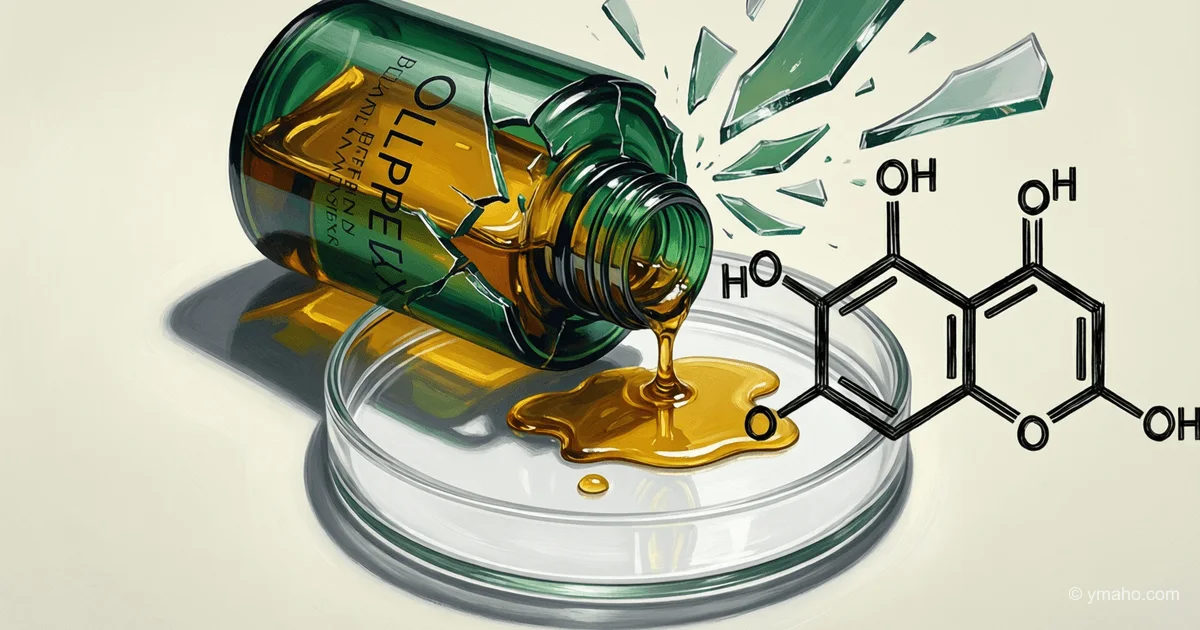
Class Action Lawsuit Against Olaplex Over Hidden Benzene in Hair Oil: 2025-2026 Samples Show 8x Exceedance
Independent lab Valisure found carcinogen in batches produced after a packaging supplier change.
The Soluble Scandal: How Olaplex's Packaging Change Led to 8x Benzene Exceedance
[The Gist]: What's Really Happening
The news of a class action lawsuit against Olaplex over benzene in its hair oil initially looks like a typical story about "chemicals in cosmetics." In reality, it's a much more alarming signal for the entire industry: the carcinogen entered the product not from the formula, but from the packaging. Independent lab Valisure found an 8x exceedance in batches produced after a change in packaging material supplier.
The real insight: benzene could not have come from the hair oil ingredients—it's not a breakdown product or synthesis byproduct of the formula components. The only entry path is contact with the packaging. This is about an extraction process: certain types of plastics or adhesives used in dispensers, bottles, or caps, when in contact with an oily medium, release benzene that accumulates in the product. Olaplex switched suppliers—and got an incubator for a carcinogen.
Just imagine: an oily medium is an excellent solvent. If the packaging contains stabilizers or solvents with a benzene ring (e.g., certain styrene polymers or aromatic hydrocarbons in dyes), they migrate into the product during long-term storage. An eightfold exceedance means someone in the supply chain either cut corners on packaging material quality or failed to run compatibility tests between packaging and formula.
Timeline and Context
2019–2022 — Olaplex's first major scandal, involving the ingredient butylphenylmethylpropional (lilial) in its No. 3 Hair Repair Perfector. A class action was filed in Canada, settled in November 2025: class members could choose either a free bottle of shampoo or $20 via transfer. Conditions: purchase of the product in Quebec between March 1, 2019, and August 31, 2022.
September 2021 — Olaplex goes public via IPO, and by November 2022, a securities fraud lawsuit is filed against the company. Investors claimed that IPO registration documents contained false statements about the company's ability to sustain sales and profitability amid macroeconomic pressure and competition.
2025–2026 (current scandal) — Independent lab Valisure detects benzene in Olaplex hair oil. The key detail most media miss: the problem arose after a packaging supplier change, not a formula change. This shifts the issue from "ingredient safety" to "packaging quality control"—an area that often remains behind the scenes in the cosmetics industry.
Who Wins and Who Loses
Winners:
- Law firms specializing in class actions. Plaintiffs and attorneys could receive millions of dollars. In the 2022 Canadian case settled in 2025, defendants already agreed to pay court costs and attorney fees in addition to class member compensation.
- Valisure and other independent labs. Each new discovery of a carcinogen in a well-known brand's product strengthens their reputation as "people's watchdogs." After the benzene case in Johnson & Johnson sunscreens, Valisure became an industry star. Now—round two with Olaplex.
- Olaplex competitors in the hair oil category (Kérastase, Moroccanoil, Ouai). They get "free" marketing material for "benzene-free, tested" campaigns. Expected sales growth for these brands: 15–25% over the next 3–6 months.
Losers:
- The Olaplex brand. Reputational damage from two consecutive scandals (lilial and benzene) is already significant. The company's Instagram posts will be flooded with safety questions.
- Distributors and retailers (Sephora, Ulta, BlueMercury). They must spend resources on processing returns, informing customers, and possibly temporarily pulling the product from shelves. In the Canadian case, Sephora Canada was named as a defendant alongside Olaplex Inc.
- Packaging manufacturers (Aptar Group, Silgan Dispensing, Berry Global). The scandal will call into question their internal quality control and material compatibility with oily formulas. Major cosmetics brands have already requested new safety tests from them.
What the Media Isn't Saying
First. This is not the first time benzene has been found in cosmetics due to packaging. Valisure previously found benzene in dry shampoos (2021) and sunscreens (2022)—and in both cases, packaging contaminated during production or storage was blamed. Benzene is not an ingredient but an "impurity." The difference here is that with Olaplex, the 8x exceedance is anomalously high even by previous scandal standards.
Second. The FDA does not require cosmetics manufacturers to test finished products for benzene before market entry. Requirements exist for pharmaceuticals, but not for cosmetics. In other words, Olaplex technically broke no laws—but morally and commercially, it's a disaster. This is a systemic industry problem, not a single brand's mistake.
Third. Inside scoop: the real reason for the scandal's loudness is not so much the benzene itself, but the timing. Valisure chose to publish at a moment when Olaplex was just starting to recover from a stock drop due to the 2022 investor lawsuit. The company's stock soared on the pandemic hair-care wave (people visited salons less and bought more home-care products), then crashed when people returned to salons. Now—a new blow. Recovery will be long.
Forecast: Next 30 Days and 90 Days
30 days:
- Olaplex will announce a review of its entire packaging supply chain and likely a return to the previous supplier. The company will also launch an independent audit of all products for benzene, publishing results on its website.
- Law firms worldwide (including Canada, the US, the UK) will announce mass lawsuits. The 2025 Canadian precedent (compensation up to $20 or a free product) will be used as a benchmark.
90 days:
- Major retailers will conduct their own tests of Olaplex oils and may temporarily suspend sales until receiving guarantees from the manufacturer. Sephora and Ulta are public companies; their lawyers cannot ignore risks.
- The FDA will issue either a warning letter to Olaplex or a general notice to the entire industry about the need to test cosmetics for benzene. A "soft warning" is likely—no product recall, but a requirement to fix the process.
- A new trend will emerge in independent labs: testing hair oils and styling products for benzene will become a paid consumer service. People will start sending samples to labs for $50–$100 per analysis.
Insight That Will Decide the Brand's Fate:
The real threat to Olaplex is not lawsuits or fines. It's the loss of trust from the professional community (stylists and salons). They were Olaplex's main sales channel: a client comes to the salon, gets a product recommendation, and buys it. Many salons have already switched to alternatives (Redken Acidic Bonding Concentrate, K18). This scandal will trigger a mass abandonment of Olaplex recommendations by stylists.
Paradox: a company that started with innovative bond-repair technology destroyed its own reputation not because of its formula, but because of cheap packaging. Switching suppliers to save a few cents per bottle will cost the company millions in fines and lost market share. This is a perfect case study for the entire industry: saving on packaging is invisible to the consumer until it becomes all too visible.
— Editorial Team









