Lebanese Front: Intense Israeli Strikes and Hezbollah Retaliations Test the Ceasefire
Against the backdrop of a ceasefire, some of the most intense clashes occurred: at least eight people were killed in Israeli strikes on southern Lebanon, and Hezbollah responded by launching several explosive-laden drones into northern Israel, wounding three soldiers.
The events on the Lebanese front over the past 48 hours are not just another round of violence within a "fragile ceasefire." This is a managed transition to a new phase of the conflict, where the stakes have gone far beyond the border confrontation between Israel and Hezbollah. Mainstream media focus on counting casualties and mutual accusations, but the real drama is unfolding in Washington, where direct negotiations between Lebanon and Israel are scheduled for May 14-15. It is this factor, not military logic, that dictates what is happening on the ground.
The Essence: What Is Really Happening
Behind the surge in violence from May 8 to 11 is not spontaneous escalation, but a synchronized attempt by all sides to secure the most advantageous negotiating positions ahead of the decisive diplomatic round. Observers note that both sides are operating in a "gray zone"—calibrating strikes so as not to trigger a full-scale war, while demonstrating resolve. The current exchange of strikes is, in essence, a fierce bargaining over what the security architecture on the border will look like in the coming years.
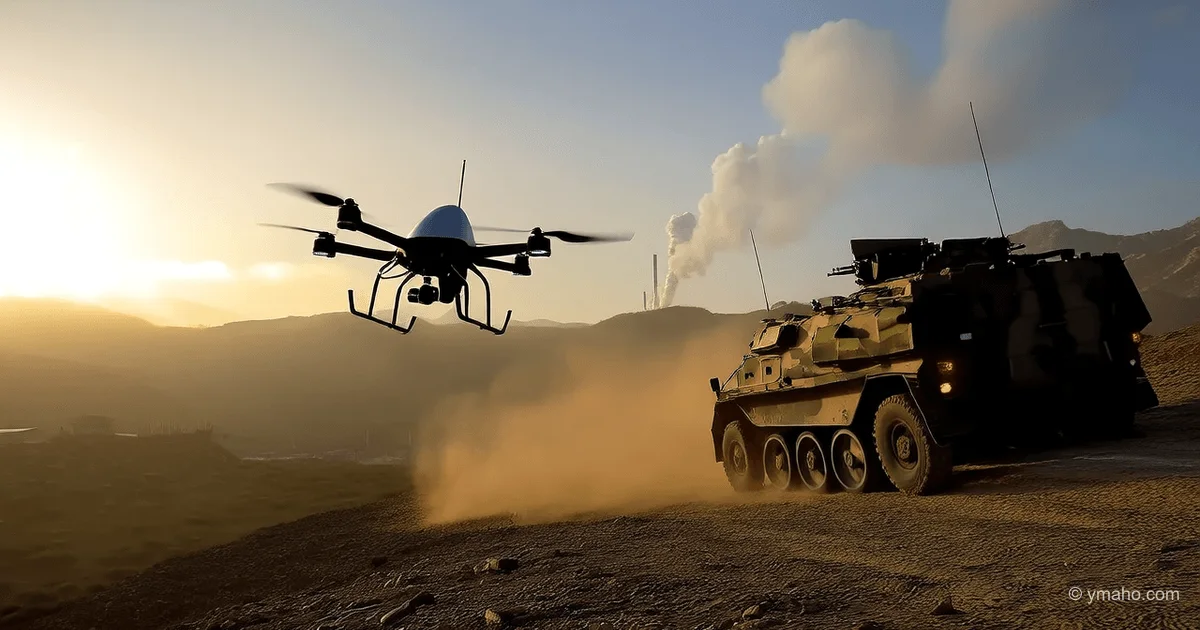
Hezbollah is purposefully showcasing new technological capabilities. The Jerusalem Post reports that Israeli forces are experiencing serious difficulties countering FPV drones that are fiber-optic controlled and immune to electronic warfare systems. This has already led to damage to equipment, including an IDF unmanned engineering vehicle, as well as casualties among soldiers. Hezbollah is striking command centers, Merkava tanks, and troop concentrations up to 10 km deep into Lebanese territory held by the IDF. The group is challenging not just Israel's military presence, but the very concept of "active defense" that the Pentagon has authorized as permissible under the ceasefire.
Israel's response is asymmetric in scale. In a single day, over 85 strikes were carried out on Hezbollah infrastructure, including weapons depots and an underground weapons manufacturing facility in the Beqaa Valley. The IDF is targeting facilities of the "Islamic Health Committee"—a medical structure affiliated with Hezbollah—sparking outrage and being seen as a direct violation of international humanitarian law. Tel Aviv's bet is clear: total destruction of the movement's logistics and social base before the political process forces the IDF to stop.
Timeline and Context
- April 17: A new ceasefire takes effect, extended until May 17.
- Late April: Israel and the US agree on the "yellow line" doctrine—a 10-kilometer buffer zone that the IDF declares as its area of military operations under the pretext of preventing "planned, imminent, or ongoing attacks."
- May 8: Lebanese President Joseph Aoun gives directives to Ambassador Simon Karam ahead of decisive talks in Washington.
- May 9-10: Sharp escalation. The IDF carries out 81 strikes in 24 hours on southern Lebanon. Hezbollah responds with 24 coordinated attacks in 24 hours, including a strike on the Iron Dome air defense system.
- May 11: Three IDF reservists are wounded near the border; Hezbollah claims "confirmed hits." That evening, Israeli analyst Ori Goldberg stated in an interview with Al Jazeera that Israel "doesn't care" and "will do what it is told," referring to its dependence on the US.
Who Wins and Who Loses
Winners:
- Israeli hardliners. Netanyahu gains a trump card: even a temporary lull on the Lebanese front lasted less than a month, giving him a strong argument against any diplomatic agreements with Hezbollah and in favor of a military solution. The prime minister uses this escalation to bolster his image as "Mr. Security" ahead of elections.
- The US military-industrial complex. Hezbollah's demonstration of the vulnerability of Israeli tactics to FPV drones will inevitably lead to emergency funding for new air defense and anti-drone systems. Contracts will run into hundreds of millions of USD.
Losers:
- The civilian population of southern Lebanon. Over 1.6 million people have already been displaced, and ongoing strikes and new evacuation orders for 52 villages make a return to normal life impossible. The destruction of residential areas and infrastructure pushes the region to the brink of a humanitarian catastrophe.
- The Lebanese government in Beirut. President Aoun and the prime minister are trapped. Direct negotiations with Israel, which they are forced to conduct under US pressure, are met with fierce resistance at home. Hezbollah MP Hassan Fadlallah has already stated that the group will "torpedo" any agreements it does not like, effectively paralyzing the Lebanese state's capacity.
What the Media Isn't Saying
Now for an insider detail that changes the whole picture. All media attention is focused on the fighting in the south, but the real reason for Israel's fury is hidden off-screen. It's not just about Hezbollah's drones.
According to sources close to IDF planning, hours before the most intense strikes on May 10, Israeli intelligence intercepted data on a shipment to Hezbollah of a trial batch of new solid-fuel rockets from Iran via the Syrian corridor. These are not the usual Fajr rockets, but systems with improved guidance and range capable of covering Tel Aviv without warning.
This was the trigger. The strikes on the Beqaa Valley and underground facilities were a hunt not for old depots, but for the fresh batch of weapons that could fundamentally change the balance of threats. That is why the strikes were so intense and indiscriminate. The goal was not to "punish" but to physically destroy the cargo before it could be dispersed. This also explains the IDF's uncharacteristic admission of an attack on an underground production facility, which is usually kept secret. They needed to show the US: "Look, we are preventing them from rearming, let us finish the job."
Forecast: The Next 30 Days and 90 Days
Next 30 days (until June 11, 2026):
The May 14-15 talks in Washington will end not with a breakthrough, but with another "technical extension" of the ceasefire for another 30 days. However, the IDF will complete the formation of its 10-kilometer "security zone," effectively annexing it. Hezbollah, having lost depots but retaining political influence, will go into a tactical pause to restore supply chains. The cost of rebuilding Lebanon will be estimated at over $10 billion, but no real money will be provided. The oil market will price in the risk of conflict expansion amid deadlock in talks with Iran and a blockade of the Strait of Hormuz.
Next 90 days (until mid-August 2026):
The key factor will be internal division in Lebanon. Pressure on Aoun's government will reach a critical point. Hezbollah's refusal to comply with agreements signed without its participation could lead to a government crisis and paralysis of power in Beirut. Israel, for its part, will face a new wave of FPV drone attacks once Hezbollah rebuilds its arsenals. The war of attrition will turn into a technological race of drones and countermeasures. But the most dangerous scenario is the "Balkanization" of Lebanon: a de facto partition of the country into zones of influence, with an IDF military administration in the south, a powerless government in Beirut, and a Hezbollah shadow government in the Beqaa Valley. The US will try to maintain this status quo, but without deploying an international contingent—which Israel will not agree to—the disintegration of a unified Lebanese state will only be a matter of time.
— Editorial Team









