LinCx Technology Enables Precise Rewiring of Brain Circuits and Increases Stress Resilience in Mice
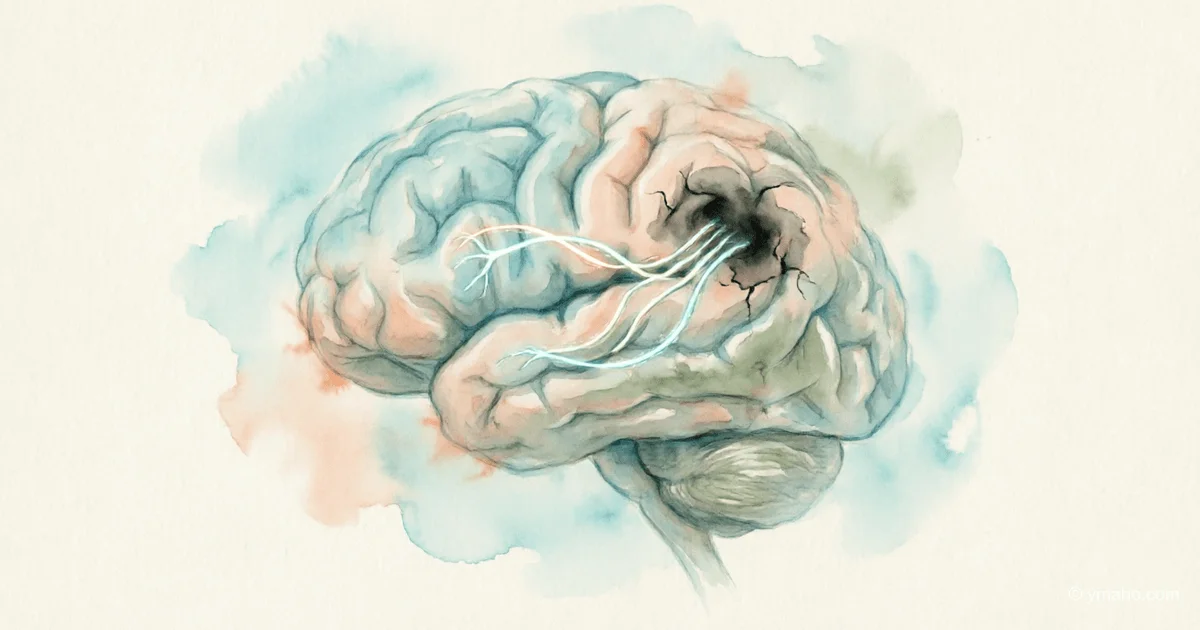
Scientists at Duke University have created a biological "wire" called LinCx (study in Nature) that establishes new electrical connections between selected neurons, bypassing damaged areas. The method altered stress responses and social behavior in mice, paving the way for drug-free treatment of neurological disorders.
The LinCx technology is not just a "biological wire" for the brain. It is a bid to change the entire paradigm of treating neurological disorders: from chemical symptom suppression to architectural rewiring of neural circuits. Researchers at Duke University, led by Kafui Dzirasa, have created a system that establishes new electrical connections between specific neurons, bypassing damaged areas. But the essence goes deeper—this is the first tool capable of editing the brain's "connection diagram" with cellular precision without constant external intervention.
Timeline and Context
The backstory of this breakthrough began long before the publication in Nature on May 13, 2026. The first preprint on bioRxiv appeared on March 26, 2025, under the title "Long-term editing of brain circuits in mice using an engineered electrical synapse." That is, the scientific community had over a year to digest it before formal publication. During this time, Duke University filed two US patent applications: US20250186620A1 and US20240248078A1, both covering the FETCH method and the use of LinCx proteins for circuit editing.
The key technological foundation is the connexin proteins (connexin 34.7 and connexin 35) from the white perch Morone americana. These fish use electrical synapses for ultra-fast communication between cells. Dzirasa's team did not simply borrow a natural mechanism—they redesigned the molecules so that they only dock with each other and do not interact with native brain proteins. To verify specificity, they created a fluorescence assay capable of testing hundreds of protein pair combinations in vitro.
Preclinical trials were conducted on two model organisms: the roundworm Caenorhabditis elegans and the mouse Mus musculus. In worms, additional electrical connections altered temperature-seeking behavior. In mice, they affected social interaction and stress responses, and also rewired whole-brain activity patterns.
Who Wins and Who Loses
There are several winners. The first is Duke University School of Medicine itself: two patent applications for the FETCH method and LinCx proteins mean potential control over an entire class of neural circuit editing technologies. The second are the foundations that funded the research early on: the Burroughs Wellcome Fund, the Howard Hughes Medical Institute, and the Hope for Depression Research Foundation. They will see a return on investment through licensing royalties when clinical development begins. The third are large pharmaceutical companies with portfolios of neuro-drugs whose patents are expiring. The LinCx technology gives them a new asset for combination therapy: drug plus circuit editing.
Losers include manufacturers of deep brain stimulation devices—Medtronic, Abbott, Boston Scientific. DBS requires electrode implantation and an external stimulator costing up to $35,000–50,000 per system. LinCx offers a one-time intervention without the need for external power. Developers of optogenetics also lose—the technology requires introducing light-sensitive proteins and implanting optical fibers, limiting clinical application. Companies betting on transcranial magnetic stimulation as the primary treatment for depression lose as well. If a circuit responsible for stress reactivity can be precisely rewired, the need for repeated TMS sessions costing $300–500 each drops sharply.
What the Media Isn't Saying
Nearly all publications, including the Duke press release, sidestep the issue of irreversibility. LinCx creates long-term structural changes—"long-term editing" is in the title of the paper. But what happens when the edited circuit starts producing unforeseen effects? Electrical synapses are bidirectional. Strengthening the connection between neurons A and B also strengthens the reverse flow from B to A. In a normal brain, such symmetry does not exist. By creating an artificial bypass, we risk generating pathological oscillations—essentially a focus of epileptiform activity.
A second non-obvious point: the choice of fish connexins is not accidental and has implications for the immune response. Morone americana proteins are evolutionarily distant from mammals. Even after engineering, they remain foreign to the human immune system. Preclinical data on immunogenicity have not been published, but my experience suggests that chronic inflammation around cells expressing the viral vector is a typical reason for gene therapy failure in phase I/II. This can be solved, but the cost of developing a vector with a tissue-specific promoter and an immunosuppressive "shield" will exceed $200 million.
Forecast: Next 30 Days and 90 Days
In the next 30 days, I expect the Dzirasa Lab to publish or submit for publication results of testing LinCx on mouse models of genetic disorders. Dzirasa himself stated: "We will next test whether LinCx is powerful enough to override synaptic deficits induced by lifelong genetic disruptions." Most likely, this will be a model of Rett syndrome or Angelman syndrome—both involve impaired synaptic function and both have strong patient organization advocacy.
In the 90-day perspective, an institutional shift will occur. I expect that one of the major foundations—likely the Wellcome Trust or the Simons Foundation—will announce a grant program for Circuit Editing Technologies with a budget of at least $50 million over three years. Simultaneously, the FDA will begin closed consultations on classifying LinCx-like interventions: are they gene therapy, cell transplantation, or a new class of "integrative neural devices"? The answer will determine the regulatory pathway and the cost of bringing them to market.
The main forecast is the emergence of a startup that will take on the commercialization of LinCx for treating treatment-resistant depression. The target population is about 2.8 million adults in the US who do not respond to two or more antidepressants. If the technology can precisely reduce the activity of stress-response circuits, we are talking about a market worth over $4 billion annually. The key question is not whether it works, but who will be the first to file an IND. Duke University's two patent applications are already at the USPTO. A startup that obtains an exclusive license will be valued at $500 million even before the first human injection.
— Editorial Team









