What to Take to the Beach with a Child: A Checklist
Niche: Travel & Tourism Content Type: Problem Solving + Checklist Why It Matters: Parents fear forgetting something — a ready-made checklist grouped by category (first aid kit, food, toys) has high practical value.
The Gist: What You Need to Know First
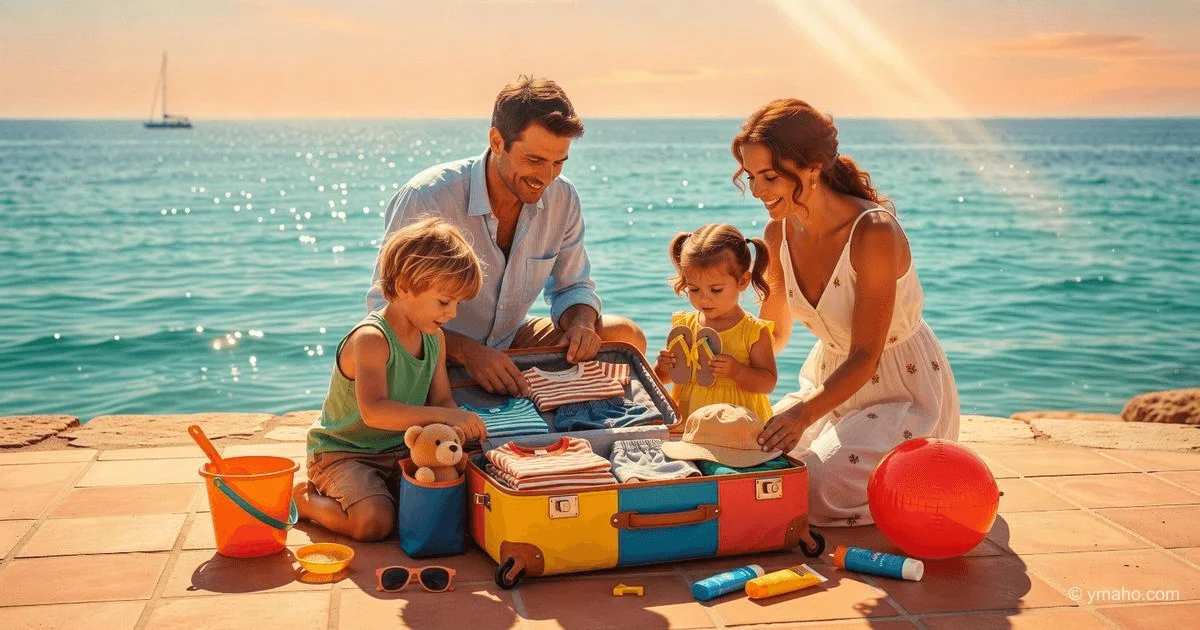
When packing for a beach trip with a child, it's easy to fall into one of two extremes: bringing half the house "just in case" or, conversely, relying on local shops and ending up without the essentials. Experienced parents know the golden rule: don't bring everything, but wisely divide items into three categories — what you need on the road, what's vital on the beach, and what you can buy locally.
Most basic necessities (diapers, wet wipes, bottled water, simple toys) can be bought at any resort town. But some things are either hard to find locally, cost 2–3 times more, or are of questionable quality. These include: specialized baby food (if the child is on formula or solids), high-SPF children's sunscreen, trusted medications, and a favorite "comfort" toy without which the child won't sleep.
And most importantly: the packing list depends heavily on age. What a one-year-old needs (diapers, formula, potty) is completely different from what a ten-year-old needs (though a sun hat and sunscreen are essential for everyone).
Step-by-Step Solution: Packing the Suitcase
Let's break down packing into logical blocks. Go through each one, and you won't forget a thing.
Step 1. Documents and Finances (Don't Leave Without These)
This is the absolute minimum that must be at hand, not in the suitcase.
| Document | Purpose | Comment |
|----------|---------|---------|
| Birth certificate (for children under 14) or passport | Proof of identity and age | Original, not a copy. Needed on the way back at the airport |
| Compulsory health insurance policy (OMS) | Free medical care in Russia | Useful even if traveling abroad — just in case |
| International passport (if abroad) | Entry to another country | Ensure it's valid for at least 3–6 months after return |
| Travel medical insurance (for foreign trips) | Emergency care abroad | Better to get coverage of 50,000–100,000 EUR. Children must be included in the policy |
| Notarized consent for travel | If the child travels with only one parent or a third party | Mandatory for foreign trips. Without it, you may be denied departure |
| Money: cash (in local currency) + cards | For pocket expenses, taxis, souvenirs | Have a small amount of cash — there may be no terminals on the beach |
Step 2. Travel Kit (What You Need on the Plane, Train, or Car)
Traveling with a child is a challenge in itself. Here's what will make it more comfortable:
- Water — at least 0.5 L per person. On a plane, you can buy it after security; on a train, bring your own.
- Snacks — things that don't get hands dirty or crumble: apples, pears, bananas, cookies, rusks, crispbreads, granola bars. Avoid chocolate — it melts and makes a mess.
- Wet wipes and hand sanitizer — indispensable on the road.
- Lollipops (for children 3+) — help relieve ear pressure during takeoff and landing. For infants, offer the breast or a bottle.
- Entertainment — a small favorite toy, coloring book with crayons, tablet with downloaded cartoons. On a train, you can bring a travel cot to keep the child safe on the top bunk.
- Warm sweater or blanket — air conditioning in transport runs at full blast. The child may get cold.
Step 3. First Aid Kit (Doctor-Approved List — Only What's Really Needed)
Surgeon Alexey Ranshakov warns: don't drag half a suitcase of medications. Most are either useless or can be harmful without a prescription. Here's what's truly necessary:
Fever reducer and pain reliever
- Paracetamol or ibuprofen in syrup or suppositories (for children from 3 months). Children under 12 must not take aspirin.
For allergies
- Antihistamine drops or syrup (Zyrtec, Fenistil — from 1 month, Zodak — from 6 months).
- Cream or gel for insect bites (with calamine or Fenistil gel).
For intestinal issues and dehydration
- Regidron or Hydrovit — powders to restore water-salt balance during vomiting and diarrhea. Critically important for intestinal infections. They may not be available at resorts.
- Sorbents — Smecta, Enterosgel, activated charcoal.
For motion sickness (for children 3+)
- Dramamine, Aviamarin.
Wound care
- Band-aids (regular and antibacterial, preferably waterproof).
- Miramistin or chlorhexidine. No brilliant green or iodine — just wash the wound with soap and water.
Panthenol — for sunburns (spray or ointment).
For infants additionally: colic remedy (Espumisan), diaper cream (with zinc), teething drops (after consulting a doctor).
Golden rule: all medications only after consulting a pediatrician, especially if giving them to the child for the first time.
Step 4. Beach Kit (What You'll Actually Need on the Sand)
The beach is where things get dirty, lost, and wet. Bring extras, but don't go overboard.
| Item | Why | Tip |
|------|-----|-----|
| Hat | Protection from sunstroke | Wide-brimmed hat or cap. The child will take it off — bring a spare |
| Sunscreen (SPF 50+) | Protection from burns | Children's, waterproof. Apply 20 minutes before going out and reapply every 2 hours or after swimming |
| Swim trunks / swimsuit (2–3 pairs) | Swimming | Kids get dirty quickly — a change is a must |
| Rash guard (with UPF protection) | Extra sun protection | Better than bare skin. No need to apply sunscreen on back and shoulders |
| Flip-flops / water shoes | Protect feet from shells and hot sand | For pebble beaches, water shoes are essential |
| Beach towels (2–3) | Drying off and lying down | One for lying, one for drying |
| Inflatable arm bands / ring / vest | Water safety | Note: not life-saving devices. Never leave the child unattended in the water |
| Beach bag | To collect wet and dirty items | Waterproof is best |
| Beach tent or umbrella | Shade | Infants under 6 months should not be exposed to direct sunlight at all |
Specifically for toddlers:
- Swim diapers (disposable or reusable) — bring more than you think you'll need.
- Waterproof changing pad — to lay down in the tent.
- Spare diapers — change after the beach.
Step 5. Clothing and Footwear (The "Layers" Rule)
Don't pack "for each day" but consider laundry and weather. In hot climates, children sweat and get dirty faster than adults.
- For active days: lightweight shorts, t-shirts made of natural fabrics (cotton, linen) — 2 sets per day.
- For evening walks / cool weather: sweatshirt or long-sleeve top, pants (even in summer, evenings at the beach can be cool).
- Pajamas — preferably cotton, 1–2 pairs.
- Socks (3–4 pairs) — easy to forget, but the child will be uncomfortable in sneakers without them.
- For evening outings to cafes/restaurants: dressier but comfortable clothes.
Footwear: comfortable sandals with Velcro (for walks), sneakers (if planning excursions with walking), water shoes (for the beach and rocks).
Step 6. Toys (Minimal but Engaging)
No need to bring the entire playroom. 3–5 items are enough:
- Beach toys: bucket, shovel, molds, small inflatable ball.
- For the road: favorite small toy (without which the child won't sleep), tablet with cartoons, coloring book (for older kids).
- For a rainy day: board game (compact) or book.
Step 7. Food and Drink (What to Bring vs. What to Buy Locally)
- Water: bring for the road; buy local bottled water at the destination.
- Baby food (for infants): if the child is on formula, bring extra. The right brand may not be available at the resort. Jars of puree — bring a few, buy the rest locally.
- Beach snacks: apples, bananas, cookies, rusks, crispbreads, nuts (for children 3+). No perishable food (cottage cheese, yogurt) — they'll spoil in the heat within an hour.
- Probiotics: doctors recommend starting a course 3 days before the trip — it helps adapt the child's gut to new food.
Step 8. Hygiene Products and Other Essentials
- Children's shampoo and soap (travel size).
- Children's toothbrush and toothpaste.
- Comb.
- Wet wipes (large pack — they go fast).
- Dry wipes or paper towels.
- Diapers (if needed) — bring enough for the first few days, buy the rest locally.
- Potty (for toddlers on the go) — indispensable during travel.
- Trash bags and bags for wet items.
Practical Tips and Important Nuances
- The "underwear and towels" rule: bring twice as many as you think you need. Kids get dirty, spill things, fall into puddles — spare clothes are never superfluous.
- The sun is the main enemy. Active sun from 11:00 AM to 4:00 PM. During this time, it's best to stay in the shade or indoors. Apply sunscreen 20 minutes before going out, not on the beach. Set a timer on your phone to remember to reapply every 2 hours.
- Infants under 6 months — no direct sun at all. Their skin doesn't produce enough melanin. Only shade, lightweight long-sleeve clothing, and a hat.
- Dehydration is the most common problem. Children lose fluid imperceptibly on the beach. Offer water every 20–30 minutes, even if the child doesn't ask.
- Mosquito repellent is a must. At the beach, insects are active in the evening. Bring a safe repellent for children. If the child has already been bitten, use an antihistamine gel.
- Don't bring antibiotics or antiemetics without a prescription. They can be harmful and mask a serious condition.
- Travel medical insurance for abroad must cover children. Minimum amount — 30,000 EUR, better 50,000–100,000 EUR. Be sure to include active activities if the child will run, climb, and swim.
Common Mistakes and How to Avoid Them
Mistake 1. Bringing too many medications. Parents pack a full first aid kit "just in case" — antibiotics, antiemetics, hormonal ointments. This is not only heavy but also dangerous: many drugs cannot be given without a prescription.
Solution: bring only fever reducers, antihistamines, sorbents, Regidron, band-aids, and Panthenol. Everything else after consulting a doctor on-site.
Mistake 2. Relying only on sunscreen. Sunscreen washes off in water, gets sweated off, and is forgotten to be reapplied. Result: sunburn.
Solution: combine: sunscreen + rash guard + hat + shade. That's the only reliable protection.
Mistake 3. Forgetting spare clothes in carry-on luggage. Luggage gets lost, and it's cold at the airport. The child is cold with nothing to change into.
Solution: always pack a warm sweater, spare pants, and socks for each family member in your carry-on.
Mistake 4. Not checking the expiration date of sunscreen. Last year's sunscreen may have expired and won't work.
Solution: buy new sunscreen each season. The packaging has a jar symbol indicating how many months it's good after opening.
Mistake 5. Putting all documents in one envelope. Lose it, and everything is gone.
Solution: make copies of all documents and put them in different places (suitcase, bag, leave with relatives at home). Ideally, have scans in cloud storage.
Summary: Key Takeaway and Next Step
Three main principles for packing for the beach with a child:
- Documents and medications (minimal but correct) — these are things you can't forget and are hard to buy locally.
- Clothing and sun protection — bring extras because kids get dirty and burn quickly.
- Everything else (diapers, water, food, toys) can be bought locally without overloading the suitcase.
Your next step right now:
Sit down with your child (or without) and spend 15 minutes making your own written list based on the categories above. Check off what you already have and buy the missing items a week before departure. Don't leave packing for the last night — that's when the most important things are forgotten.
And remember: even if you forget something, it's not a disaster. Every resort town has a pharmacy and a children's store. The main thing you bring is a good mood and a readiness for adventure.
— Editorial Team