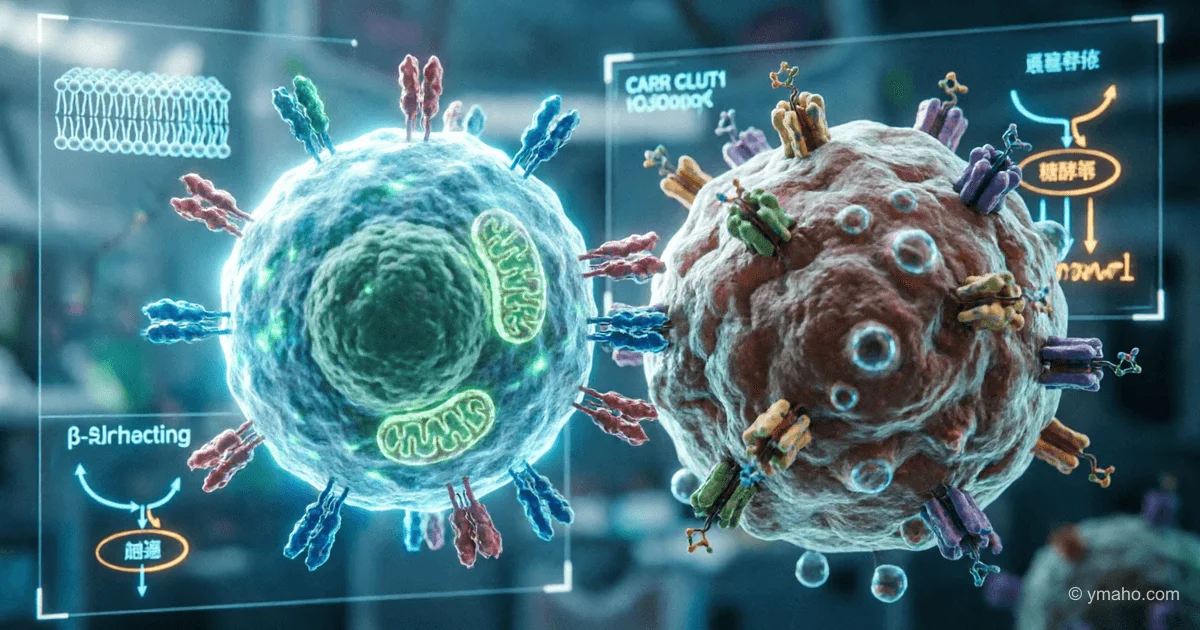
Nature: Review of New Metabolic Vulnerabilities Opens Avenues for Lymphoma Therapy
A study published in Nature reveals metabolic subtypes of diffuse large B-cell lymphoma. New inhibitors targeting glucose and lipid metabolism have shown selective toxicity, paving the way for combination therapy with CAR-T cells.
This is my analysis of the situation. It is not a retelling of the scientific article, but a map of how metabolic classification of lymphomas is reshaping the oncohematology market and exposing the flaws of "genetic determinism."
The Core: What Is Really Happening
The publication in Nature is not just a review of metabolic subtypes of DLBCL. It is a manifesto for a new oncology where genetics takes a back seat. The authors from the cancer center at Harvard Medical School postulate: metabolic profiling is an independent stratification axis that does not correlate with the cell of origin of the tumor. The OxPhos transcriptomic cluster can hide under both GCB and ABC masks. This means that the current diagnostic standard, for which laboratories like Myriad Genetics or Foundation Medicine charge between $3,500 and $5,800 for a genetic panel, misses a critically important layer of information.
The main signal here is the proposal to combine metabolic inhibitors with CAR-T therapy. Essentially, the researchers are saying: "We don't just want to kill the tumor; we want to turn off its metabolic generator and simultaneously recharge the patient's T-cell battery." This is a shift from the "chemotherapy or immunotherapy" paradigm to their metabolic symbiosis.
Timeline and Context
The story didn't start today. Back in the 2000s, Monti's group identified three clusters based on transcriptomics: OxPhos (oxidative phosphorylation), BCR/Proliferation (glycolysis and B-cell receptor), and Host Response (immune microenvironment). At the time, this was academic exoticism. The breakthrough came in 2024–2025, when several independent labs showed that OxPhos cluster tumors are resistant to standard R-CHOP because doxorubicin, contrary to expectations, cannot effectively break mitochondria with enhanced antioxidant defenses.
In parallel, a second vector emerged: metabolic "exhaustion" of the CAR-T cells themselves. It turned out that the IL-2-dependent production protocol channels an effector phenotype geared toward glycolysis. Such cells are deadly sprinters but poor long-distance runners. IL-7 and IL-15, on the other hand, preserve oxidative metabolism and stem memory. The Nature article brings these two puzzles together into a single picture: for CAR-T to work, it needs to be fed fatty acids and amino acids, while the tumor should be starved by blocking glucose transporters.
Who Wins and Who Loses
The winners are biotech companies that already have metabolic reprogramming platforms. The main beneficiary is Leman Biotech, which received FDA IND approval for META 10-19 (a "metabolically armored" CD19 CAR-T therapy based on IL-10). Their data show 100% complete remission at ultra-low doses without lymphodepletion. With the CAR-T market valued at $6.9 billion by 2028, such technology is a direct threat to the dominance of Gilead/Kite and Novartis.
The losers are manufacturers of standard antibody-drug conjugates (ADCs). If metabolic inhibitors combined with CAR-T show even a 15–20% improvement in survival compared to the standard polatuzumab vedotin-R-CHP, investments in ADCs will start flowing into metabolic startups. Additionally, US insurance companies will gain an argument to require full metabolic profiling before approving CAR-T therapy costing $375,000–$475,000 per infusion. Laboratories without mass spectrometry will be left behind.
What the Media Isn't Saying
Most outlets omit a fundamental problem: there is a chasm between "transcriptomic signatures of metabolism" and actual metabolite fluxes. The review authors themselves honestly admit: the CCC classification is based on RNA, not direct metabolomic data. Post-transcriptional regulation and substrate availability can completely distort the predicted phenotype. In other words, we are looking at a map, not the terrain.
And here's a non-obvious insight: no one yet knows how Host Response cluster tumors—those that actively recruit immune cells and inflammatory signals—respond to metabolic inhibitors. There is a risk that blocking glycolysis in this subtype could hit not only the lymphoma but also antitumor M1 macrophages, which also depend on glucose. By killing tumor metabolism, we might accidentally suffocate our own immune response. This echoes the story of mTOR inhibitors, whose immunosuppressive effect came as an unpleasant surprise.
Forecast: Next 30 Days and 90 Days
30 days (by June 18, 2026): I expect an announcement of a major agreement between Leman Biotech and one of the US cancer centers—likely MD Anderson or Memorial Sloan Kettering. Leman has already initiated clinical trials in the US, and they need a reputable partner to validate the concept of "metabolic armoring" in DLBCL cohorts. The deal size, including exclusive rights, could range from $150 to $220 million. At the same time, interest will grow in diagnostic startups capable of delivering clinical-grade metabolomics at a price no higher than $800 per sample.
90 days (by August 19, 2026): The FDA will release new draft guidance on CAR-T therapy development. The document will emphasize control of the metabolic phenotype of the product as a quality criterion (CMC control). This will hit small manufacturers that lack platforms for measuring oxidative stress in cell products. For patients with double refractory DLBCL, expanded access cohorts for metabolically enhanced CAR-T will begin to open. But most importantly, we will see large pharma companies, primarily Roche and BMS, start acquiring portfolios of glutaminase inhibitors and FAT transporters. The market will enter a metabolic arms race, where victory will go to the one who first proves not victory over cancer, but victory over T-cell exhaustion.
— Editorial Team









