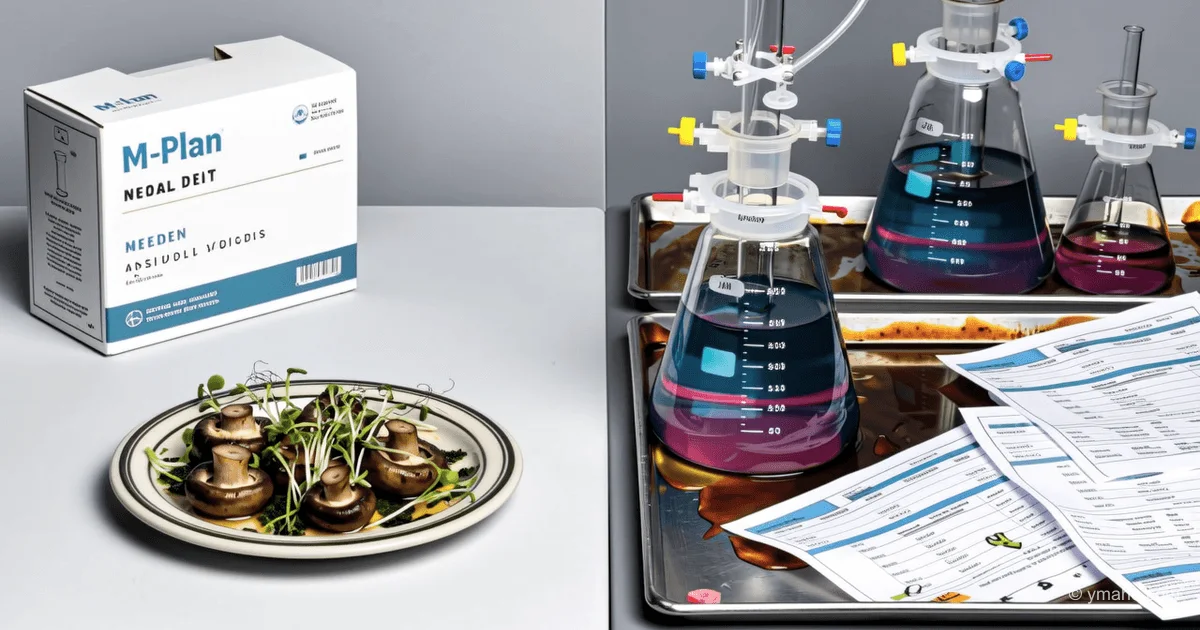
The Mushroom Diet: How a Simple Food Became the New Weight Loss Hit
The M-Plan diet focusing on mushrooms is gaining popularity online: experts note that mushrooms are rich in beta-glucan, protein, and fiber, promoting prolonged satiety and accelerated fat breakdown with low calorie content.
The news about the "mushroom diet" and M-Plan as a weight loss hit seems like an innocent health trend at first glance. As an insider tracking deals in FoodTech and big pharma, I see not just a fad for a low-calorie product, but a masterfully executed multi-step strategy. We are witnessing an operation to turn cheap biological raw materials into a premium dietary product through the "medicalization" of ordinary food. This is a market capture campaign orchestrated not by dietitians, but by venture capital funds against the backdrop of the "great correction" in the functional foods industry.
The Essence: What's Really Happening
The hype around the "mushroom diet" is a smokescreen covering an urgent business model shift for alternative protein and functional food manufacturers. After the plant-based meat bubble (on which mushrooms parasitized as an ingredient) began to deflate, huge biotech capacities designed for mycelium cultivation were left without a market. They were urgently redirected to the health & wellness segment for weight loss.
The numbers speak for themselves: the medicinal mushroom market is already valued at $10.48 billion and, according to Precedence Research, will reach nearly $30 billion by 2034 with a CAGR of 12.35%. But these are just formal figures. The reality is that certain retail categories have dropped by 30-40% because inflation forced consumers to cut back on discretionary spending on "functional" coffees and snacks. To survive, the mushroom player pool had to find an anchor consumer who would eat their product guaranteed and daily. And they found it — the ever-dieting audience, to whom M-Plan offers replacing a meal with mushrooms.
Timeline and Context
May 11, 2026 is just a convenient moment for the release, but preparations have been underway for at least six months. Here are the facts that not everyone connects.
First, the "pharma upgrade" of mushrooms. Since January 2026, a clinical trial UMIN000060293 has been launched, testing the effect of consuming 40g of mushrooms per day on gut health, stool quality, presenteeism (employees' ability to work productively), and, attention, body weight. This is not just scientific work — it's building an evidence base for the FDA and regulators to reclassify mushrooms from "just food" to a dietary or even therapeutic product.
Second, total capital mobilization. The mushroom boom requires industrial scale, and venture capital has rushed into this sector. In January 2026, Maia Farms raised $3.75 million (in addition to previously received $2.7 million) to scale up production of mycelial ingredients. Simultaneously, in China (Hohhot), a project for a mycelial protein plant worth 1.2 billion yuan (approximately $165 million at current exchange rates) was signed, which will produce 15,000 tons of product per year. This is an industrial giant level. Their goal is not to feed vegans, but to flood health snack and meal replacement manufacturers with cheap raw materials.
Third, market consolidation. Right now, there is a wave of mergers and acquisitions: Real Mushrooms is buying Mushroom Science, Giorgi Mushroom Co is acquiring spawn assets, Mangoceuticals is buying patents on mushroom extracts. This behavior is typical of a market before a shakeout: the weak are weeded out, the strong consolidate supply chains and clear the patent field before the mass launch of products targeting weight loss.
Who Wins and Who Loses
Winners:
- Fermenter and bioreactor manufacturers. The shift to industrial mycelium cultivation requires vertical farms and equipment for liquid fermentation. Companies like Maia Farms directly state that their goal is to scale these technologies.
- GLP-1-associated retail. The industry is already looking for ways to ride the wave of weight loss drugs (Ozempic and analogs). Mushrooms, rich in fiber and beta-glucan, perfectly align with the diet of patients on GLP-1 agonists, creating a separate niche for "supportive therapy."
- Cosmeceuticals. This sector (the "new blue zone") is actively extracting antioxidants from mushrooms for creams and serums, thereby diversifying risks from the food sector.
Losers:
- Wild mushroom foragers. The rise in mushroom popularity has triggered a wave of severe poisonings among inexperienced gatherers confusing edible species with death caps. In recent months alone, wild mushrooms have led to several deaths and liver transplants, creating negative publicity. Authorities are forced to issue emergency warnings, which hurts the entire category's reputation.
- Doctors without toxicology training. As practice shows, diagnosis of amatoxin poisoning is often delayed because symptoms appear 6-24 hours later, followed by a false improvement before liver failure. The mass enthusiasm for self-medicating with mushrooms places a huge burden on hepatology centers.
- Patients on blood thinners and antibiotics. Official studies exclude such people from tests, but M-Plan advertising omits these risks. The interaction of high doses of mushroom polysaccharides with medications is a time bomb that no one discusses.
What the Media Isn't Saying
Here lies the most inconvenient fact for proponents of the "mushroom diet" — the cadmium paradox. While everyone touts the benefits, a study published in the reputable journal Toxics on January 10, 2026 (the height of the trend launch) showed that mushrooms, including popular button mushrooms and shiitake, actively accumulate heavy metals.
Specifically, cultivated Agaricus blazei mushrooms (a base for many supplements) were found to contain 3.84 mg/kg of cadmium. Although researchers reassure that the bioavailability of this poison is low (only 6%), there is a nuance. When cooked and digested, mushrooms release a mass of soluble polysaccharides. These same polysaccharides in the GI tract can bind cadmium and retain it, preventing immediate absorption into the blood but creating prolonged contact with the mucosa. If a person on M-Plan eats mushrooms for weeks, the issue of accumulation and transformation of this "low-bioavailable" cadmium in the body becomes critical. This is a "time bomb" that marketers keep quiet about, but which has already caught the attention of toxicologists.
The second point is the overproduction crisis. The functional mushroom market is already oversaturated, and some retailers report category sales drops of up to 40%. This means M-Plan is aggressively promoted not because consumers want to eat that way, but because warehouses are full of biomass that needs to be urgently monetized under any dietary sauce, at least at break-even.
Forecast: Next 30 Days and 90 Days
Next 30 days (until June 10, 2026):
A wave of "ready-made meal kits" based on mushroom mince will hit the market. We will see collaborations between major retailers and Maia Farms and Typcal (which are just launching commercial supplies of mycelial powder). The price for a "mushroom detox kit" will be set in the range of $25-$35 per daily ration. Simultaneously, an aggressive attack on meat shelves will begin: mushroom blends will be sold not as an alternative, but as a "functional enhancer" for classic dishes.
90 days (August 2026):
We will see the first major lawsuit related to the safety of "M-diets." Either a case of severe poisoning in the US due to confusion with wild mushrooms, or a scandal over laboratory detection of heavy metals in a popular supplement line. The FDA, currently investigating fatal cases in California, will increase pressure. This will cause the market to split into "wild" (dangerous) and "farm/bioreactor" (certified). We will see small brands disappear from Amazon shelves due to inability to prove raw material purity, giving way to giants with their own closed farms. The mushroom diet will turn into "mushroom pharmaceutical nutrition," and a prescription for mycelium will eventually be on par with a prescription for protein. We need to be prepared for this.
— Editorial Team









