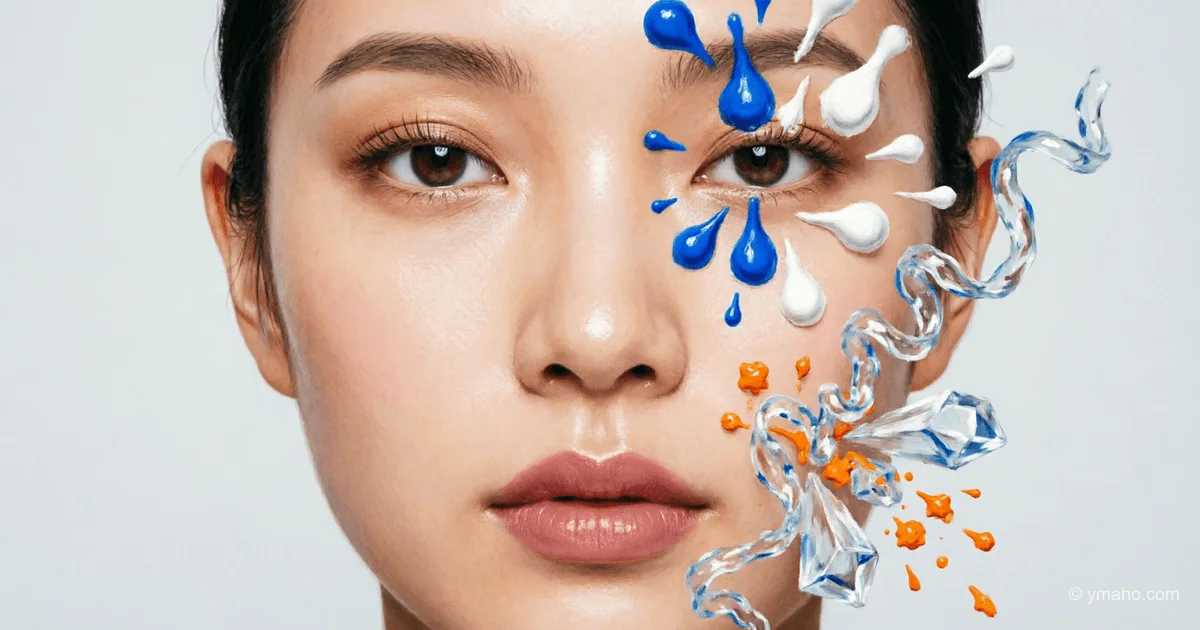
Skincare Makeup (#skincaremakeup): The New Wave of the 'No-Makeup Makeup' Trend
Foundations, tints, and concealers with proven skincare benefits are taking center stage. Brands are focusing on lightweight textures and active ingredients, turning decorative cosmetics into a full-fledged step in skincare.
As a strategic development consultant for beauty brands, working with labs and marketing departments on both sides of the Atlantic, I view the #skincaremakeup trend with professional skepticism. Loud headlines about a 'revolution in hybrid products' have flooded trade publications, but behind them lies not so much a technological breakthrough as a desperate attempt by the industry to solve the problem of market stagnation. This is not an evolution of customer care, but a complex engineering compromise that most brands try to pass off as synergy, often ignoring the fundamental laws of chemistry and skin physiology.
The Essence: What's Really Happening
We are witnessing not an integration of two worlds, but their harsh collision, where compromise always comes at the expense of effectiveness. Consumers are being sold a narrative of simplified routines: 'a foundation that works like a serum.' In reality, this means trying to combine substances with fundamentally different tasks in one bottle. Pigments, especially iron oxides that create color, are catalysts for oxidative stress on active ingredients. When you mix iron oxide and vitamin C in one jar, you trigger the Fenton reaction—a powerful cascade of free radical formation that not only kills the antioxidant value of the 'skincare' part but can also increase oxidative stress on the skin.
The main driver of this trend is not consumer demand for skin health, but the overheating of the 'clean' skincare segment and the search for new margins. The super-premium decorative cosmetics market is valued at $44.10 billion USD in 2026, with the makeup segment accounting for 26% of that amount. But organic traffic growth for classic foundations is declining, while 'tinted serums' and 'skin tints' show explosive growth in search queries. Brands realized: if you add cheap hyaluronic acid to a foundation and call it 'skincare,' you can raise the average price by 20–30% without significantly changing the manufacturing process. This is pure attention arbitrage.
Timeline and Context
The key mutation of the trend occurred in 2025, when biotech startups like BiotechBeauty announced the creation of the multi-stick BiomeBlush with 83% skincare ingredients. This was a bombshell that disrupted the marketing strategies of all giants. Haus Labs, with their highlighter containing 64% 'skincare,' showed that the percentage race had become the new norm. But the insider point of no return came earlier—back in January 2026, when new formula stability requirements took effect due to the ban on cyclic silicones D4, D5, and D6.
It was environmental regulation, not customer care, that forced technologists to reformulate textures. The replacement of silicones led to formulas becoming more 'wet' and holding pigment less effectively. To compensate for the loss of longevity and sensory feel, developers were forced to introduce more film-formers and bio-lipids, such as Vitamin F Forte. These components, formally serving as barrier care, actually solve the problem of foundation smudging. Marketing immediately repackaged this technological crutch as 'skin care.'
Who Wins and Who Loses
The main beneficiary today is not the end user, but suppliers of 'smart' raw materials. Companies producing encapsulated actives and stabilized peptides are reaping the rewards of this trend. To prevent a molecule from being destroyed in the aggressive environment of pigments, it must be enclosed in an expensive liposomal capsule. The winner is the one who sells this shell (microencapsulation), not the one who produces the active itself. The cost of encapsulation can reach 40% of the raw material purchase price.
The losers are small indie brands and consumers with sensitive skin. Indie brands cannot afford complex delivery systems, so their 'skincare' makeup is simply a mixture of pigment and glycerin that doesn't work. Consumers risk encountering the 'cocktail effect.' Applying a foundation with niacinamide over a serum with niacinamide and a retinol cream creates a 'toxic mix' on the skin that exceeds tolerance thresholds. As noted by Professor Adam Friedman, a dermatologist at George Washington University, prolonged contact of makeup with actives without proper tolerance testing leads to a surge in acne and dermatitis.
What the Media Isn't Saying
Beauty publications omit the fact that the concentration of skincare ingredients in makeup is, in the vast majority of cases, a 'marketing infusion' rather than a therapeutic dose. Analysis by professional chemists shows: when a brand claims 64% skincare, it counts water, glycerin, and basic emollients. The actual proportion of 'active' expensive peptides or enzymes in this mass is often less than 0.1%, which is catastrophically insufficient for any physiological effect.
The second non-obvious issue is stability during storage. Sunscreen hybrids with SPF and skincare are technically extremely unstable. UV filters, especially mineral ones (titanium dioxide, zinc oxide), generate reactive oxygen species when exposed to light. If at that moment the formula contains an unprotected plant extract, it oxidizes not on the skin, but already in the bottle. Labs know that after six months of storage, only the marketing promise on the packaging remains of the 'skincare value' of such a cream.
Forecast: The Next 30 Days and 90 Days
First 30 days. We will see a segmentation of the trend into luxury and mass market with a dramatic quality gap. In the premium segment, players like Kanebo with their 'embryonic' line CREAM IN DAY will start promoting the concept of 'makeup that reprograms the skin,' using enzymes and biotech. In the mass market, a wave of blatantly empty but brightly colored 'serum tints' will flood in. A scandal will be key: I predict a viral video from a beauty blogger or chemist-technologist that visually demonstrates the oxidation of vitamin C in a foundation from a well-known brand, triggering the first major wave of disappointment in the 'all-in-one' concept.
90 days. By September 2026, the market will start demanding 'evidence-based makeup.' The trend will shift from 'percentage of skincare in the formula' to 'clinical in vivo trials at the intersection of makeup and dermatology.' Brands that are the first to conduct such tests (showing that their foundation truly reduces moisture loss after 8 hours of wear without adverse reactions) will capture a niche worth up to $1.42 billion USD (projected market size for tinted sunscreens by 2031).
In parallel, shelf segmentation will begin: consumers burned by mixing actives in makeup will return to the concept of a 'clean base.' Skincare will be strictly underneath (serum and cream), and makeup strictly on top, with a demand for minimal invasiveness and inert coverage. This will not kill the #skincaremakeup trend, but will transform it from mass hysteria into a niche, high-tech segment with a very high entry barrier. Only those who are friends with science, not copywriters, will survive.
— Editorial Team









