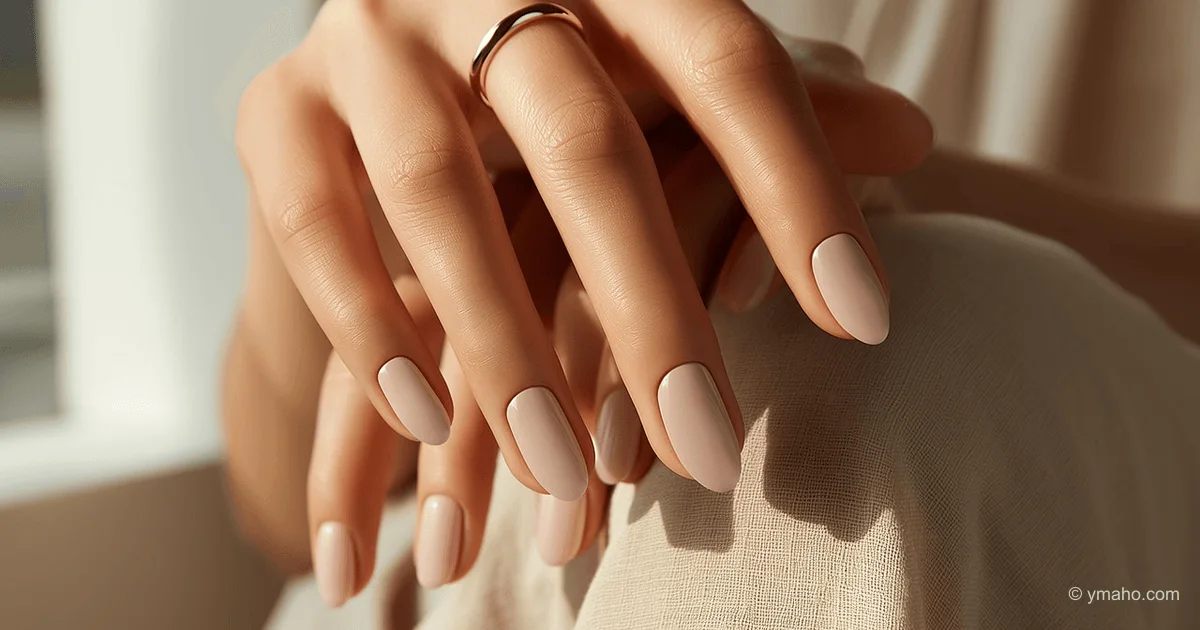
New Nail Trend: 'Quiet Luxury' and Naturalness Over Bold Designs
Experts note that affluent clients are abandoning complex nail art in favor of barely-there coatings. The 'clean girl' manicure using classic shades like OPI Bubble Bath is becoming a new status symbol.
'Quiet luxury' at your fingertips: why the nail industry is rewriting the rules in 2026
What's Really Happening
What the media presents as 'a new trend toward naturalness' is not just a shift in color palette from bright neon to OPI Bubble Bath. It's a tectonic shift in the economics of the nail industry. The market is restructuring: money is moving from the 'design and decoration' segment to the 'technique and time' segment. Clients are voting with their wallets not for the master's creativity, but for their ability to make a nail flawless with zero visible intervention.
The litmus test is financial indicators. Retailers specializing in nail art are experiencing a collapse. The major online store clutchnails.com recorded a drop in annual revenue of 50%+ — from $86K in 2025 to a projected further 50%+ decline in 2026. In January 2026, their monthly revenue was $133 — an amount that doesn't even cover basic operating expenses. Another seller, 99nails.de, generated $1,407 in March 2026 with an average order value of $0-25, significantly below industry median figures.
These numbers are not a coincidence. They are a symptom. The nail decoration market is collapsing because consumers have switched to a fundamentally different product.
Timeline and Context
The transformation came in waves. First, K-Beauty and J-Beauty brought the philosophy of grooming without visible makeup. Second, Quiet Luxury as a macro-trend redefined status consumption: ostentation gave way to the invisible, recognizable only to the initiated. Hermès doesn't write its name on the bag — the material and stitching reveal its origin. Zegna Triple Stitch to the uninitiated is just a sneaker; to the knowledgeable, it's a signal of belonging to a circle of those in the know.
The nail industry followed the same path. First came the 'Russian manicure' — a technique that removes the cuticle so cleanly that gel polish seems to be an extension of the nail plate. Two hours of work, jeweler's precision, price 60-100% higher than a standard manicure. Then came the Japanese manicure — no colored coating at all, only rubbing in a paste with beeswax and polishing to a mirror shine.
By early 2026, these techniques were no longer niche and had gone mainstream. Searches for 'short nail manicure' grew by 110%. Pantone's color of the year — Cloud Dancer, a milky white shade, as far from 'noticeable' manicure as possible.
Who Wins and Who Loses
Winners — masters with high technical qualifications. The 'Russian manicure' requires a completely different skill level than standard gel polish application. Working with a drill, knowledge of nail bed anatomy, the ability to create a perfectly straight line at the cuticle — these competencies cannot be mastered in a two-day course. A specialist who masters the technique at a high level can charge $80-120 per procedure instead of the standard $30-50. Moreover, the 3-4 week wear time justifies the price for the client: the cost per day of wear ends up comparable to a regular manicure.
Premium salons that repackage the service from 'manicure' to 'experience' also win. As Grazielle Matos, founder of Grazielle Matos Beauty, writes, 'the secret to success is making the simple flawless.' When a master exits the price war and starts competing on quality, business margins grow.
Losers — suppliers of nail art and decoration. The decline of clutchnails.com and 99nails.de is just the beginning. The market for rhinestones, stickers, sliders, and pigments for complex designs is shrinking in proportion to clients abandoning patterns in favor of monochrome coatings.
Masters who built their business on speed and decoration also lose. The 'one-hour bright design with glitter' model stops working when a client asks for a two-hour 'Russian manicure' with sheer nude.
What the Media Isn't Saying
Insight: Quiet Luxury in manicure is not an aesthetic but a class filter.
A quick, bright design for $20 is accessible to almost anyone. It requires neither time nor special knowledge to order. A two-hour 'Russian manicure' for $100+ requires both money and free time, and an understanding of why one would pay so much for 'invisible' nails.
This is exactly the same mechanism that works with Loro Piana's beige cashmere: the item looks 'plain' to the uninitiated, but is a social marker for those 'in the know.' A nail treated so that the gel polish extends a fraction of a millimeter under the cuticle, creating the effect of color 'growing from within' — that's a message without words. It is read only by those who themselves get such a manicure.
The second hidden aspect is the redistribution of money within the industry. Previously, the value chain looked like this: decoration manufacturer → wholesaler → retailer → master → client. Now the 'decoration manufacturer' and 'wholesaler' links are dropping out. Money stays with the master, who sells not a product but time and qualification. This fundamentally changes the economics of the entire industry.
The third point — manicure is becoming a health & wellness procedure, not a beauty service. The Japanese manicure is sold not as a 'coating' but as 'nail plate health improvement.' Abandoning gel polish in favor of rubbing in ceramides and wax is no longer an aesthetic choice but a medical narrative. It allows charging more money and building loyalty through care, not decoration.
Forecast
Next 30 days (until mid-June 2026):
Expect a wave of articles about the 'dangers of gel polish' — this is marketing groundwork for a mass shift to 'health' techniques. Salons will start actively adding 'nail detox' services with Japanese manicure to their menus. Prices for services will rise 15-20% in the premium segment, as demand for 'Russian manicure' in major cities exceeds the supply of qualified masters.
Online decoration retailers will continue to decline. The first high-profile closures of stores specializing in nail art are possible.
Next 90 days (until mid-August 2026):
By the end of summer, expect certification programs for 'Russian manicure' from major beauty schools. The technique will transform from underground to institutionalized. At the same time, the segment of home devices for 'smart' manicure will grow: devices with depth sensors that prevent nail plate injury.
A key risk is price dumping by masters who have taken quick courses and do not master the technique at the proper level. Negative reviews about injuries after 'Russian manicure' could slow the trend in the mid-price segment.
The main strategic takeaway for market participants: in 2026, a nail master sells not color or design. They sell wear time, perfection, and belonging to the circle of 'those in the know.' Whoever first packages this into a scalable product will skim the cream off the restructuring market.
— Editorial Team









