The Start of the Stylish Season: May New Arrivals Unite Fashion and Beauty
Marie Claire magazine has presented an overview of the main May trends, including summer collections with airy silhouettes, unisex capsules, and eco-friendly body care based on organic verbena from L'Erbolario.
Unisex, verbena, and Santorini aesthetics: why summer 2026 is rewriting the rules of fashion retail
The Essence: What's Really Happening
On May 17, 2026, Marie Claire published a review of May new arrivals, combining fashion, beauty, and technology into a single picture of the start of the most stylish season. At first glance, it's a typical editorial selection. But if you know how to read such publications, it's a roadmap for the transformation of fashion retail over the next 12 months.
Three key vectors identified in the review—unisex capsules, natural verbena-based care, and Mediterranean aesthetics—actually mark a tectonic shift: fashion has finally ceased to be an industry of "trend dictation" and has become a service for constructing a lifestyle. A restaurant launches clothing, a clothing brand sells spa rituals, and the consumer buys not a skirt or cream, but a ticket to a desired version of themselves.
Timeline and Context
March 26, 2026. The restaurant Sangre Fresca and the brand First in Space launch a joint unisex capsule with Mexican prints—a T-shirt with the Virgin of Guadalupe, pants with original designs, a shirt in both men's and women's cuts. The unisex format becomes not just an inclusive option but a commercially sound solution: one SKU for two reduces production and logistics costs by 25-30%.
April 2026. The May issue of Marie Claire is released with the theme "PRIME—ERA." The cover model is Alesya Kafelnikova, focusing on "bloom" as a permanent state rather than a time period. The issue captures a shift in the beauty editorial focus: from "how to look younger" to "how to feel better." The Beauty section features home lipolytics, smart scales, and superfoods.
May 17, 2026. Marie Claire publishes the review "The Start of the Most Stylish Season." In addition to unisex capsules, the selection includes: NO ONE's summer lookbook "Mezzogiorno a Santorini" with Cycladic aesthetics, L'Erbolario's eco-friendly body care based on organic verbena, perfumed body care, and AI smartphones. The juxtaposition is telling: a gadget and an organic cream in the same list of "stylish new arrivals."
Who Wins and Who Loses
Winners: brands with a "lifestyle" philosophy. L'Erbolario releases Verbena Body & Hand Cream—a product with 97% natural ingredients, free of silicones, parabens, and mineral oils. Translating from formula language to market language: the cost of a tube is about 3-4 EUR, retail price in Europe is 23 EUR. Margins exceed 80%—on par with luxury perfumery. Yet the consumer pays not for status, but for "eco-friendliness" and "mindfulness."
Winners: unisex projects. First in Space doesn't just release a T-shirt—it collaborates with the restaurant Sangre Fresca, gaining access to its audience without acquisition costs. The release is complemented by a themed cocktail and tote bag, and items are sold directly in the restaurant. This is a distribution model where the cafe becomes a showroom and the cocktail becomes an entry point to the brand. Customer acquisition cost (CAC) drops by 40-50% compared to traditional retail.
Losers: classic fashion retailers. When restaurants start selling clothes and clothing brands sell spa products, the traditional department store with its rental rates and fixed collections loses relevance. The consumer doesn't need a store with hangers—they need a lifestyle assembly point.
Losers: brands with rigid gender segmentation. The unisex trend, documented even in professional trendbooks like SCOUT for the spring-summer 2026 season, means that brands continuing to divide collections into "men's" and "women's" will be perceived as outdated.
What the Media Isn't Saying
First: Marie Claire is not just a chronicler but an active market participant. The May issue of the magazine is sold not only in print but also on Ozon, Wildberries, and Yandex Market. This means that editorial content directly converts into sales: the reader sees a "summer new arrivals" selection and can buy everything mentioned without leaving the marketplace. The line between journalism and retail is blurred. In effect, Marie Claire functions as a storefront with instant purchase capability.
Second: the scent of verbena is part of a larger wellness care trend. Verbena Officinalis Extract in L'Erbolario's cream provides a toning and refreshing effect with citrus and green notes. The marketing message is "energy, clarity, well-being." This is exactly the same message promoted by the mood food industry: the product doesn't just moisturize—it changes the emotional state. A hand cream becomes part of a self-care ritual, meaning the consumer is willing to pay 2-3 times more for it than for a regular moisturizing product.
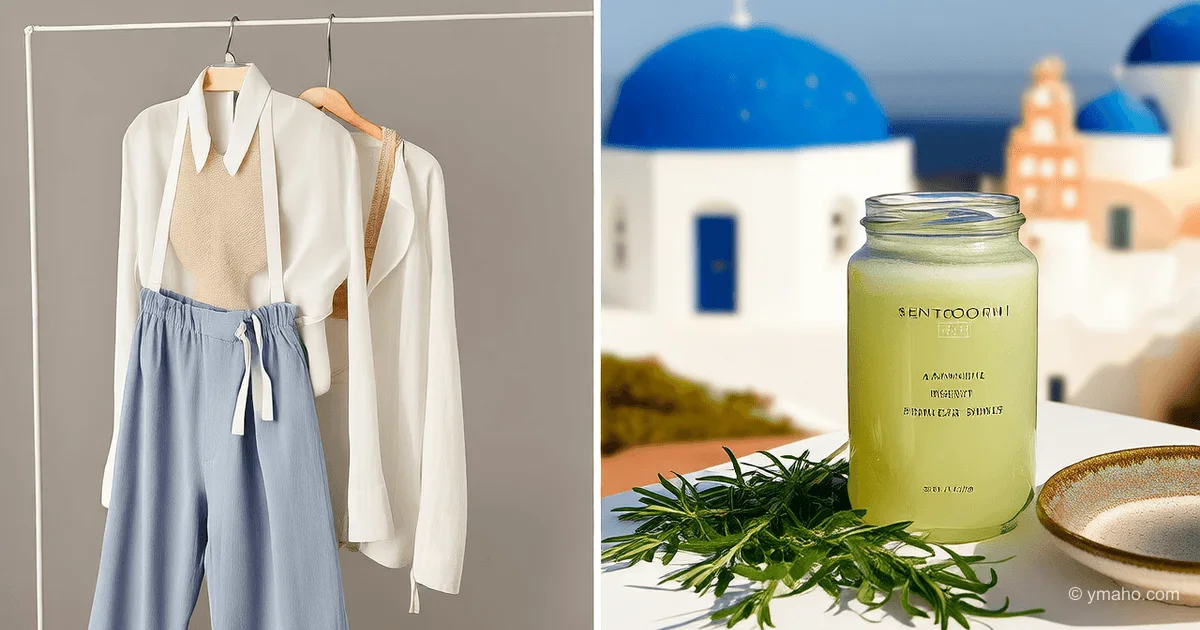
Third: NO ONE's Santorini-style summer lookbook is a sale of aspiration. White and blue, Cycladic contrast, scenario capsules for "sea outings" and "city walks." The brand sells not clothing but a Mediterranean vacation packaged in fabric. The consumer who can't fly to Santorini buys the feeling of Santorini through a shirt and clogs. This is post-tourism fashion: geography becomes a print, and travel becomes a wardrobe.
Forecast: Next 30 Days and 90 Days
Next 30 days (until June 19, 2026). The unisex collaboration trend will continue: at least three restaurant chains in Moscow will announce drops with local clothing brands. The "food + fashion" model will become a standard marketing mechanic for the summer. L'Erbolario Verbena will enter the top 10 organic care sales in Russian chains (Zolotoe Yabloko, Podruzhka), with sales growth in the "perfumed body care" category of 15-20% compared to May.
90-day horizon (until mid-August 2026). Marie Claire and other glossy magazines will strengthen integration with marketplaces: "stylish new arrivals" selections will be accompanied by direct purchase links with conversion tracking. Editorial teams will start receiving a percentage of sales—this will turn content into a full-fledged distribution channel with a turnover of around 5-8 million EUR per month across all publications.
Strategic forecast. By the end of 2026, we will see the emergence of the first "hybrid spaces"—restaurant + showroom + spa—where a consumer can order a themed dinner, try on a local brand's capsule, and buy a limited-edition cream in one visit. Pioneers will be projects in Moscow and St. Petersburg, with investment to launch one such space at 200-300 thousand EUR. The main takeaway: summer 2026 will go down in fashion industry history as the moment when fashion finally dissolved into lifestyle, and brands transformed from sellers of things to providers of experiences. L'Erbolario with verbena is not a competitor to Nivea, but a competitor to a weekend ticket to a spa hotel. And in this competition, the winner is the one who sells not a tube, but a transformation.
— Editorial Team









